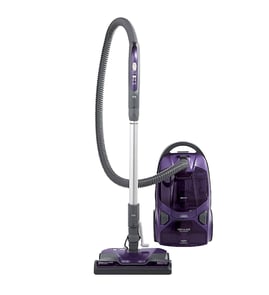

What are the disadvantages of a canister vacuum?
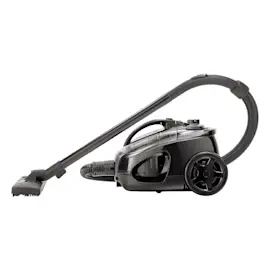
Canister vacuums (including the Kenmore 3462165080) are powerful and versatile, but the main disadvantages are bulkier storage, more “pull-behind” handling, and extra setup steps (hose, wand, floor tool) that make quick cleanups less convenient than an upright or stick vacuum.
Common drawbacks you may notice
- Harder to store: the canister body plus hose and wand take more space in a closet.
- More effort to maneuver: you often pull the canister around furniture, corners, and doorways.
- Can bump walls and furniture: the canister can scuff baseboards or ding table legs if it swings.
- More bending and handling: you may bend to change suction settings, swap tools, or empty/replace the bag.
- Thick carpet can feel slower: some canisters glide well on hard floors but take more passes on plush carpet.
- Ongoing consumables: bagged models need replacement bags; bagless models need frequent bin and filter cleaning.
Bagged vs. bagless: what changes
| Feature | Bagged canister | Bagless canister | |---|---| | Mess when emptying | Lower | Higher (dust plume is common) | | Ongoing cost | Bags | Filters (and more maintenance time) | | Odor control | Often better | Depends on filter care |
Why it matters
If you clean lots of stairs, hard floors, and under-furniture areas, a canister’s hose-and-wand design is a big advantage. If you want fast grab-and-go cleaning in a small space, the extra pieces and pull-behind canister can feel like a hassle.
Tips to reduce the downsides
- Park the canister behind you (not beside you) to reduce wall bumps.
- Use the shortest effective hose length to prevent snagging.
- Keep filters clean and fully seated to help reduce dust leakage.
- Store tools together so setup is faster.
- If suction seems weak, check for clogs in the hose, wand, and floor nozzle before assuming a motor issue.
For general DIY readiness and safe repair habits, we recommend reviewing are diy appliance repairs safe and must have tools for appliance repair.
Last updated: January 2026
How long do canister vacuums last?
Most canister vacuums, including the Kenmore 3462165080, last 7 to 10 years with normal home use and basic maintenance. Higher-end canister vacuums can run 15 to 20 years when airflow is kept strong (clean filters, clear clogs, and replace worn hoses and power cords promptly).
Typical lifespan by use and care
A vacuum’s motor life is closely tied to airflow and heat. When filters clog or a hose is blocked, the motor runs hotter and wears faster.
- Light use (1 to 2 times/week): often 10+ years
- Average use (2 to 4 times/week): commonly 7 to 10 years
- Heavy use (daily, pets, large homes): commonly 5 to 8 years
- Best-case longevity: 15 to 20 years with consistent upkeep
What shortens a canister vacuum’s life
These are the most common causes of early failure on canister vacuums:
- Running with clogged filters or a full bag/bin
- Vacuuming fine dust without proper filtration (overloads filters)
- Hose, wand, or floor nozzle clogs that restrict airflow
- Pulling the vacuum by the hose (cracks cuffs and causes leaks)
- Using the wrong outlet or a damaged cord (intermittent power)
Quick maintenance checklist (high impact)
Use this routine to extend the life of a Kenmore canister vacuum like model 3462165080:
- Empty/replace the bag or bin before it is packed full
- Clean or replace filters on a schedule (more often with pets)
- Check the hose and wand for clogs when suction drops
- Inspect the power cord and plug for heat damage or cuts
- Clean hair and string from any brush roll (if your nozzle has one)
Lifespan expectations at a glance
| Condition | What you’ll notice | What to do |
|---|---|---|
| Good airflow | Strong suction, normal sound | Keep filters and pathways clean |
| Restricted airflow | Hotter smell, louder pitch, weak pickup | Clear clogs, service filters |
| Electrical wear | Cutting in/out, no power | Inspect cord, switch, connections |
Why it matters
A canister vacuum usually “dies early” from overheating or electrical wear, not from age alone. Keeping airflow open and addressing small issues quickly is the simplest way to protect the motor and extend service life.
For DIY electrical checks, we recommend using a meter correctly and safely; see how to use a multimeter to test electrical parts video.
Last updated: January 2026
What is the very best canister vacuum?
The “very best” canister vacuum depends on your home and priorities (allergies, pets, carpet vs. hard floors, and budget). For most shoppers, a premium bagged canister with sealed HEPA filtration and strong airflow delivers the best overall cleaning and longevity; your Kenmore model 3462165080 is a canister style that can be a solid value when kept well maintained.
What “best” usually means (the criteria we use)
- Cleaning performance: strong suction plus good airflow at the floor tool
- Filtration: sealed system and HEPA-level filtration for dust control
- Ease of use: hose reach, wand controls, weight, and swivel maneuvering
- Floor versatility: hard-floor tool plus a powered nozzle for carpet (if needed)
- Ongoing cost: bag and filter replacement frequency and price
Quick guide: which type is best for your home
| If you have... | Best match | Why it works |
|---|---|---|
| Allergies or lots of fine dust | Bagged, sealed, HEPA filtration | Cleaner emptying and better dust containment |
| Mostly hard floors and area rugs | Compact canister with hard-floor tool | Easy maneuvering and gentle pickup |
| Wall-to-wall carpet or pet hair on carpet | Canister with powered nozzle | Better agitation and deep cleaning |
| Tight budget | Value canister (often bagged) | Strong performance per dollar |
Our practical picks (by shopper type)
- Best overall (premium): Miele and SEBO style bagged canisters (durability, filtration, refinement)
- Best for allergies: sealed bagged canister with HEPA filtration (any brand that offers true sealed filtration)
- Best value: Kenmore and other budget-friendly canisters that still use bags and decent filtration
- Best for small spaces: compact canister with a simple hard-floor tool
Why it matters
A canister vacuum can last for years when airflow stays high. The “best” choice is the one that matches your flooring and filtration needs, then stays maintained with clean bags and filters so suction does not drop.
Maintenance tip that improves any canister vacuum
- Replace the bag before it is completely packed
- Clean or replace filters on schedule
- Check the hose, wand, and floor nozzle for clogs
- Inspect the brush roll (if equipped) for hair wrap
For help confirming you have the right model before buying bags, filters, or attachments, use how to find your appliance model number (and what it means for parts).
Last updated: January 2026
Who makes Kenmore canister vacuums now?
Kenmore canister vacuums sold under the Kenmore floor care brand are made under a brand-licensing arrangement by Cleva North America, Inc. For Kenmore model 3462165080, the most reliable way to identify the correct replacement parts is to match parts to the exact model number, not to a “series” name.
What the current manufacturer means for parts
Even when the Kenmore name is on the vacuum, parts compatibility still depends on the specific build of your model.
- Match parts using the full model number: 3462165080
- Use the model tag on the canister body (not the wand or floor nozzle)
- Compare the original part’s shape, latch style, and electrical connectors
- For electrical symptoms, inspect the cord reel, switch, and hose handle wiring first
- If you have multiple Kenmore canisters at home, do not swap hoses or power nozzles without confirming the model match
Quick reference: model number beats “series” labels
| Identifier you see | How useful it is | Why |
|---|---|---|
| Model number (3462165080) | Best | Ties directly to the correct parts list and diagrams |
| “600 Series” or similar | Limited | Often shared across multiple builds with different internal parts |
| Cord length or other specs | Not reliable for ID | Specs can be listed inconsistently across retailers and do not guarantee part fit |
Why it matters
Kenmore canister vacuums can look similar across generations, but the hose ends, cord reel, motor layout, filters, and power nozzle connections can change. Using the exact model number prevents ordering a part that fits a different Kenmore build.
Helpful next step
Use our guide to confirm you are reading the model tag correctly: how to find your appliance model number (and what it means for parts).
Last updated: January 2026