

How do I tell which Kenmore washer I have?
You can tell which Kenmore washer you have by finding the model number tag and matching that number to your parts list. For Kenmore model 11091511100, the tag is typically on the top or back of the control panel, or on the cabinet near the bottom.
Where to find the model number tag
Check these common locations first (most-to-least common):
- Top-load washers: under the lid opening, on the rim, or on the main cabinet near the bottom
- Behind the control panel: on the back of the console or control panel housing
- Rear of the washer: on the back panel
- Front-load washers (if applicable): behind the door, on the door frame, or in the door jamb
What the model number looks like (and why it matters)
Kenmore model numbers are usually a long string of numbers. Once you confirm the exact model number, we can match the correct Kenmore washer parts (like a lid switch, drain pump, or motor coupling) so the fit and wiring are right.
Quick check table
| What you see on the tag | What it means | What to do next |
|---|---|---|
| 11091511100 | Exact model number | Use it to select parts for this washer |
| Starts with 110. but ends differently | Same Kenmore family, different model | Use the full number to avoid wrong parts |
| Tag is missing or unreadable | Model cannot be confirmed from the cabinet | Match by component style and measurements |
If the tag is missing or unreadable
Use these practical identifiers to narrow it down:
- Compare your washer’s control panel layout (knob positions and cycle names)
- Note whether it is direct-drive (common on many Kenmore 110 top-loaders)
- Check the agitator style and basket type
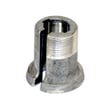
- Look up parts you know you need and compare photos, for example the coupling 285753A
Why it matters
Kenmore washers often share similar cabinets across model families, but internal parts like the drive system, water pump, and switch can differ. Using the exact model number prevents ordering a part that looks close but will not install correctly.
Last updated: February 2026
How many cubic feet is a Kenmore Model 11091511100 washer?
Kenmore washer model 11091511100 is a Whirlpool-built, agitator-style top-load design; washers in this Kenmore 110 platform are typically about 3.2 to 3.5 cu. ft. capacity. For the exact cubic-foot rating, match the capacity to the model’s product label details and basket style.
Typical capacity range for this Kenmore 110 top-load platform
Most Kenmore 110-series, direct-drive top-load washers from this era fall into a standard-capacity range.
- Typical range: 3.2 to 3.5 cu. ft.
- Agitator top-loaders measure capacity by the wash basket volume
- Standard capacity handles everyday family loads well
- Bulky items (large comforters) often fit better in 4.0+ cu. ft. machines
Quick load-size guide (for a 3.2 to 3.5 cu. ft. top-load washer)
| Load type | Expected fit | Best practice |
|---|---|---|
| Mixed everyday laundry | Good | Fill loosely; do not pack down |
| Towels/denim | Good | Run smaller heavy loads for better turnover |
| Queen sheets/blankets | Usually | Distribute evenly around the agitator |
| King comforter | Tight | Use a larger-capacity washer if it binds |
How to confirm capacity on the appliance
Use these practical checks to pin down the correct capacity without guessing.
- Look for the model/serial tag (often under the lid or on the rim) and note any capacity wording
- Compare your basket depth and diameter to standard-capacity top-load baskets
- If you are shopping parts due to overload-related issues, inspect drive components for wear
Why it matters
Correct capacity helps you load properly, which improves cleaning and reduces out-of-balance spinning. Overloading also increases strain on drive parts such as the coupling 285753A and can contribute to spin or agitation problems.
Last updated: February 2026
How to unclog drain hose on Kenmore washer?
To unclog the drain hose on your Kenmore washer model 11091511100, we unplug the washer, remove as much water as possible, then clear blockages from the drain hose and the drain pump inlet. Most clogs are lint, coins, socks, or sludge trapped where the hose meets the pump.
Safety first
- Unplug the washer before servicing.
- Turn off both water supply valves.
- Keep towels and a shallow pan ready; hoses can release several quarts of water.
- If you must tip the washer, get help to prevent injury and cabinet damage.
Step-by-step: unclog the drain path
- Drain the tub: Bail water into a bucket or use a wet/dry shop vacuum at the standpipe or hose end.
- Access the drain hose: Pull the washer forward and locate the hose running from the pump to the household drain.
- Check the easy end first: Remove the hose from the standpipe or laundry tub and look for a plug of lint or a small item.
- Clear the hose: Run hot water through it; if needed, use a flexible drain snake (gently) or straighten the hose and massage soft clogs loose.
- Inspect the pump inlet: Remove the hose at the pump and check the pump port for debris.
- Spin-check the impeller: If the pump impeller is jammed or damaged, replace the pump.
Parts that commonly solve “won’t drain”
If the hose is clear but draining is still slow or noisy, these model-matched parts are common fixes:
Quick diagnosis table
| Symptom | Most likely cause | What we do next |
|---|---|---|
| Hums but won’t drain | Pump jammed, sock/coin in pump | Check pump inlet, impeller; replace pump if damaged |
| Drains slowly | Partial clog in hose or standpipe | Flush hose; verify household drain flow |
| Leaks during drain | Loose clamp, cracked hose/connector | Reseat clamps; replace connector if split |
| No drain sound at all | Power issue, lid switch issue, failed pump | Confirm power, then inspect pump and related wiring |
Why it matters
A restricted drain hose makes the washer hold water, stop mid-cycle, or leave clothes soaking wet. Clearing the hose and verifying the pump flow prevents pump overheating and repeat clogs.
Last updated: February 2026
Is it worth repairing a Kenmore washing machine?
Yes, it’s usually worth repairing a Kenmore washer, especially a proven direct-drive model like Kenmore 11091511100, when the fix is a common wear part and the total repair cost stays well below the price of a comparable new washer.
A practical way to decide (cost vs. value)
We use this quick rule: repair when the total cost is 50% or less of a replacement washer and the failure is a typical mechanical part (coupling, pump, clutch, lid switch).
Good candidates for repair
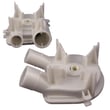
- Won’t drain or leaks at the pump area (often the water pump WP3363394)
- Motor runs but won’t agitate or spin (often the coupling 285753A)
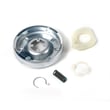
- Spins weakly or slips under load (often the clutch 285785)
- Won’t start or stops when the lid is moved (often the switch 285671)
- Excessive vibration from worn support components (check suspension parts like washer suspension spring WP63907)
When replacement makes more sense
If multiple major drive-train or tub-seal components are failing at once, costs can stack up quickly.
| Situation | Typical direction | Why |
|---|---|---|
| Single common failure (pump, coupling, clutch, lid switch) | Repair | Lower parts cost, high success rate |
| Repeated leaks into the tub bearing area | Replace or major rebuild | Labor and teardown are significant |
| Gear case or drive system has multiple worn parts | Compare quotes | Parts plus labor can approach replacement cost |
| Rusted cabinet or severe tub damage | Replace | Structural issues keep coming back |
Why it matters
A repair decision is really about how long the fix will last. On many Kenmore top-load direct-drive washers, replacing a few high-wear parts restores normal wash and spin performance for years, while avoiding the cost and learning curve of a new machine.
Helpful troubleshooting content
If your washer is showing an error code and you want a fast direction on what to check first, use our Kenmore 110 vmax top load washer error codes guide.
Last updated: February 2026
What does F11 mean on a Kenmore washer?
On Kenmore washer model 11091511100, an F11 code points to a motor control communication problem (the washer is not reliably “talking” to the drive system). Most often, it is caused by a loose or oxidized wire connection in the motor control circuit, and reseating/cleaning the connectors restores normal operation.
What to do first (safe, quick checks)
- Unplug the washer for 2 minutes, then plug it back in and try a rinse and spin.
- With power unplugged, inspect wiring connectors you can access for a loose fit, discoloration, or corrosion.
- Reseat each connector: unplug it, check for bent pins, then plug it back in firmly.
- Look for rubbed-through wires near the cabinet edges or under the console.
- If the washer drains poorly or stalls mid-cycle, check for a drain restriction that can overload the drive.
Parts that commonly relate to “won’t move” symptoms
F11 is a control/communication issue, but if the basket or agitator is mechanically stuck, the drive can fail to respond and trigger errors. These model-matched parts are common suspects during diagnosis:
Symptom-to-part quick guide
| What you notice | Most likely area | Model-matched part to check |
|---|---|---|
| Motor runs but washer does not agitate/spin | Drive connection | Coupling |
| Spins weakly, slips, or smells hot | Clutch/brake system | Clutch |
| Hums, drains slowly, or won’t drain | Drain system | Water pump |
Why it matters
When the motor control circuit loses communication, the washer can stop mid-cycle, fail to spin, or leave clothes wet. Fixing a loose connector early helps prevent repeated shutdowns and reduces strain on the motor, clutch, and pump.
Helpful error-code reference
For Kenmore washer error-code patterns and troubleshooting flow, use: Kenmore 110 vmax top load washer error codes.
Last updated: February 2026
What is the average lifespan of a Kenmore washer?
A Kenmore washer typically lasts 10 to 15 years with normal household use. For the Kenmore 11091511100 washer, keeping loads balanced, avoiding overfilling, and fixing small leaks or noises early helps you reach the high end of that range.
What affects washer lifespan most
- Overloading (stresses the drive system, clutch, and motor)
- Unbalanced loads (increases vibration and wear on suspension components)
- Drain problems (coins, lint, or small items stressing the pump)
- Water leaks (can damage bearings, seals, and nearby electrical parts)
- Hard water and excess detergent (buildup that reduces cleaning and increases wear)
Common wear items that can shorten life
If your washer won’t spin, won’t drain, or makes grinding or burning-rubber noises, these model-compatible parts are common suspects:
| Symptom | Often involved part | What it does |
|---|---|---|
| Won’t agitate or spin, motor runs | Coupling 285753A | Connects motor to transmission drive; can break under heavy loads |
| Won’t drain, water left in tub | Water pump WP3363394 | Pumps water out during drain and spin |
| Spins weakly or slips | Clutch 285785 | Helps the basket reach full spin speed smoothly |
| Oil leak, loud gear noise, poor spin | Pinion 3360629 | Gear case component tied to drive and spin performance |
Maintenance that adds years
- Use the right water level and avoid packing the basket tight
- Wash bulky items (blankets, rugs) in smaller loads to prevent off-balance spinning
- Check pockets to reduce pump clogs and tub damage
- Level the washer so it does not “walk” during spin
- Address new leaks quickly; seals and gaskets are cheaper than major drive repairs
Why it matters
A washer that is maintained and repaired early usually avoids the expensive failures (drive system wear, seal leaks, and repeated off-balance spinning) that shorten service life and increase noise, vibration, and cycle problems.
Last updated: February 2026