Owner’s manual
 Error Codes



How to take fridge off demo mode?
On a Frigidaire FRS26R4AB7 side-by-side refrigerator, demo mode is turned off from the temperature control panel by pressing and holding the demo-mode key sequence until the display returns to normal cooling operation. Use the exact button combination shown in the FRS26R4AB7 owner's manual.
- Open the refrigerator door so you can see the display clearly.
- Press and hold the demo-mode button or the specified key combination for about 3 to 5 seconds.
- Watch for a change in the display (cooling indicators return, or “OF/0” style indicators clear).
- Wait 5 minutes; confirm the compressor and fans begin normal cycling.
- If the display immediately flips back, power-cycle the refrigerator by unplugging it for 2 minutes, then plug it back in.
Demo mode that will not “stick” is usually caused by a control input problem (stuck key) or a control reset issue.
- Check the control panel for a stuck or continuously pressed button.
- Make sure the outlet is not controlled by a wall switch (accidental shutoff can mimic resets).
- Verify the refrigerator is plugged directly into a grounded outlet (no extension cord or adapter).
- If the unit repeatedly resets after power is restored, inspect for loose connections at the control housing.
| What you observe | What it typically means |
|---|---|
| Interior lights work but no cooling | Demo mode is still active |
| Fans and compressor start cycling | Demo mode is off |
| Display changes but reverts quickly | Stuck key or control issue |
Demo mode is designed for showroom display; it can leave lights and the display working while disabling normal cooling. Getting out of demo mode restores proper compressor and evaporator fan operation so food temperatures recover.
Last updated: February 2026
What is the average lifespan of a Frigidaire refrigerator?
Most Frigidaire refrigerators, including the FRS26R4AB7 side-by-side, typically last 10 to 15 years with normal use and basic maintenance. Keeping airflow clear, cleaning, and staying on top of wear items (like door gaskets and filters) helps you reach the high end of that range.
A refrigerator’s life is mostly determined by how hard the sealed system and fans have to work day to day.
- 10 to 15 years is the typical expected lifespan for a household refrigerator
- Heavy use (frequent door openings, warm garage installs) can shorten life
- Good maintenance (cleaning, correct temps, good door seal) extends life
- Ice maker and dispenser use can increase run time and wear
- Poor airflow or dirty condenser areas can make the compressor run longer
Use these habits to reduce compressor run time and prevent common failures.
- Keep doors closed as much as possible; warm air makes the unit run longer
- Make sure the refrigerator is level so doors close fully
- Keep food packages from blocking the door from sealing
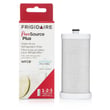
- Replace the water filter on schedule if you use the dispenser; use the Frigidaire puresource plus refrigerator water filter WFCB
- Address a weak door seal early; a leaking seal forces longer run times (see how to fix a fridge door seal)
| What you notice | What it usually means | What to do first |
|---|---|---|
| Runs “all the time” | Warm air leaks, dirty condenser area, heavy use | Check door seal and door closing; verify temps |
| Frost buildup, warm fridge | Airflow or defrost issue | Check vents for blockage; inspect for ice buildup |
| Water/ice issues | Filter restriction or supply problem | Replace filter; purge air; confirm water supply |
A refrigerator that runs too much or too long uses more energy and puts extra wear on the compressor and fans. The troubleshooting chart in the owner's manual also notes that door openings, a slightly open door, worn gaskets, and dirty condenser conditions can all increase run time.
Last updated: February 2026
How to read a Frigidaire refrigerator model number?
On a Frigidaire refrigerator such as model FRS26R4AB7, the model number is read directly from the serial plate inside the fresh food (refrigerator) compartment; open the refrigerator door and look for the label on an interior wall, then record the full model number exactly as shown. Details and examples are in the owner's manual.
We see the model and serial information listed on the serial plate inside the refrigerator compartment.
- Open the fresh food door (not the freezer door)
- Look on the left or right interior side wall
- Find the serial plate or rating label
- Copy the model number and serial number exactly (letters and numbers)
- Record the purchase date for your records
For most Frigidaire model numbers, the characters are a structured code used to identify the product family and configuration. For parts lookup and troubleshooting, the most important rule is to use the entire model number exactly as printed.
| What to capture | Example (your unit) | Why it matters |
|---|---|---|
| Model number | FRS26R4AB7 | Ensures the correct parts list and diagrams |
| Serial number | (from label) | Helps match production run and revisions |
| Purchase date | (your date) | Useful for service history and maintenance planning |
- Do not use only the first few characters (for example, do not stop at “FRS26”)
- Do not swap similar characters (0 vs O, 1 vs I)
- If the label is hard to read, take a clear photo and zoom in
- Use the model number when ordering common maintenance items like the Frigidaire puresource plus refrigerator water filter WFCB
Using the exact model number is the fastest way to match the right Frigidaire parts (gaskets, ice maker components, controls) and to follow model-specific operating instructions such as temperature control adjustments and care and cleaning guidance.
Last updated: February 2026
Why is my Frigidaire side by side flashing H?
On your Frigidaire FRS26R4AB7 side-by-side refrigerator, a flashing H or HI means a high temperature alarm; the refrigerator or freezer has been too warm for about an hour. The most common cause is a door left ajar or a door seal that is not sealing tightly.
- Make sure both doors fully close and do not bounce back open
- Check that the door gaskets touch the cabinet on all sides and are not folded or torn
- Confirm food packages are not holding the door open
- Reduce door openings for the next few hours so temperatures can recover
- Verify the refrigerator is level so the doors self-close properly
After you correct the cause (usually a door not sealing), the alarm typically clears after the compartment temperature drops back to normal.
| Situation | What you will notice | What to do |
|---|---|---|
| Door was left open | Warm temps, alarm tone, flashing H/HI | Close door, check gasket contact, wait for temps to recover |
| Door seal leak | Condensation, longer run times, recurring warm alarms | Clean/reshape gasket; replace if torn |
| Heavy warm load or frequent openings | Temps rise after loading groceries | Limit openings; allow time to stabilize |
If the doors are sealing and the alarm keeps returning, cooling airflow or defrost issues can contribute to warm temperatures.
- If you hear unusual fan noise or have weak airflow, inspect the evaporator fan area; the evaporator fan blade is a common wear item
- If you see frost buildup that restricts airflow, a defrost control issue may be present
Relevant parts for this model include the refrigerator evaporator fan blade 5308000010 and the refrigerator defrost bi-metal thermostat 5303918214.
A high-temp condition can lead to food spoilage and forces the compressor to run longer. Fixing door sealing and airflow problems quickly helps the FRS26R4AB7 maintain stable refrigerator and freezer temperatures.
For model-specific alarm behavior and operating details, follow the FRS26R4AB7 owner's manual.
Last updated: February 2026
What is the most common problem with a Frigidaire refrigerator?
For the Frigidaire FRS26R4AB7, the most common issue we see is a cooling or temperature-control problem, often tied to restricted airflow, dirty condenser coils, or defrost-related ice buildup that makes the fresh food section warm while the freezer still seems OK. Use the owner's manual troubleshooting chart to narrow the cause.
- Refrigerator section is warm but freezer is cold
- Unit runs too long or seems to run constantly
- Frost or ice buildup in the freezer (airflow gets blocked)
- Ice maker or dispenser performance drops (slow ice, no ice, weak water flow)
- Moisture between doors or on the cabinet in humid weather
Before replacing parts, we recommend these steps because they match the most common causes listed in the manual:
- Make sure doors fully close and nothing is holding them open
- Clean the condenser coils (dirty coils commonly cause long run times and warm temps)
- Confirm temperature controls are set correctly; then allow 24 hours to stabilize after changes
- Reduce frequent door openings; warm air loads can mimic a cooling failure
- If the ice maker is not making ice, confirm the wire signal arm is down (ON) and the household water valve is open
If basic checks do not restore normal temperatures, these parts are commonly involved in Frigidaire side-by-side cooling complaints:
| Problem pattern | Common area to inspect | Example part on this model page |
|---|---|---|
| Frost buildup, warming fridge section | Defrost system | Refrigerator defrost bi-metal thermostat 5303918214 |
| Warm temps with weak airflow | Evaporator fan area | Refrigerator evaporator fan blade 5308000010 |
| Water flow slows, ice production drops | Water filtration | Frigidaire puresource plus refrigerator water filter WFCB |
Cooling problems usually get worse over time: restricted airflow and dirty coils force the compressor to run longer, which can lead to food spoilage, heavier frost buildup, and more wear on key components.
Last updated: February 2026