Error Codes


How to identify a Kenmore washer model?
Your Kenmore washer model number is printed on the appliance’s model and serial tag; for Kenmore washers it often starts with 110 (like 11082781100). Once you match that tag to your washer, we can help you choose parts that fit correctly and avoid returns.
Check these common locations first (power off is best):
- Top-load washer: under the lid, around the tub opening
- Front-load washer: inside the door opening, along the door frame
- Back panel: near the power cord entry or along the rear cabinet
- Control console area: behind the console or on the cabinet edge
- Side of the cabinet: sometimes near the bottom edge
For Kenmore model 11082781100, the model number is typically:
- 11 characters (or more)
- Mostly numbers
- Often formatted like 110.XXXXXXXX on the tag (the dot may or may not appear)
| What you see on the tag | What it means | What to do |
|---|---|---|
| 11082781100 | Full model number | Use it to match diagrams and parts |
| 110.82781100 | Same model with a dot | Treat it as the same model |
| A shorter number or letters | Usually serial or revision info | Keep looking for the full model number |
Kenmore washers can look similar across many series, but parts like a lid switch, drain pump, or motor coupling can vary by model. Using the exact model number helps us match the right replacement part the first time.
Once you’ve confirmed 11082781100, these are common wear items we often see involved in agitation or spin complaints:
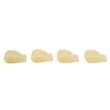
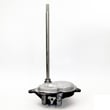
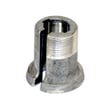
- Agitator dog 80040 (worn dogs can cause weak or no agitation)
- Coupling 285753A (a broken coupling can stop agitation and spin)
- Switch W10820036 (a failed lid switch can prevent spin)
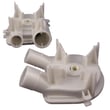
- Water pump WP3363394 (a jammed pump can affect draining and spin)
Last updated: February 2026
Is it worth repairing a Kenmore washing machine?
Yes, repairing a Kenmore washer is usually worth it when the machine is otherwise in good shape and the fix targets a common wear part. For Kenmore model 11082781100, repairs like a drain pump, motor coupling, or clutch replacement often restore reliable washing for far less than replacing the washer.
We use these practical checkpoints to decide if a repair makes sense:
- The washer fills, drains, and powers on (even if it will not spin or agitate).
- The problem matches a typical wear item (coupling, pump, lid switch, clutch).
- The tub and cabinet are not heavily rusted, and the basket is not damaged.
- The repair cost is comfortably below the cost of a comparable new washer.
- You want to keep a proven direct-drive style washer running.
These are frequent, high-value fixes on Kenmore top-load washers like 11082781100:
| Symptom | Likely part to check | Example part for this model |
|---|---|---|
| Will not drain or leaves water in tub | Drain pump | Water pump WP3363394 |
| Motor runs but washer will not agitate/spin | Motor coupling | Coupling 285753A |
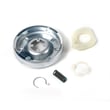
| Spins weakly, slow to reach speed, burning smell | Clutch/brake system | Clutch 285785 |
| Agitator moves poorly or “ratchets” | Agitator dogs | Agitator dog 80040 |
| Will not start spin when lid closes | Lid switch | Switch W10820036 |
Replacement is typically the better choice when you have multiple major failures at once (for example: gear case plus basket drive issues), repeated leaks that have damaged the base, or severe vibration from structural wear.
A targeted repair keeps your washer’s core components (basket, drive tube, gear case) in service and avoids paying for features you may not need. On older Kenmore washers, replacing a single failed part often brings performance back to normal.
Last updated: February 2026
What is the average lifespan of a Kenmore washer?
A Kenmore washer typically lasts 10 to 15 years. For Kenmore model 11082781100, reaching the high end of that range usually comes down to avoiding overloads, keeping the drain system clear, and fixing early wear items before they damage the drive system.
Most washers fail early from a few predictable issues: draining problems, agitation wear, or drive-train slippage. These are the factors that most often shorten (or extend) service life:
- Overloading and consistently unbalanced loads
- Hard water buildup and detergent overuse
- Slow draining (standing water, lint, coins, small socks)
- Worn agitation components such as the agitator dog 80040
- Drive-train wear such as a cracked coupling 285753A
These habits reduce stress on the motor, clutch, and gear case and help prevent leaks.
- Use the correct load size and distribute bulky items evenly
- Leave the lid open after washing to reduce odor and moisture
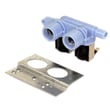
- Check fill hoses for bulges or leaks and replace if needed
- If draining slows, inspect the pump area and hoses; a failing water pump WP3363394 can also cause poor draining
- Address new noises early (grinding, squealing, or a burning rubber smell)
| Symptom | What it often points to | Example part for 11082781100 |
|---|---|---|
| Agitator moves poorly or “ratchets” | Worn agitator dogs | Agitator dog 80040 |
| Washer won’t agitate/spin but motor runs | Motor coupling slipping/broken | Coupling 285753A |
| Won’t drain or drains slowly | Pump obstruction or worn pump | Water pump WP3363394 |
| Loud spin, tub feels loose | Drive block or suspension wear | Washer drive block WP389140 |
A washer that is struggling to agitate, spin, or drain forces the drive motor and gear case to work harder. Replacing small wear parts early often prevents bigger repairs like a gear case replacement.
Last updated: February 2026