Owner’s manual


How do I tell what model my Kenmore dryer is?
Your Kenmore dryer’s model number is printed on the model and serial number label at the top inside the dryer door well. For this dryer, the model number format is shown as 110. followed by additional digits; record the full number exactly as it appears.
Where to look on model 11062062100
Open the dryer door and check these common tag locations:
- Top inside the dryer door well (most common on this Kenmore design)
- Along the door opening on the cabinet frame
- Inside the door on the inner panel area
- Back panel (less common, but worth checking if the label is missing)
Use the layout and location details in the 11062062100 owner's manual to match what you see on your dryer.
What to write down (and why)
Copy the information exactly from the label:
- Model number (example format: 110. plus the remaining digits)
- Serial number
- Purchase date (if you still have it)
Why it matters
The model number is how we match the correct Kenmore dryer parts and diagrams. Even small differences in the last digits can change which heating, drum, or door parts fit.
Quick check: model number vs. serial number
| Item | What it does | Used for |
|---|---|---|
| Model number | Identifies the exact dryer design | Finding correct parts and manuals |
| Serial number | Identifies your specific unit | Service history and age lookups |
If the label is hard to read
Try these practical steps before you assume the tag is gone:
- Wipe the label gently with a damp cloth and mild soap, then dry it
- Use a flashlight at an angle to make faded printing easier to see
- Take a close-up photo and zoom in
- Write down every character you can read, including dots and dashes
Last updated: February 2026
Is it worth replacing the heating element in a dryer?
Yes, it’s usually worth replacing the heating element in your Kenmore dryer model 11062062100 when the dryer still runs normally but won’t heat; the repair cost is typically far less than replacing the entire dryer, and it can restore full drying performance.
Quick way to decide
Replace the heating element when the dryer tumbles, timer advances, and airflow is strong, but clothes stay cold or take much longer to dry.
- The dryer runs but has no heat or weak heat
- The drum turns and the door switch works normally
- You have good airflow at the outside vent
- The dryer is otherwise in good condition (no major noise, burning smell, or repeated shutdowns)
- You want a repair that’s usually straightforward compared to major mechanical rebuilds
For the model-specific heat check steps (run on a full heat cycle, then check for heat after about 5 minutes), follow the 11062062100 owner's manual.
Parts that commonly go with a “no heat” repair
A failed heating element is common, but we also see heat-related safety parts open when airflow is restricted.
| Symptom | Common related part to check | Example part for this model |
|---|---|---|
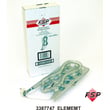
| Runs but no heat | Heating element | Dryer heating element WP3387747 |
| Runs then stops heating, or no heat after overheating event | Thermal fuse | Dryer thermal fuse WP3390719 |
| Overheats or cycles heat oddly | Thermistor | Dryer thermistor WP8577274 |
Why it matters
A dryer that is not heating often points to an electrical heating problem or an overheating protection trip. Fixing the root cause (especially restricted venting and lint buildup) helps prevent repeat failures and improves dry times.
Before you replace parts (high-impact checks)
- Clean the lint screen and remove lint buildup inside the cabinet and vent path
- Confirm the dryer is on a heat cycle (not air/no-heat)
- Verify the door fully closes and the start button is pressed firmly
- Check that both dryer power legs are present (many electric dryers use two breakers/fuses)
- Make sure the exhaust duct is not crushed, kinked, or blocked
Last updated: February 2026
What size is a Kenmore Model 11062062100 dryer?
Most Kenmore 11062062100 dryers are built in a standard full-size footprint; plan on about 27 inches wide, 27 to 28 inches deep, and 43 to 44 inches high. For the exact cabinet dimensions and required installation clearances for your unit, use the 11062062100 owner's manual.
Typical size and what to plan for
These are the measurements we use most often for Kenmore 110-series style dryers when planning a laundry space:
- Width: ~27 in.
- Depth: ~27 to 28 in. (not including the vent connection)
- Height: ~43 to 44 in.
- Door swing: allow enough room for the door to open fully
- Floor requirement: sturdy, level floor (the manual notes a maximum slope of 1 in. under the entire dryer)
Installation clearances and venting space
Even if the cabinet size fits, the dryer still needs room for airflow and vent routing.
| What you are measuring | What to include | Why it matters |
|---|---|---|
| Cabinet footprint | Width, depth, height | Confirms the dryer fits the opening |
| “Installed depth” | Cabinet depth plus vent hookup space | Prevents crushed/kinked venting |
| Door clearance | Space in front for full door swing | Makes loading and service easier |
| Side and rear clearance | Space for airflow and vent routing | Helps drying performance and safety |
Why it matters
Correct sizing prevents installation problems like a pinched exhaust duct (long dry times), a door that cannot open fully, or a dryer that sits out too far from the wall. It also helps you plan vent length and elbow count so the dryer can exhaust properly.
Quick measuring checklist (before you move the dryer)
- Measure the opening width at the front and back
- Measure depth to the wall, then add space for the vent connection
- Measure height to shelves or cabinets above the dryer
- Confirm the electrical outlet location and cord reach
- Verify the floor is level so sensor cycles work correctly
Last updated: February 2026
What are common problems with Kenmore dryers?
Common problems on the Kenmore 11062062100 dryer are no heat or long dry times, the dryer not starting, the drum not turning, and loud squealing or thumping. Most issues come from restricted airflow (lint buildup), worn drum support parts, or a failed heating or safety component; use the 11062062100 owner's manual for model-specific care and checks.
Most common symptoms and what usually causes them
- No heat or weak heat: failed heating circuit parts such as the dryer heating element WP3387747, a blown dryer thermal fuse WP3390719, or a bad temperature sensor like the dryer thermistor WP8577274.
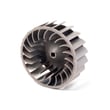
- Long dry times: lint screen clogged, vent restriction, or a damaged blower such as the dryer blower wheel WP697772.
- Won’t start: power supply issue (often one tripped breaker), door not fully closed, or controls not set to run.
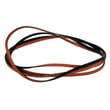
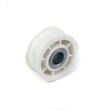
- Drum won’t tumble: worn drive components (belt or idler system) including the dryer idler pulley 279640.
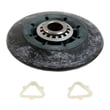
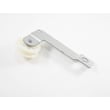
- Loud noise (squeal, rumble, thump): worn drum support rollers; the support kit WPW10314173 is a common fix.
Quick checks we recommend before replacing parts
- Clean the lint screen before every load; do not run the dryer with the screen loose, damaged, blocked, or missing.
- Run the dryer on a full-heat cycle for about 5 minutes, then check for heat.
- Check the home electrical supply; many electric dryers use two breakers or fuses.
- Confirm strong airflow at the outside exhaust hood; weak flow points to a vent restriction.
- If the dryer overheats or stops mid-cycle, inspect heating circuit safety parts.
Symptom-to-part cheat sheet (common matches)
| Symptom | What to inspect first | Parts often involved |
|---|---|---|
| No heat | Breakers, heat test | WP3387747, WP3390719, WP8577274 |
| Long dry time | Lint screen, venting, blower | WP697772 |
| Squealing/rumbling | Drum support area | WPW10314173 |
| Drum not turning | Belt path and tension | 279640 |
Why it matters
Poor airflow and lint buildup increase drying time and can overheat the dryer, which commonly leads to blown safety fuses and premature wear on heating and drum support components.
Last updated: February 2026