


Are all washers and dryers 27 inches wide?
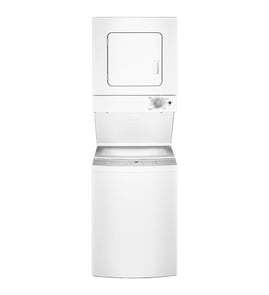
No. While 27 inches is the most common width for full-size washers and dryers, many models are narrower or wider. For a stacked laundry center like GE model WSM2700WAWWW, we recommend measuring your opening and allowing extra space for hoses, venting, and door clearance before you shop or replace the unit.
Typical widths you will see
Most laundry appliances fall into a few common width groups:
- Compact: about 24 inches wide (common for apartments)
- Standard full-size: about 27 inches wide (most common)
- Oversize / high-capacity: about 29 to 30+ inches wide (varies by brand and design)
- Stacked laundry centers: often around 27 inches, but not always
What to measure (so the new unit actually fits)
Measure your space first, then compare to the appliance dimensions.
- Width of the opening (left to right)
- Height (especially under shelves or cabinets)
- Depth to the back wall
- Clearance behind the unit for water hoses and the dryer vent
- Door swing clearance for the dryer door and washer lid
Quick fit check guide
Use this as a practical planning reference.
| Item to check | What we recommend | Why it matters |
|---|---|---|
| Opening width | Measure the tightest point | Trim, door frames, and baseboards can reduce usable space |
| Rear clearance | Plan extra room for hookups | Prevents kinked hoses and crushed venting |
| Depth | Include door and vent path | A unit can fit the footprint but still stick out |
| Access | Leave service space if possible | Makes belt, motor, and hose repairs easier |
Why it matters
A 1 to 3 inch difference in width is enough to prevent installation, pinch a dryer vent (poor drying), or kink a fill hose (slow fill or leaks). Getting the measurements right also helps you avoid unnecessary returns and downtime.
Parts note for this model
If you are keeping the GE WSM2700WAWWW and planning a repair instead of replacing the unit, common fit-related items include the fill hoses and clamps; for example, the in.hose 4 ft WH41X10207 is a model-listed inlet hose option.
Last updated: February 2026
How many years should a GE washing machine last?
A GE washing machine typically lasts 10 to 14 years. For a stacked laundry center like GE WSM2700WAWWW, lifespan depends most on load size, how often it runs, and whether wear parts (like the drive belt) are replaced before they cause bigger damage.
Typical lifespan and what affects it
Most washers land in the 10 to 14 year range, but these factors move the number up or down:
- Usage frequency: daily loads wear bearings, belts, and seals faster than weekly use
- Overloading: strains the motor, belt, and gear case
- Water quality: hard water can increase buildup and stress moving parts
- Leveling and vibration: an unlevel unit can accelerate wear and noise
- Maintenance and small repairs: replacing a worn belt or seal early prevents secondary damage
Quick benchmarks for “normal” vs “hard” use
| Use pattern | What it looks like | Typical outcome |
|---|---|---|
| Light | 1 to 3 loads/week | Often reaches the upper end of the range |
| Average | 4 to 7 loads/week | Usually lands in the middle of the range |
| Heavy | Multiple loads/day | Often trends toward the lower end of the range |
Parts that commonly determine how long it keeps running
If your WSM2700WAWWW is noisy, slipping, leaking, or struggling to spin, these are common wear points to check:
- Belt WH07X10009 (drive belt that transfers motor power)
- Washer tub seal assembly WH08X10004 (helps prevent leaks that can damage bearings and the drive system)
- Pad level le WH01X10044 (leveling support that helps reduce vibration)
- Washer gear case WH38X10014 (major drive component; problems here often signal a bigger repair decision)
Why it matters
A washer that is pushed past its wear limits can start with small symptoms (slipping spin, squealing, minor leaks) and end up with expensive failures (gear case damage, motor strain, water damage). Catching wear early is the best way to hit the full expected lifespan.
Last updated: February 2026
What are the most common issues with WSM2700WAWWW?
The most common issues we see with the GE WSM2700WAWWW laundry center are washer not spinning or draining, excessive vibration, water leaks, and dryer not heating or taking too long to dry. Many of these problems trace back to wear items like belts, seals, thermostats, or airflow components.
Common symptoms and what usually causes them
- Washer won’t spin or agitate: worn or broken drive belt, motor or gear case problems
- Washer leaks water: tub seal wear, loose hose connections, drain path issues
- Washer shakes or walks: unit not level, worn leveling pads, uneven load
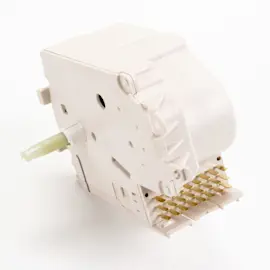
- Dryer won’t start or won’t advance: timer or start button issues
- Dryer not heating or overheating: thermostat problems, restricted airflow, heater housing issues
- Dryer takes too long to dry: lint blockage, blower wheel problems, crushed vent
Parts that commonly fix these problems
If your symptoms match, these model-compatible parts are often involved:
- Belt WH07X10009 (washer drive belt)
- Washer tub seal assembly WH08X10004 (leak at tub or center area)
- Thermostat WE4X757 (dryer heat regulation)
- Laundry center blower wheel WE16X28 (weak airflow, long dry times)
- Pad level le WH01X10044 (vibration and leveling support)
Quick checks before replacing parts
- Unplug the laundry center and shut off water before inspecting.
- Confirm the unit is level front-to-back and side-to-side.
- Check the dryer vent for lint buildup and make sure the duct is not kinked.
- Look for water tracks under the washer to pinpoint leak location.
- If testing electrical parts, use a meter and follow safe practices in how to use a multimeter to test electrical parts video.
Symptom-to-part cheat sheet
| Symptom | Most likely area | Example part on this model |
|---|---|---|
| No spin/agitate | Drive system | Belt (WH07X10009) |
| Water leak | Tub sealing/drain | Washer tub seal assembly (WH08X10004) |
| No heat/overheat | Temperature control | Thermostat (WE4X757) |
| Long dry times | Airflow | Blower wheel (WE16X28) |
Why it matters
Catching belt wear, airflow restrictions, and small leaks early helps prevent bigger failures like motor strain, gear case damage, or moisture-related corrosion in your GE stacked laundry center.
Last updated: March 2026