 Owner’s manual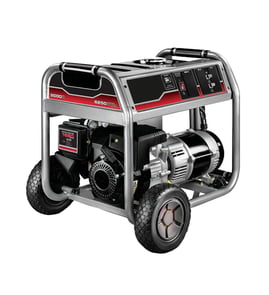

What are the most common issues with GG5500?
The most common problems we see with the Ust GG5500 generator are no-start conditions, rough running or surging, and no AC power output. These issues usually trace to fuel quality, airflow, ignition, or a tripped/bad protection device; the GG5500 owner's manual covers the correct checks and settings.
Common GG5500 symptoms and likely causes
- Won’t start: stale fuel, clogged carburetor jets, dirty air filter, fouled spark plug, low-oil shutdown active
- Starts then dies: fuel cap vent issue, restricted fuel flow, choke not opening, carburetor varnish
- Surging (hunting): partially clogged carburetor, air leak, governor linkage out of adjustment, load too light/heavy
- No AC power: tripped breaker, bad receptacle, loose wiring, failed capacitor/AVR (if equipped), damaged stator/rotor
- Runs but low power: overloaded circuits, extension cord too long/small gauge, engine speed not at rated RPM
- Hard starting when cold: choke use incorrect, weak spark plug, old fuel
Quick checks we recommend first (safe, high-impact)
- Verify fresh gasoline and open the fuel valve (if equipped).
- Confirm oil level is correct; low-oil sensors stop ignition on many generators.
- Inspect and service spark plug (clean/gap/replace) and air filter.
- Reset and test AC breakers; unplug all loads and restart.
- Check for loose or heat-darkened wires at outlets and control panel (power off, engine cool).
Troubleshooting map (symptom to next step)
| Symptom | Best next step | Tool/skill |
|---|---|---|
| No start, no sputter | Check oil level, spark at plug | Basic hand tools |
| Starts on choke only | Clean carburetor, check air leaks | Moderate DIY |
| Surges at steady load | Clean carburetor, verify governor linkage | Moderate DIY |
| Engine runs, no AC | Reset breaker, test outlet voltage | Multimeter |
Why it matters
Generator issues often cascade: a small fuel restriction can cause surging, which can create unstable voltage that is hard on connected equipment. Fixing the root cause (fuel, airflow, ignition, or output protection) restores stable RPM and safer power.
For electrical testing steps, a multimeter is the right tool; our how to use a multimeter to test electrical parts video is a solid walkthrough.
Last updated: March 2026
What is the average lifespan of GG5500?
A Ust GG5500 portable generator typically lasts 10 to 15 years with normal homeowner use and consistent maintenance. In engine hours, that equals about 1,000 to 2,000 hours for many consumer-grade generators; clean fuel, regular oil changes, and proper storage extend life.
Typical lifespan ranges
| Usage pattern | Typical engine hours | What it looks like |
|---|---|---|
| Occasional outages | 25 to 75 hrs/year | Runs a few days per year |
| Seasonal/backup | 75 to 200 hrs/year | Frequent storms, jobsite light use |
| Heavy/near-continuous | 200+ hrs/year | Long runtimes, high load, hot conditions |
What shortens generator life fastest
- Running above the rated load (overheats windings and engine)
- Old fuel or ethanol-related varnish in the carburetor
- Skipping oil changes or running low on oil
- Dirty air filter (rich running, carbon buildup)
- Poor airflow around the generator (heat soak)
- Long storage without stabilizer and a dry fuel system
Maintenance that adds years
- Change oil on schedule and check level before each run
- Keep the air filter clean and replace when restricted
- Use fresh fuel; add stabilizer for storage
- Exercise the generator monthly under load for 15 to 30 minutes
- Store dry and covered; keep rodents out of wiring
Why it matters
Generator lifespan is mostly about engine wear and electrical heat. Keeping loads reasonable and fuel clean prevents the most common failures (hard starting, surging, low output) and protects expensive components like the alternator.
For model-specific maintenance intervals and storage steps, follow the GG5500 owner’s manual.
Last updated: March 2026
Will a GG5500 watt generator run a refrigerator?
Yes. The Ust GG5500 generator is rated at 5.0 kW (5,000 watts) with 5.5 kW (5,500 watts) max, which is enough to run a typical refrigerator as long as the combined load of everything plugged in stays within the generator’s rated capacity and you account for higher starting (surge) current. See the GG5500 owner's manual for the load guidance table.
How to size it correctly (running watts vs starting watts)
Refrigerators use a compressor motor, so they draw extra power for a few seconds at startup. The GG5500 manual notes that motor-driven equipment draws higher current when starting.
Use this quick check:
- Add up running watts for everything you want on at the same time.
- Make sure the largest motor load (often the refrigerator) has enough starting headroom.
- If the generator breaker trips, reduce load and restart after a few minutes (as described in the manual).
| Load type | What to plan for | Example (typical) |
|---|---|---|
| Refrigerator running | Steady draw | ~100 to 800 W |
| Refrigerator starting | Short surge | ~1,200 to 2,500 W |
| Lights, TV, chargers | Small steady loads | Often 10 to 300 W each |
Best practices when powering a refrigerator with the GG5500
To keep the generator stable and protect appliances, we recommend:
- Start the generator first, then plug the refrigerator in.
- Turn on the highest-starting-load item first (the manual recommends this when multiple loads are connected).
- Keep other big loads off while the refrigerator cycles on.
- Use a heavy-duty outdoor-rated extension cord sized for the load.
- Ground the generator as directed in the manual to reduce shock risk.
Why it matters
A refrigerator can run fine on a 5,000-watt rated generator, but the compressor’s startup surge plus other connected loads can trip the AC breaker or cause low voltage. Managing starting loads helps keep food cold and prevents nuisance shutdowns.
Last updated: February 2026