Owner’s manual
 Error Codes


What size is Kenmore refrigerator model 79578409801?
Kenmore refrigerator model 79578409801 is a bottom-freezer design in the Kenmore 795.7840_ / 795.7841_ family. For overall exterior dimensions (width, depth, height), use the specifications section in the 79578409801 owner's manual; that is the correct source for the exact size for your specific color/version.
How to find the exact dimensions for model 79578409801
We recommend using the manual’s installation and specification details because this model family can have small dimension differences by version.
- Check the installation section for required clearances and cabinet opening guidance.
- Look for a specifications or product dimensions listing (often near installation pages).
- Measure your space and compare to the manual’s required side, top, and rear clearances.
- If you are measuring the refrigerator itself, include door swing and handle depth.
- If the unit must fit through a doorway, measure the narrowest point and plan for door removal if needed.
Quick measuring checklist (what to measure at home)
Use a tape measure and record in inches.
| What to measure | What to include | Why it matters |
|---|---|---|
| Width | Cabinet opening and refrigerator body | Prevents binding and vibration |
| Depth | Case depth plus doors and handles | Avoids sticking out too far |
| Height | Floor to top of hinge cover | Ensures it fits under cabinets |
| Clearance | Space behind and above | Helps airflow and cooling |
Why it matters
Correct sizing prevents installation problems like doors not opening fully, poor airflow at the condenser area, and difficulty leveling. It also helps you plan for moving the refrigerator, especially if doors need to come off during delivery.
Last updated: January 2026
Why is my Kenmore refrigerator leaking water from the bottom?
On Kenmore bottom-mount refrigerator model 79578409801, water leaking from the bottom is usually caused by a defrost drain problem (clogged or frozen) that sends meltwater into the cabinet instead of down to the drain pan. A leaking water line connection to the icemaker can also drip and collect underneath. See the 79578409801 owner's manual for drain and water line guidance.
Most common causes (and what to check first)
- Clogged or frozen defrost drain: Water backs up and can leak into the fresh food section, then run down to the floor.
- Drain pan overflow or misalignment: Defrost water is supposed to run into the pan; if it is out of place or overfilled, it can spill.
- Water supply line or fitting leak (if you have an icemaker/water dispenser): A slow drip can pool under the refrigerator.
- Door not sealing: Excess moisture can create heavy frost, leading to more defrost water than normal.
Quick troubleshooting steps
- Unplug the refrigerator and remove items from the bottom of the fresh food compartment.
- Inspect the defrost drain area for ice buildup or debris; flush the drain with warm water (a turkey baster works well).
- Check the drain pan underneath for cracks, shifting, or overflow.
- Inspect the water line and connections at the back lower area; tighten any connection that is seeping.
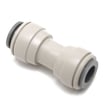
- If the leak appears near the rear connection point, inspect the refrigerator water tube fitting 4932JA3002B for damage or a loose connection.
What the symptoms usually mean
| Symptom | Most likely cause | Best next step |
|---|---|---|
| Water appears after a defrost cycle | Defrost drain clogged/frozen | Clear and flush the drain |
| Water only when icemaker is on | Water line connection leak | Tighten fittings; inspect tubing |
| Puddle under front corners | Drain pan spill or cabinet condensation | Check pan position; verify door seal |
| Ice buildup on freezer floor | Defrost drain frozen | Defrost and clear drain path |
Why it matters
A small leak can turn into floor damage and can also lead to ice buildup, airflow problems, and warmer temperatures in the refrigerator or freezer. Fixing the drain path and water line connections early helps protect the compressor and cooling performance.
Last updated: January 2026
What does DH mean on Kenmore Elite refrigerator?
On Kenmore model 79578409801, dH (often shown as Er dH) points to a defrost heating problem: the refrigerator is not sensing the expected temperature change during the defrost cycle. This can lead to frost buildup on the evaporator and warm temperatures.
What to check first (safe, quick steps)
- Confirm both doors fully close and the gaskets seal all the way around.
- Make sure air vents are not blocked by food packages (blocked airflow can mimic cooling and defrost issues).
- Unplug the refrigerator for 5 minutes, then restore power to clear a temporary control glitch.
- If the code returns, move to defrost-system checks.
Common causes of a dH / Er dH condition
Most dH issues come from one of these areas:
- Defrost heater not heating (open heater circuit or wiring issue)
- Defrost sensor not reading correctly (thermistor or sensor assembly)
- Heavy frost/ice preventing airflow through the evaporator area
- Control not powering the heater during defrost
Parts that often relate to this symptom
| Symptom you notice | What it usually points to | Example part for this model |
|---|---|---|
| Frost blanket on rear freezer panel, weak airflow | Defrost system not clearing ice | Refrigerator defrost sensor assembly 6615JB2005C |
| Warm refrigerator section, freezer still somewhat cold | Airflow restricted by frost | Defrost system diagnosis needed |
| Clicking, then no cooling (separate from dH) | Start device issue | Compressor start components (varies) |
Why it matters
When defrost heat is not working, ice builds up on the evaporator and blocks airflow. The compressor can run longer, temperatures drift warmer, and the ice maker may slow down or stop because the freezer cannot stay cold enough.
Where to find model-specific troubleshooting steps
We recommend following the diagnostic and access steps in the 79578409801 owner's manual, including the safety guidance to disconnect power before service.
If you need code definitions and what to check next for Kenmore 795 bottom-freezer models, use Kenmore 795 model bottom freezer refrigerator error codes.
Last updated: January 2026