 Owner’s manual


How do I tell what model my GE washer is?
For your GE washer, the model number is printed on the model and serial tag; on model GTW465ASN0WW you can find that tag under the lid when you open the washer. Write down both the model number and serial number exactly as shown, then match parts to that model.
Where to look on a GE washer
Most GE top-load washers (including GTW465ASN0WW) place the model and serial label in one of these common spots:
- Under the lid, on the underside of the top panel or rim area
- On the back of the control panel (less common on newer designs)
- On the cabinet near the bottom edge (side or rear)
- On front-load models only: behind the door or in the door jamb
For the exact location and how GE labels it, use the GTW465ASN0WW owner's manual.
What to record (so you get the right parts)
Copy the information exactly, including all letters and numbers:
- Model number (example: GTW465ASN0WW)
- Serial number
- Brand (GE)
- Any suffixes or revision characters shown on the tag
Quick check table
| What you see on the tag | What it means | Why we need it |
|---|---|---|
| Model number | The exact washer design | Ensures part compatibility |
| Serial number | Production run identifier | Helps confirm version changes |
| Brand name | Manufacturer | Narrows parts and manuals |
Why it matters
GE often uses similar-looking cabinets across multiple GTW models; the model number is what tells us which control system, lid lock, drain pump, and suspension setup your washer uses.
Last updated: February 2026
Is the GE 4.5 top load washer any good?
Yes. The GE GTW465ASN0WW 4.5 cu. ft. top-load washer is a solid, practical choice if you want a traditional agitator, straightforward controls, and strong everyday cleaning. Like many high-efficiency top-loaders, it can be louder during sensing and spin, and off-balance loads can affect performance.
What you can expect from this washer
- High-efficiency wash action that typically uses less water than older top-load washers
- Automatic load sensing at the start of a cycle (a short initial spin is normal)
- Best results when you load items loosely around the agitator and avoid overfilling
- Lid-related protections (the washer will not start filling or washing with the lid open)
- Automatic draining if water sits too long with the lid open or the cycle paused
How to get the best performance (and fewer complaints)
- Load evenly around the agitator; mix large and small items to reduce imbalance
- Use HE detergent and measure carefully; too much detergent can hurt cleaning and rinsing
- Place detergent packets at the bottom of the basket before adding clothes
- Keep bulky items (blankets, towels) distributed around the basket, not bunched in one spot
- If the washer seems “stuck” after a water-fill issue, wait out the built-in lockout period, then restart
Common “good vs not so good” tradeoffs
| What people like | What can be annoying | What usually fixes it |
|---|---|---|
| Large capacity for bulky loads | Noise during sensing/spin | Level the washer; load evenly |
| Traditional agitator cleaning | Off-balance spin interruptions | Rebalance load; avoid single heavy items |
| Efficient water use | Water level looks low | Use Deep Fill when needed; don’t overdeterge |
| Simple controls | Lid lock behaviors | Open and close lid between cycles |
Why it matters
Most “bad washer” experiences with this style of GE top-load washer come from loading and detergent habits that don’t match high-efficiency design. When you follow the recommended loading pattern and use HE detergent correctly, you get better cleaning, fewer spin issues, and less wear on drive components.
For model-specific operating details (load examples, detergent guidance, lid lock behavior, and automatic drain rules), use the GTW465ASN0WW owner’s manual.
Last updated: February 2026
What is the life expectancy of a GE washing machine?
A GE washing machine typically lasts 10 to 14 years. For your GE GTW465ASN0WW top-load washer, consistent care (proper loading, routine cleaning, and replacing wear items like hoses on schedule) is what most directly determines whether you land closer to 10 years or push beyond it; see the GTW465ASN0WW owner’s manual.
What affects washer lifespan the most
- Load size and balance: frequent overloading and out-of-balance loads increase stress on the suspension and drive system.
- Water supply hose age: GE recommends replacing fill hoses every 5 years to reduce failure risk.
- Leveling and vibration: an unlevel washer can rub the cabinet and wear components faster.
- Drain performance: slow draining makes the pump work harder and can lead to repeat clogs.
- Cycle and detergent habits: using the right amount of HE detergent and running periodic cleaning cycles helps prevent buildup.
Maintenance schedule we recommend (simple and realistic)
| Task | How often | Why it matters |
|---|---|---|
| Replace water supply hoses | Every 5 years | Prevents hose deterioration and leaks |
| Check leveling legs and floor stability | Every 6 to 12 months | Reduces vibration and cabinet wear |
| Run a cleaning cycle (or hot wash with washer cleaner) | Monthly to quarterly | Reduces odor, residue, and performance issues |
| Inspect drain hose routing and standpipe height | At install and after moves | Prevents siphoning, slow drain, and overflow |
Signs your washer is nearing end of life
- Repeated no-spin or agitation problems (often tied to the shifter, clutch, or speed sensing)
- Persistent loud banging or walking even after leveling (suspension wear)
- Frequent drain issues or water left in the tub (pump or drain path problems)
- Burning smell, tripped breaker, or intermittent power symptoms
- Repair costs stacking up across multiple systems (drive, control, and tub)
Common parts that can extend service life
If performance problems show up, replacing the failed part often restores normal operation and helps you get more years out of the washer:
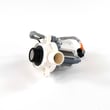
- Washer drain pump assembly WH23X28418 (draining and spin-out)
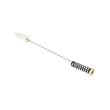
- Washer suspension rod and spring assembly WH16X26911 (reduces out-of-balance movement)
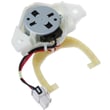
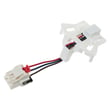
- Washer lid lock WH08X37938 (cycle start and safety interlock)
Why it matters
A washer that is kept level, not overloaded, and maintained on a basic schedule typically avoids the most expensive failures (drive system strain, vibration damage, and water-related issues). That is the difference between replacing a washer at year 10 versus keeping it running well into the teens.
Last updated: February 2026
What is the most common problem with GE washers?
On GE washers like model GTW465ASN0WW, the most common issues we see are drain and spin problems. They often trace back to a kinked or improperly installed drain hose, an out-of-balance load that prevents full-speed spin, or a failed component such as the drain pump or lid lock. See the GTW465ASN0WW owner’s manual for the model’s built-in indicators and troubleshooting steps.
Most common symptoms (and what they usually mean)
- Washer won’t drain: drain hose kinked, standpipe too high, or a weak/failed pump
- Clothes come out too wet: out-of-balance load, interrupted spin, or drive system issue
- Fill light blinking: water supply valves off or low household water supply (washer may enter a timed lockout)
- Lid won’t lock or won’t start: lid lock problem or lid not opened between cycles
- Pauses during spin or early-cycle spin: normal load sensing behavior on this model
Quick checks we recommend first
- Redistribute the load and run Drain & Spin if the Spin light is blinking (out-of-balance correction may limit spin speed).
- Inspect the drain hose for kinks and confirm the drain outlet height is under 8 ft (2.44 m).
- Confirm both hot and cold supply valves are fully open; if the Fill light flashes, wait out the lockout and restart.
- Close the lid fully; this washer won’t fill or start with the lid open.
- If draining is slow or intermittent, check the pump area and consider replacing the washer drain pump assembly WH23X28418.
Common causes and likely fixes
| Problem area | What you notice | Typical fix |
|---|---|---|
| Drain path | Standing water, slow drain | Straighten/replace drain hose; replace drain pump if weak |
| Balance/spin | Spin light blinking, wet load | Rebalance load; check suspension rods if chronic |
| Lid safety | Won’t start, lid locked behavior | Inspect/replace lid lock |
| Water supply | Fill light blinking | Turn on valves; correct supply issue |
Why it matters
Drain and spin issues can look like “the washer is broken,” but on GTW465ASN0WW they are often caused by installation (hose routing/height) or load balance, and the washer’s indicators are designed to point you to a simple correction before parts replacement.
Last updated: February 2026
Why is my GE front load washer leaking from the bottom?
On the GE GTW465ASN0WW, a bottom leak is usually caused by a loose or damaged drain hose connection, a cracked drain hose, or a failing drain pump. Start by checking for drips during drain and spin, then inspect hoses and the pump area for wetness.
Quick checks we recommend first
- Unplug the washer and turn off both water faucets (the manual recommends shutting faucets off when not in use to minimize leakage).
- Pull the washer forward and look for the exact drip point with a flashlight.
- Run a short Drain & Spin and watch the back and bottom edge for water.
- Check fill hoses at the wall and at the washer for seepage at the couplings.
- Inspect the drain hose for splits, rub-through, or a loose clamp.
Most common bottom-leak causes (and what to do)
| What you see | Most likely cause | What to do next |
|---|---|---|
| Water appears mainly during draining/spin | Drain hose leak or loose connection | Re-seat and secure the hose; replace if cracked (see washer drain hose WH41X32477). |
| Puddle near the pump area | Drain pump housing or seal leaking | Inspect pump for cracks and wetness; replace if leaking (see washer drain pump assembly WH23X28418). |
| Water seems to “disappear” or drain oddly | Siphoning from incorrect drain-hose placement | Keep no more than about 5 inches of hose down the standpipe and maintain an air gap; confirm setup in the GTW465ASN0WW owner’s manual. |
| Drips at the back during fill | Fill hose connection or inlet valve seepage | Tighten couplings, check rubber washers, clean inlet screens; replace valve if it leaks (see washer water inlet valve assembly WH13X26535). |
Why it matters
A bottom leak can damage flooring and can also lead to oversudsing, drain problems, or repeated cycle interruptions. Fixing the exact leak point first prevents replacing good parts.
When a part replacement is the right call
- Drain pump: leaking from the pump body, pump seam, or pump outlet.
- Drain hose: visible crack, pinhole spray, or soft spot where it rubs the cabinet.
- Inlet valve or hoses: moisture at the valve body or hose couplings during fill.
Last updated: February 2026


