 Installation guide
 Owner’s manual
 Error Codes





What is the most common problem with the Frigidaire dishwasher?
For the Frigidaire FGID2468UF1A dishwasher, the most common service issue we see is draining trouble (water left in the bottom of the tub) caused by a clog in the filter/glass trap area, a kinked drain hose, or a weak drain pump. Use the FGID2468UF1A use & care manual troubleshooting steps first.
- Cancel the cycle and let the unit run its drain (the manual notes a drain period after cancel).
- Check the bottom of the tub for standing water after the cycle ends.
- Inspect and clean the filter area and glass trap (food, labels, broken glass).
- Verify the drain hose is not kinked and has a proper high loop.
- If connected to a disposer, confirm the disposer is empty and the inlet knockout plug is removed.
If cleaning and hose checks do not fix it, these model-compatible parts are common next suspects:
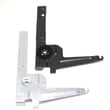
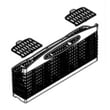
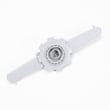
- Dishwasher filter 154283005 (restricted filter can slow or stop draining)
- Dishwasher drain hose 807117001 (kinks, internal blockage, or poor routing)
- Drain pump a A00126401 (pump runs but cannot move water, or is noisy and weak)
- Dishwasher check valve 807048001 (backflow or blockage at the valve)
| What you notice | Most likely cause | What to do next |
|---|---|---|
| Water left in tub | Clogged filter/glass trap | Clean filter area and re-test |
| Hums but won’t drain | Jammed/weak drain pump | Inspect pump area; replace if needed |
| Drains slowly | Kinked/partially blocked hose | Re-route or replace hose |
| Drains then water returns | Check valve issue | Inspect/replace check valve |
Standing water can lead to odor, poor cleaning, and repeat clogs. Fixing the drain path early helps protect the pump and keeps cycle performance consistent.
Last updated: January 2026
How do I run a diagnostic on my Frigidaire dishwasher?
On the Frigidaire FGID2468UF1A dishwasher, we do not have a model-specific “diagnostic mode” button sequence identified in the available documentation; however, you can still do a reliable control reset and then use the display/status window behavior and any error code shown to guide troubleshooting using the steps in the FGID2468UF1A use & care manual.
- Press and hold START/CANCEL for 3 seconds to cancel the current cycle and force a drain.
- If the control is unresponsive, turn power off at the breaker for 30 seconds, then restore power.
- Start a normal cycle and watch the console for unusual lights, beeps, or a code in the status window.
- Confirm the door is fully closed and latched.
- Make sure the water supply valve is on.
- Verify the dishwasher is not set to Delay Start.
- Listen for a fill sound, then wash motor sound.
- Look for standing water after cancel/drain.
This model can show an error code in the status window (for example, if it malfunctions). Use the code plus the symptom to narrow the likely system.
| What you observe | What it usually points to | What to do next |
|---|---|---|
| Won’t fill | Water supply or inlet system | Check supply valve; inspect inlet components |
| Won’t drain / water left in tub | Drain path restriction or drain pump issue | Check hose routing and clogs; inspect drain components |
| Door won’t start cycle | Door latch not engaging | Inspect latch and strike alignment |
If the dishwasher will not drain and you’ve confirmed the hose is not kinked, the drain pump is a common next check; see the drain pump a A00126401 if replacement becomes necessary.
A true “diagnostic mode” varies by control design, but a reset plus observing fill, wash, drain, and any displayed code gives you the same practical information without guessing a button sequence.
Last updated: January 2026
Why does my dishwasher keep having power failure?
On the Frigidaire FGID2468UF1A dishwasher, repeated “power failure” symptoms are most often caused by an unstable household power supply, a door that is not staying fully latched, or an intermittent control or wiring connection. Use the reset and restart steps in the FGID2468UF1A use & care manual to confirm normal operation before replacing parts.
- Reset the breaker fully (switch OFF, then ON) and confirm the dishwasher is on a 120V, 15-amp circuit (20-amp if connected with a food disposer).
- If it is hardwired, turn power off and check the junction box connections for looseness or heat damage.
- Start the cycle correctly: press START/CANCEL, then close the door firmly within 4 seconds.
- If you opened the door during a cycle, press START/CANCEL and close the door promptly to resume.
- Cancel Delay Start if it is set; a delay can look like the unit “lost power.”
If the supply power is steady, these model-compatible parts are common causes of intermittent power or stopping:
- Dishwasher door latch 5304525218 (door not staying latched, stops when bumped)
- Dishwasher door latch strike 5304532796 (misalignment prevents a solid latch)
- Dishwasher electronic control board 5304517594 (random resets, dead console, intermittent operation)
- Dishwasher wire harness 154870101 (loose or failing connector causing intermittent power)
| What you notice | Most likely cause | Best first step |
|---|---|---|
| Display goes blank mid-cycle | Power interruption or loose connection | Check breaker, outlet or junction box, then harness connections |
| Stops when door is touched | Latch or strike issue | Inspect latch engagement and strike alignment |
| Random resets at different times | Control board or wiring | Inspect harness plugs, then consider the control board |
Repeated power interruptions can leave water in the tub, interrupt heating and drying, and stress electrical connections. Fixing the root cause early helps prevent bigger repairs and nuisance stoppages.
Last updated: January 2026





