Owner’s manual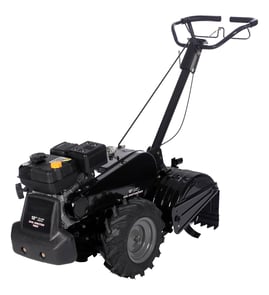



Where is the model number on a Craftsman rear tine tiller?
On the Craftsman rear-tine tiller model 917299881, the tiller model number is on a plate attached to the top of the transmission. The engine has a separate model number, typically found on the engine blower housing; use the 917299881 owner's manual for the exact identification notes.
Quick ways to find the model plate
- Look on top of the transmission housing (often near the shift linkage area)
- Wipe off dirt and oil; the plate can be hard to read when greasy
- Use a flashlight and take a photo, then zoom in to read the digits
- Write down the full model number exactly as shown (including dots if present)
Tiller model number vs. engine model number
Your Craftsman tiller and its engine use different identification numbers. This matters when ordering parts like a V-belt, tine shaft, or gear case.
| What you are identifying | Where to look | What it’s used for |
|---|---|---|
| Tiller model number (917299881) | Plate on top of the transmission | Tiller chassis and drive parts |
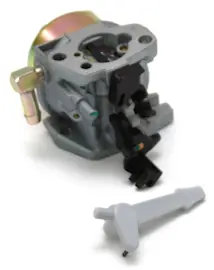
| Engine model/type numbers | Blower housing on the engine | Engine-specific parts (carburetor, ignition, gaskets) |
Why it matters
Using the correct model number helps us match the right diagrams and parts for your exact rear tine tiller configuration, especially for drivetrain and tine components.
Last updated: January 2026
What is the bar on the back of a tiller for?
On the Craftsman 917299881 rear-tine tiller, the bar on the back is the depth stake (also called a drag stake). We use it to control how deep the tines dig and to help steady the tiller so it does not surge forward while working.
What the depth stake does
- Sets tilling depth from shallow cultivating to deeper soil breaking
- Acts as a “brake” in the soil to slow forward travel and improve control
- Helps keep the tiller from hopping or pulling ahead when tines bite hard ground
- Makes transport easier when raised up
How to adjust it (basic steps)
- Stop tine and wheel movement by releasing the drive control bar.
- Set the shift lever to neutral.
- Pull the depth stake pin.
- Raise the stake for deeper tilling, lower it for shallower tilling.
- Reinsert the pin fully to lock the stake in position.
For the exact pin locations and the depth positions shown for this model, follow the 917299881 owner's manual.
Quick guide: stake position vs. results
| Depth stake setting | What you get | Best for |
|---|---|---|
| Higher (less stake in soil) | Deeper bite, more aggressive digging | New gardens, hard-packed soil |
| Lower (more stake in soil) | Shallower tilling, slower forward travel | Cultivating, weeding, better control |
| Fully raised | Minimal soil contact | Moving the tiller without tilling |
Why it matters
Depth control affects everything: soil texture, how hard the engine works, and how safely the tiller handles. If you try to till too deep too fast, the tines can catch and the machine can lunge forward; using the depth stake correctly keeps the job controlled and consistent.
Last updated: January 2026
What are the common problems with lawn tillers?
Common problems with the Craftsman 917299881 rear-tine tiller include hard starting or rough running, tines that do not pull well in soil, poor tilling depth, and drive issues caused by worn belts or binding tines. Regular maintenance and correct tilling technique prevent most failures.
Most common symptoms and what they usually mean
- Engine will not start or runs rough: old fuel, restricted airflow, fouled spark plug, or carburetor mixture issues.
- Poor tilling or excessive bouncing: soil too dry or too hard; trying to till too deep too fast.
- Tines slow down or stop: vegetation wrapped around the tine shaft, worn drive belt, or drivetrain wear.
- Tiller surges or lacks power under load: dirty air filter, stale fuel, or incorrect choke use.
- Unsafe handling (tiller lunges forward): tines catching in hard ground; release the handlebars and do not restrain the machine.
Quick checks we recommend first
- Verify the engine oil level and basic tune-up items listed in the 917299881 owner's manual.
- Drain and replace old gasoline; use fresh fuel and open the shut-off valve (if equipped).
- Inspect and replace the spark plug yearly; the manual’s maintenance schedule calls this out as annual service.
- Clear wrapped vines and long grass from the tine shaft before continuing.
- If drive performance is weak, inspect the drive belt for glazing, cracking, or stretching; replace if worn.
Tilling conditions that cause “problems” (but are normal)
The manual notes best tilling depth is typically 4 to 6 inches, and hard, dry soil can cause excessive bounce and difficult handling. Moistening hard soil helps, but extremely wet soil can clump and reduce performance.
| Situation | What you see | Best adjustment |
|---|---|---|
| Soil too hard/dry | bouncing, poor penetration | moisten soil, slow down, reduce depth |
| Soil too wet | clumping (“balling up”) | wait for drier conditions |
| Heavy vegetation | tines bind or slow | remove vines/grass from tine shaft |
Why it matters
Most “tiller problems” are either maintenance-related (spark plug, air filter, fuel quality) or technique-related (depth and speed). Fixing the root cause protects the drivetrain, reduces wear on parts like the v-belt 532138399, and improves safety.
Last updated: January 2026
How often should I change the oil in my tiller?
For the Craftsman 917299881 rear-tine tiller, change the engine oil after the first 2 hours of operation, then every 25 hours of use after that, or at least once a year. Check the crankcase oil level before starting and after every 5 hours of continuous use; top off as needed.
Oil-change interval for model 917299881
Follow the maintenance interval shown in the Craftsman 917299881 owner's manual:
- First oil change: after the first 2 hours of operation
- Routine oil changes: every 25 hours
- Annual minimum: at least once a year (if you do not reach 25 hours)
- Oil level checks: before starting
- During long jobs: check oil level after every 5 hours of continuous use
Oil type and operating conditions
The manual calls out common small-engine oil guidance; match viscosity to temperature and keep the level full.
- Use SAE 30 motor oil for warm-weather operation
- Use a multi-viscosity oil such as 10W-30 for easier cold starting when appropriate
- In dusty soil or heavy-load tilling, stay strict on the 25-hour interval
- Keep the tiller level when checking oil; fill to the specified full level
Quick reference table
| Use case | What to do |
|---|---|
| New or newly serviced engine | Change oil after 2 hours |
| Regular gardening season | Change every 25 hours |
| Light annual use | Change once per year |
| Extended continuous tilling | Check oil every 5 hours |
Why it matters
Rear-tine tillers run hot and often work in dusty conditions. Fresh oil and frequent level checks prevent accelerated wear, hard starting, and loss of power during tilling.
Last updated: January 2026