Owner’s manual
 Error Codes


How wide is a 25.6 cubic foot Refrigerator?
A 25.6 cubic foot refrigerator is typically about 36 inches wide. For your GE PZS22MSKEHSS side-by-side, the installation guidance indicates you may need door removal if an opening is less than 38 inches wide, which aligns with a cabinet-width refrigerator plus clearance; confirm exact fit details in the PZS22MSKEHSS owner's manual.
Typical width and what to plan for
Most standard-depth side-by-side refrigerators in the 25 to 26 cu. ft. range are built for a 36-inch cabinet opening.
- Typical cabinet width: 36 in.
- Typical “must-fit-through” opening (with padding and maneuvering room): 38 in. or more
- Plan extra space for airflow, water line, and power cord routing
Clearances that affect the real-world space needed
Even if the refrigerator body is about 36 inches wide, you still need clearance for installation and ventilation.
| Space area | Typical need | Why it matters |
|---|---|---|
| Side clearance | 1/8 in. to 1 in. | Door swing, airflow, easier install |
| Top clearance | 1/8 in. to 1 in. | Heat release, cabinet fit |
| Back clearance | 1/2 in. to 1 in. | Water line and electrical space |
For GE side-by-side models like PZS22MSKEHSS, the manual lists small side/top clearances and a larger back clearance depending on configuration; use the manual values for your exact setup.
How to measure correctly before you buy or move
- Measure the cabinet opening width at the front and back
- Measure the narrowest doorway/hallway on the delivery path
- Include trim, baseboards, and door casing in your doorway measurement
- If any entrance is under 38 inches, plan on removing doors (per the manual guidance)
Why it matters
Width is only part of “will it fit.” Delivery path width, door swing clearance, and ventilation gaps determine whether a 25.6 cu. ft. refrigerator installs cleanly and cools properly.
Last updated: January 2026
What is the average lifespan of a GE Refrigerator?
A GE refrigerator like model PZS22MSKEHSS typically lasts 10 to 20 years, with about 12 years being a common average for many household refrigerators. Regular cleaning, correct temperatures, and timely part replacement help you reach the high end of that range.
Typical lifespan at a glance
| Appliance type | Typical lifespan | What usually ends it first |
|---|---|---|
| Side-by-side refrigerator (GE) | 10 to 20 years | Sealed system wear, fan failures, defrost issues |
What helps a GE refrigerator last longer
- Keep the fresh food section near 37°F and the freezer near 0°F.
- Clean condenser areas regularly to reduce compressor run time.
- Make sure doors seal tightly; warm air and moisture increase frost and run time.
- Replace water filters on schedule to protect the dispenser and ice maker.
- Fix airflow problems early (warm spots, noisy fan, heavy frost).
Parts that commonly affect longevity
If performance drops, these are common wear items that can restore normal cooling and reduce strain on the compressor:
- Refrigerator evaporator fan motor WR60X10307 (moves cold air through the compartments)
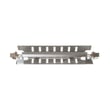
- Refrigerator defrost heater WR51X10055 (prevents heavy frost that blocks airflow)
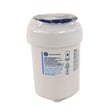
- GE refrigerator water filter MWFP (helps maintain water flow and ice maker performance)
Why it matters
A refrigerator that runs warmer than normal or builds frost often runs longer and harder. That extra run time can shorten the life of major components like the compressor and evaporator fan, so addressing cooling and airflow symptoms quickly protects the whole system.
Where to confirm model-specific care and maintenance
For cleaning intervals, temperature recommendations, and filter guidance specific to GE PZS22MSKEHSS, use the PZS22MSKEHSS owner’s manual.
Last updated: January 2026
Where is the water filter on my GE side by side refrigerator?
On the GE PZS22MSKEHSS side-by-side refrigerator, the water filter cartridge is located inside the fresh food (refrigerator) compartment in the back upper-right corner. Open the refrigerator door and look high on the right wall toward the rear.
How to find it quickly
- Open the refrigerator (not freezer) door.
- Look at the back wall, upper-right corner.
- If you see a cartridge-style filter housing, that is the water filter location.
- If the dispenser water flow is weak, check the filter first.
- Keep a towel handy; a few drops of water are normal during removal.
Basic replacement steps (typical for this style)
- Dispense a little water first to relieve pressure.
- Remove the old cartridge by slowly turning it (then pull it out).
- Install the new filter by inserting it fully and turning to lock.
- Run and discard several glasses of water to flush air and carbon fines.
For model-specific details and any indicator-light behavior, follow the instructions in the PZS22MSKEHSS owner’s manual.
Replacement timing and what the indicator means
Most units follow these guidelines:
- Replace about every 6 months.
- Replace sooner if dispenser flow slows or ice production drops.
- If your dispenser has a filter light, replace when it turns red (orange typically means “replace soon”).
| Symptom | Most likely filter-related cause | What to do |
|---|---|---|
| Slow water at dispenser | Clogged filter media | Replace filter, then flush |
| Small or hollow ice | Restricted water flow | Replace filter, confirm supply valve is open |
| No water/ice after removing filter | Filter or bypass plug missing | Install filter or bypass plug |
Why it matters
A restricted water filter can reduce water flow to the dispenser and ice maker, which affects ice production and can make the dispenser seem “weak” even when the water supply is fine.
If you need the correct replacement cartridge for this model, use the GE refrigerator water filter MWFP.
Last updated: January 2026
What is the most common problem with a GE Refrigerator?
The most common GE refrigerator problems are temperature-related issues (not cooling enough, warming up, or freezing food) and water/ice dispenser troubles. On GE model PZS22MSKEHSS, correct temperature settings are 0°F for the freezer and 37°F for the refrigerator; it can take up to 24 hours to stabilize after changes (see the PZS22MSKEHSS owner’s manual).
Most common symptoms we see (and what they usually point to)
- Fridge or freezer too warm: airflow blocked, dirty condenser area, evaporator fan issue, defrost problem, or a temperature sensor/control issue
- Food freezing in the fresh food section: temperature set too cold, airflow aimed at items, sensor issue
- No ice or slow ice production: water supply restriction, clogged filter, ice maker problem
- Water dispenser slow or not dispensing: clogged filter, air in the line, inlet valve issue
- Unusual noises: fan noise, compressor start components, or normal defrost sounds (some noises are normal during operation)
Quick checks before replacing parts
- Confirm settings: set freezer to 0°F and refrigerator to 37°F; wait 24 hours for temperatures to stabilize.
- Check airflow: avoid packing food tightly against rear vents and air towers; blocked louvers can cause warm spots or freezing.
- Inspect door closing: make sure bins are not hitting shelves and the gasket is sealing.
- For water/ice issues: replace the filter on schedule and purge air after filter changes.
- Power reset: unplug for 2 minutes, then restore power and recheck operation.
Common problem areas and matching parts (when symptoms fit)
| Symptom | Likely system | Example part for this model |
|---|---|---|
| Warm temps, inconsistent cooling | Temperature sensing | GE profile refrigerator temperature sensor WR55X10025 |
| Frost buildup, warming over time | Defrost system | Refrigerator defrost heater WR51X10055 |
| No water/slow water, weak ice | Filtration or water supply | GE refrigerator water filter MWFP |
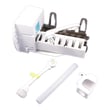
| No ice production | Ice maker assembly | GE refrigerator ice maker kit WR30X10093 |
Why it matters
Temperature and airflow problems can mimic “big” failures. Getting the settings right (0°F and 37°F) and keeping vents clear often restores normal cooling and prevents food spoilage and ice maker complaints.
Last updated: January 2026