Owner’s manual
 Error Codes



What is the advantage of a bottom mount fridge?
A bottom-mount refrigerator like the KitchenAid KBFS20EVMS5 puts the fresh-food section at eye and waist level, so the items you use most are easier to see and reach. The freezer stays below, which reduces daily bending for refrigerated foods.
Key advantages in everyday use
- Fresh food is easier to access: shelves, produce drawers, and door bins are higher up.
- Better visibility: you can scan refrigerated items without crouching.
- Less bending for daily tasks: most households open the refrigerator more than the freezer.
- Freezer organization can be simpler: pull-out drawer and baskets help group frozen items.
- Door swing and placement flexibility: with proper clearances, doors can open fully for loading.
Installation and clearance notes (helps you get the full benefit)
Bottom-mount designs often use wide doors and a freezer drawer, so spacing matters for comfort and access. Our KBFS20EVMS5 guidance includes:
| Area | Typical need | Why it matters |
|---|---|---|
| Top and back ventilation | About 1/2 in. | Helps airflow and cooling efficiency |
| Hinge-side wall clearance | At least 2 1/2 in. | Allows the door to swing open wider |
| Back clearance with ice maker | Extra space | Prevents kinks in the water line |
For the exact placement and leveling steps for your unit, use the KBFS20EVMS5 owner's manual.
Why it matters
When fresh food is at eye level, you waste less time searching, you keep the door open for less time, and you are more likely to use what you already have. That convenience is the main reason many people prefer a bottom-mount refrigerator layout.
Last updated: February 2026
What is the most common problem with KitchenAid refrigerators?
For KitchenAid refrigerators like model KBFS20EVMS5, the most common issues we see are ice maker and water system problems, cooling complaints (refrigerator not cold enough or freezer too warm), and water leaks or frost buildup. These symptoms often trace back to airflow, defrost drainage, or water supply components; see the KBFS20EVMS5 owner's manual for model-specific troubleshooting steps.
Most common symptoms and what usually causes them
- Ice maker not making ice: restricted water flow, a failing ice maker module, or a valve issue
- Water dispenser slow or not working: clogged filter, air in the line, or a weak inlet valve
- Fridge warm, freezer OK (or vice versa): airflow restriction, damper problem, or evaporator fan issue
- Water under the fridge or in the crisper: clogged/iced defrost drain or drain pan overflow
- Noisy operation: evaporator fan, condenser area vibration, or compressor start components
Quick checks we recommend first (before replacing parts)
- Confirm power and controls: make sure the unit is plugged into a grounded outlet and the controls are turned on.
- Allow proper cool-down time: after a move or first install, allow 24 hours to reach stable temperatures.
- Check door sealing and loading: doors not sealing or overpacked shelves can cause temperature swings and frost.
- Inspect airflow: blocked vents can mimic a cooling failure.
- If water or ice is affected: replace the filter on schedule and purge air after filter changes.
Common parts that solve these problems on KBFS20EVMS5
| Symptom | Part that often fixes it | Example part on this model page |
|---|---|---|
| Bad tasting water, slow dispense | Water filter | Refrigerator water filter EDR4RXD1 |
| No ice or intermittent ice | Ice maker assembly | Refrigerator ice maker D7824706Q |
| Warm temps, poor airflow | Evaporator fan motor or damper | Refrigerator evaporator motor W11024089, refrigerator damper control assembly WPW10594329 |
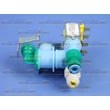
| Water not filling ice maker | Water inlet valve | Refrigerator water inlet valve assembly WP12544124 |
Why it matters
These “common problems” are usually symptoms, not the root cause. A clogged filter can look like a bad ice maker, and an airflow issue can look like a sealed-system failure. Starting with basic checks helps you avoid replacing the wrong part.
For step-by-step help with one of the most frequent fixes, use how to replace the water filter in a KitchenAid refrigerator.
Last updated: February 2026
What are the disadvantages of a bottom freezer refrigerator?
Bottom-freezer refrigerators like the KitchenAid KBFS20EVMS5 keep fresh food at eye level, but the tradeoffs are real: you bend more for frozen items, large freezer drawers can be harder to organize, and some designs are more prone to ice buildup or drain clogs that lead to leaks. See the KBFS20EVMS5 owner's manual for model-specific use and care.
Common drawbacks you may notice
- More bending and lifting: You reach down for everyday freezer items, and heavy bags or frozen bulk foods can be awkward to lift out.
- Deep-drawer organization: Items can stack and get buried, especially in lower baskets.
- Freezer access feels slower: Pull-out drawers take more space to open than a swing door.
- Potential for puddles from drain issues: Bottom-freezer layouts can be affected by defrost drain clogs that let water collect and refreeze.
- Often higher upfront cost: Bottom-freezer models commonly cost more than basic top-freezer designs.
What to do if the “disadvantages” are affecting performance
If your concern is more than convenience (for example, warm temps, frost, or water on the floor), these checks usually help:
- Confirm the controls are near the recommended settings (typically 38°F refrigerator and 0°F freezer).
- Wait 24 hours after any temperature change for the cabinet to stabilize.
- Make sure air vents are not blocked by food packages.
- Keep door seals clean and fully seated; gaps can cause frost and moisture.
- If you have water dispenser or ice maker issues, check the filter and water supply.
Quick symptom-to-likely-cause table
| What you notice | Common cause in bottom-freezer use | What to check first |
|---|---|---|
| Frost in freezer drawer | Door not sealing, frequent openings | Gasket contact, drawer closing |
| Water under crisper or in freezer | Defrost drain restriction | Clear ice, check for debris |
| Ice maker slow or no ice | Water flow restriction | Filter, inlet valve, temp |
Why it matters
Most “bottom freezer cons” are really about ergonomics and airflow. When drawers are overpacked or vents are blocked, temperatures swing and moisture increases, which can lead to frost, odors, or puddles.
Helpful parts and guides for this model
- If water taste, flow, or ice production is an issue, start with the refrigerator water filter EDR4RXD1.
- For step-by-step filter help, use how to replace the water filter in a KitchenAid refrigerator.
Last updated: February 2026
What is the average lifespan of a KitchenAid refrigerator?
Most KitchenAid refrigerators last about 14 years on average; a typical overall range is 10 to 17 years with normal household use and basic maintenance. For your KitchenAid KBFS20EVMS5 bottom-mount refrigerator, consistent airflow, clean coils, and tight door seals are the biggest factors that help it reach the high end of that range.
Typical lifespan and what affects it
A refrigerator’s life is mostly determined by how hard the sealed system and fans have to work to hold temperature.
- Maintenance habits: cleaning, leveling, and filter changes
- Room conditions: heat, humidity, and ventilation around the cabinet
- Door seal condition: warm air leaks force longer run times
- Ice and water use: more cycling of valves and ice maker components
- Repair timing: fixing small issues early prevents bigger failures
Maintenance that most improves longevity
Use these as your baseline routine for KBFS20EVMS5:
- Keep condenser area clean and unobstructed (good airflow reduces compressor run time)
- Confirm doors close fully and gaskets seal all the way around
- Replace the water filter on schedule; flush/purge after changes
- Keep vents inside the fresh food section and freezer unblocked
- Set stable temps (avoid frequent adjustments)
For model-specific care and operating guidance, follow the KBFS20EVMS5 owner's manual.
Parts that commonly impact “how long it lasts”
These parts do not determine lifespan by themselves, but they are frequent contributors to cooling and water-system complaints when they wear.
| System | Common symptom | Example part on this model page |
|---|---|---|
| Water filtration | Slow water, odd taste, low ice output | Refrigerator water filter EDR4RXD1 |
| Air movement | Warm fridge, uneven temps, noisy fan | Refrigerator evaporator motor W11024089 |
| Sealed system start | Clicking, hard starting, warm temps | Refrigerator run capacitor WPW10662129 |
Why it matters
A refrigerator that runs longer and hotter than it should (from dirty coils, air leaks, or blocked vents) puts extra stress on the compressor, evaporator, and condenser. Reducing run time is the simplest way to extend service life.
Last updated: February 2026