Installation guide
 Owner’s manual


How long do gas dryers last?
Most gas dryers, including Whirlpool model WGD7500GW0, typically last 10 to 13 years with normal household use. Consistent airflow maintenance (lint screen and venting) and fixing wear parts early are the biggest factors that push a dryer toward the longer end of that range.
What affects a gas dryer’s lifespan most
- Venting and airflow: Restricted exhaust makes the dryer run hotter and longer.
- Lint screen habits: Clean the lint screen before every load.
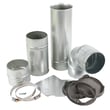
- Vent material and layout: Use 4-inch (102 mm) heavy, rigid metal venting when possible; keep the run short and limit elbows.
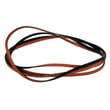
- Wear parts condition: Rollers, idler pulley, and belt wear can cause noise and extra strain.
- Level installation: A dryer that is not level can vibrate and wear components faster.
Maintenance that extends life (and improves drying)
We follow the same airflow guidance used in the Whirlpool documentation:
- Clean the lint screen before each load.
- Check outside exhaust airflow periodically.
- Remove lint from the full vent system at least every 2 years.
- Avoid plastic or foil venting; use 4-inch metal venting.
For model-specific venting and setup details, use the owner's manual and the installation guide.
Common “wear items” to watch on WGD7500GW0
If you hear squealing, thumping, or rumbling, these parts are common fixes:
| Symptom | Common cause | Example part for this model |
|---|---|---|
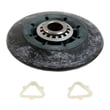
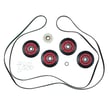
| Rumbling or thumping | Worn drum rollers | Dryer drum support roller WPW10314173 |
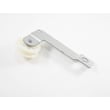
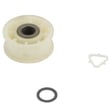
| Squealing or belt slip | Worn idler pulley | Dryer idler pulley W10837240 |
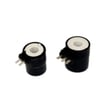
| No heat (gas model) | Weak gas valve coils | Dryer valve coil kit 279834 |
Why it matters
A gas dryer that is forced to dry with poor airflow often runs longer per load, which increases heat exposure and wear on the drive system and heating components. Keeping venting clear is one of the simplest ways to protect performance and lifespan.
Last updated: February 2026
Is a 7.4 cu ft dryer big?
Yes. A 7.4 cu ft Whirlpool dryer like model WGD7500GW0 is considered large capacity, so it comfortably handles bigger loads and bulky items (such as comforters) with better tumbling room, which can help drying performance and reduce the number of loads you run.
What “7.4 cu ft” means in real use
Dryer capacity is the approximate volume of the drum. More capacity helps when you dry bulky items or want to dry a full washer load without overpacking.
Common benefits of a large-capacity drum:
- Fewer loads for families and frequent laundry days
- Better airflow around items when you avoid overfilling
- Easier drying of bulky items (blankets, comforters, jackets)
- Less wrinkling when clothes have room to tumble
How big is “big” compared to other dryer sizes?
Here is a practical way to think about capacity ranges.
| Capacity range | Typical label | Best for |
|---|---|---|
| 3.4 to 4.4 cu ft | Compact | Apartments, small loads |
| 5.0 to 7.0 cu ft | Standard | Most households |
| 7.2 cu ft and up | Large to extra-large | Families, bulky items |
Getting the best results from a large-capacity dryer
Even with a 7.4 cu ft drum, drying performance depends heavily on loading and airflow.
We recommend:
- Fill the drum loosely; stop before items press tightly against the door
- Clean the lint screen every load (a clogged screen slows airflow)
- Use the correct cycle for the fabric (bulky, towels, timed dry, etc.)
- Check that the exhaust vent is not crushed or restricted behind the dryer
- Level the dryer so the drum and support rollers run smoothly
Why it matters
A large-capacity dryer is most helpful when you match it with good airflow and proper loading. Overfilling can still cause long dry times, higher heat stress on fabrics, and extra wear on moving parts like the idler pulley and drum support rollers.
For model-specific installation and clearance guidance, use the WGD7500GW0 installation guide.
Last updated: February 2026
Should I replace my gas dryer with an electric?
If your Whirlpool WGD7500GW0 is already set up for gas, we typically recommend staying with a gas dryer unless you have a strong reason to switch. Converting to electric usually means adding a 240V/30-amp circuit and changing venting and hookup requirements, which can add cost and complexity.
Quick decision guide
- Keep gas if you already have a working gas shutoff/line and you want faster heat-up and strong drying performance.
- Switch to electric if you are eliminating gas service, you cannot run a safe gas line where the dryer sits, or you already have a 240V/30-amp outlet available.
- Either way, plan for proper venting; poor airflow is a top cause of long dry times and overheating.
What changes when you switch from gas to electric
Your installation requirements change mainly in electrical supply:
- Gas dryers typically use a separate 15- or 20-amp circuit.
- Electric dryers typically require a 30-amp circuit.
We recommend confirming the exact electrical and location requirements in the installation guide.
Gas vs electric: at-a-glance
| Topic | Gas dryer | Electric dryer |
|---|---|---|
| Circuit requirement | 15 or 20 amp | 30 amp |
| Heat source | Gas burner | Electric heating element |
| Common “no heat” checks | Gas valve open, igniter/sensor | 240V supply, both breakers/fuses |
Why it matters
A dryer swap is not just the appliance. The right circuit size, correct outlet, and safe venting protect the dryer from nuisance shutdowns (like blown fuses or tripped breakers) and help prevent overheating conditions.
If you are troubleshooting your current gas dryer instead
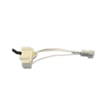
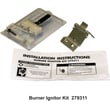
If the drum turns but there is no heat, common gas-heat suspects include the igniter and flame sensing components. For this model, parts often involved in heat complaints include the igniter 279311 and the dryer radiant sensor WP338906.
Last updated: February 2026
What are common problems with Whirlpool WGD7500GW0 dryers?
Common Whirlpool WGD7500GW0 dryer problems include not starting, no heat, stopping mid-cycle, “Check Vent” airflow warnings, and unusual noises (thumping, rattling, squealing). Many issues trace back to power supply, gas supply (gas models), vent restriction, or wear parts such as rollers, idler pulleys, and fuses; see the WGD7500GW0 owner's manual for model-specific troubleshooting steps.
Most common symptoms and what they usually mean
- Dryer will not run: door not fully closed, START/PAUSE not held long enough, tripped breaker or blown fuse
- Dryer runs but will not heat: gas supply valve closed (gas models), power supply issue (electric models), or a safety device opened
- “L2” code (low/no line voltage): home power supply problem that can prevent the heater from turning on
- “PF” code (power failure): cycle interrupted by a power loss
- Noise complaints: thumping after sitting, rattling from small objects, squealing from worn drum support parts
Quick checks we recommend first (fast, no parts)
- Confirm the door fully closes and latches.
- Touch and hold START/PAUSE for 2 to 5 seconds.
- Check the home electrical supply; many dryers use two fuses or two breakers.
- For gas models, confirm the gas supply valve is open.
- If the display shows “Check Vent”, inspect for a crushed, kinked, or blocked vent path.
Parts that commonly fix noise, no-start, or heat complaints
If basic checks do not resolve the issue, these model-listed parts are common culprits:
- Dryer drum support roller WPW10314173 (worn rollers can cause rumbling or squealing)
- Dryer idler pulley W10837240 (can squeal and affect belt tension)
- Thermal fuse W10909685 (can stop the dryer from running if it opens)
- Dryer valve coil kit 279834 (gas heat problems when coils weaken)
Symptom-to-likely-cause guide
| Symptom | Most likely area to check | Typical next step |
|---|---|---|
| Won’t start | Door switch, power, controls | Verify door closes; check breakers; test door switch |
| Runs, no heat | Venting, gas valve/coils, power | Clear vent; confirm gas on; check coils |
| Stops mid-cycle | Airflow restriction, power | Clean venting; check for “PF” or “Check Vent” |
| Squealing/rumbling | Rollers, idler pulley | Inspect drum support and idler components |
Why it matters
A restricted vent or weak power supply can cause long dry times, repeated shutdowns, and overheating protection trips. Catching airflow and wear-part issues early helps protect the drive motor and electronic control.
Last updated: February 2026