Owner’s manual
 Error Codes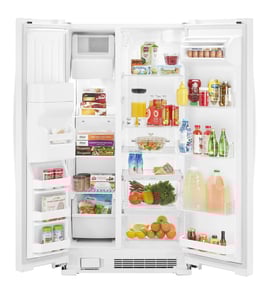


How wide is a 25.6 cubic foot refrigerator?
Most 25.6 cubic foot side-by-side refrigerators are about 35 to 36 inches wide. For your GE GSH25JSXLSS, the exact cabinet width and required clearance are listed in the GSH25JSXLSS owner's manual.
Typical width and what to plan for
Capacity (25.6 cu. ft.) does not guarantee a single width, but side-by-side designs in this size class usually fall into a narrow range.
- Typical cabinet width: 35 to 36 inches
- Common “fits-in” opening: 36 inches (with clearance)
- Door swing clearance: needs extra space beyond cabinet width
- Airflow clearance: space behind and above helps cooling performance
- Water line space: allow room for the supply line if you have an ice maker and dispenser
Quick sizing guide (typical)
| What you are measuring | Typical value for 25.6 cu. ft. side-by-side | Why it matters |
|---|---|---|
| Cabinet width | 35 to 36 in. | Determines if it fits between cabinets |
| Recommended opening width | 36 in. or slightly more | Prevents rubbing and improves ventilation |
| Clearance for doors/handles | Varies by handle style | Affects door swing and walkway space |
How to measure your space the right way
- Measure the opening width at the front and back (walls can be out of square).
- Measure height to the lowest cabinet or soffit.
- Measure depth from the back wall to the front edge of counters.
- Confirm you have room to pull the refrigerator out for service.
- If you use the dispenser, confirm the water line can route without kinking.
Why it matters
A refrigerator that is even 1/4 inch too wide can bind against cabinets, reduce airflow to the condenser area, and make installation harder. Planning for clearance also helps prevent door alignment and temperature performance issues.
Last updated: February 2026
Are GE side by side refrigerators good?
Yes. GE side-by-side refrigerators like model GSH25JSXLSS are a solid, long-lasting design for everyday use; they typically offer dependable cooling, easy food organization with adjustable shelves and bins, and convenient ice and water dispensing when maintained per the GSH25JSXLSS owner's manual.
What “good” looks like for this GE side-by-side
A good experience usually comes down to temperature stability, airflow, and routine maintenance.
- Holds steady temperatures in both compartments when vents are kept clear
- Provides strong organization (door bins, shelves, crispers, meat pan)
- Delivers convenient filtered water and ice when the filter is changed on schedule
- Runs with normal operating sounds (fans, ice maker cycling)
- Stays efficient when the condenser area is kept clean
Common pros and tradeoffs (side-by-side style)
Side-by-side refrigerators have consistent strengths and a few compromises.
| Category | Typical strength | Typical tradeoff |
|---|---|---|
| Fresh food access | Eye-level shelves and door storage | Narrower shelf width for large platters |
| Freezer access | Easy access to frozen items | Tall, narrow freezer space |
| Dispenser convenience | Water and ice on the door | More moving parts to maintain |
| Organization | Lots of bins and dividers | Can feel tighter than a French door layout |
Maintenance that keeps performance “good”
These steps prevent many cooling and dispenser complaints.
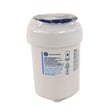
- Replace the water filter about every 6 months, or sooner if flow slows (this model uses GE refrigerator water filter MWFP)
- Keep food from blocking air vents so cold air can circulate
- Wipe up dispenser drips and mineral deposits promptly
- Confirm doors seal fully; a worn gasket can cause temperature swings and frost
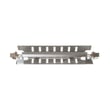
- If temperatures seem off, check the sensor and defrost system components before replacing major parts (examples include refrigerator temperature sensor WR55X10025 and refrigerator defrost heater WR51X10055)
Why it matters
A side-by-side can be “good” for many years, but dispenser and defrost performance depend on basic upkeep. Staying on top of filter changes, airflow, and door sealing helps protect food quality and reduces strain on the cooling system.
Last updated: February 2026
What is the average lifespan of a GE refrigerator?
Most GE refrigerators, including the GE GSH25JSXLSS side-by-side, typically last 10 to 20 years with normal household use and basic maintenance (clean airflow, good door seals, and stable temperatures). Many households see performance issues start sooner when airflow is restricted or doors do not seal well.
Typical lifespan ranges (what to expect)
Refrigerator life varies most by usage, maintenance, and how hard the sealed system has to work.
- Average range: 10 to 20 years
- Common “midpoint” expectation: about 12 to 15 years
- Shorter lifespan drivers: dirty condenser area, frequent door openings, warm room temps, overpacked compartments
- Longer lifespan drivers: good ventilation, clean coils, tight gaskets, correct temperature settings
| What you notice | What it usually means | What we recommend |
|---|---|---|
| Runs a lot or cycles often | Often normal for modern units; can also mean restricted airflow or warm conditions | Confirm temps and airflow; clean condenser area |
| Frost buildup or warm fridge section | Door left open, gasket leak, or defrost issue | Check door seal and loading; review troubleshooting |
| Water/ice performance drops | Filter restriction or valve issue | Replace filter; check water supply |
Maintenance that helps you reach the high end of the range
These steps reduce compressor run time and help prevent temperature swings.
- Keep vents inside the refrigerator and freezer unblocked
- Make sure doors close fully; avoid packages holding the door open
- Keep the condenser area clean so heat can dissipate
- Replace the water filter on schedule (if equipped)
- Set temps to recommended settings and give the unit time to stabilize after changes
Parts that commonly affect “how long it lasts”
When cooling or dispensing issues show up, these model-compatible parts are often involved.
- Refrigerator water filter MWFP (water taste, flow, ice quality)
- Gasket WR24X23250 (warm temps, moisture, frost from air leaks)
- Refrigerator temperature sensor WR55X10025 (temperature control problems)
- Condenser motor WR60X10209 (poor heat removal, long run times)
Why it matters
A refrigerator can still “run” past its prime, but efficiency and temperature stability usually decline first. Keeping airflow clear and doors sealing tightly helps the sealed system (compressor, condenser, evaporator) work less, which supports a longer service life.
For model-specific operating tips and troubleshooting, use the owner's manual.
Last updated: February 2026
What is the most common problem with a GE refrigerator?
The most common GE refrigerator complaint is not cooling properly, which is usually caused by an airflow problem (dirty condenser coil, failed fan), a defrost issue, or a temperature-sensing/control problem. For your GE GSH25JSXLSS, we use the troubleshooting steps and component locations in the owner's manual.
Most common GE refrigerator problems (and what to check first)
- Not cooling or warm temperatures: confirm vents are not blocked; clean the condenser area; listen for fans.
- Ice maker not making ice: verify the freezer is cold enough; check water supply and fill.
- Water dispenser slow or not dispensing: replace the water filter; check for kinked tubing.
- Water leaking: inspect water line connections and valve area; check for ice buildup at the drain.
- Door not sealing: look for gaps, torn gasket, or shelves/bins preventing closure.
- Unusual noises: fan blade rubbing ice, condenser fan noise, or compressor/inverter related sounds.
- Lights not working: check the bulb and door switch.
Quick symptom-to-part map for model GSH25JSXLSS
| Symptom | Most likely system | Parts commonly involved on this model |
|---|---|---|
| Fresh food warm, freezer OK | Airflow/evaporator circulation | Temperature sensor, fan components |
| Both sections warm | Heat rejection or sealed system | Condenser fan motor, condenser coil, compressor/inverter |
| Frost buildup, warming over time | Defrost system | Defrost heater, defrost thermostat |
| No water or slow water | Filtration or inlet supply | Water filter, water valve |
Parts we often replace for these issues
Use the symptom above to narrow the diagnosis, then match the part to your exact failure.
- Cooling control/sensing: refrigerator temperature sensor WR55X10025
- Defrost failures: refrigerator defrost heater WR51X10055, refrigerator defrost bi-metal thermostat WR50X10065
- Water and ice supply: GE refrigerator water filter MWFP, refrigerator water valve WR57X33326
- Door sealing problems: gasket WR24X23250
- Light not working: refrigerator light bulb 40A15
Why it matters
A GE side-by-side like the GSH25JSXLSS depends on steady airflow and accurate temperature feedback. When airflow is restricted or the defrost system fails, temperatures drift, food spoils faster, and the refrigerator runs longer than it should.
Last updated: February 2026