 Installation guide
 Owner’s manual
 Error Codes
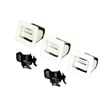


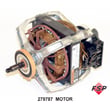
What model number is the Kenmore 11073932102 dryer?
The model number for this Kenmore gas dryer is 11073932102. You’ll find the complete model number on the model and serial number label located at the top inside the dryer door well; it’s the best number to use when ordering parts or checking specifications in the owner's manual.
Where to find the model number on the dryer
Look for the model/serial label in this common location:
- Open the dryer door
- Check the top inside the dryer door well (near the opening)
- Record the full model number and serial number
- Use the exact model number when searching parts and diagrams
Why the exact model number matters
Kenmore dryers can look similar across multiple series, but parts like the door switch, push-to-start switch, and timer can vary by model. Using 11073932102 helps ensure the correct match for items such as:
Quick reference
| Item | What to use | Why it helps |
|---|---|---|
| Model number | 11073932102 | Identifies the exact dryer design |
| Serial number | From the same label | Helps with production-specific variations |
| Manual | Owner's manual | Confirms operation, features, and label location |
Why it matters
When we match parts to the correct model number, we reduce returns and downtime, especially on gas dryer components like the igniter, gas valve coils, and sensors.
Last updated: February 2026
Is there a way to reset a Kenmore dryer?
Yes. For your Kenmore gas dryer model 11073932102, the most reliable “reset” is a power reset: turn the dryer off, disconnect power for about 1 minute, then restore power and restart the cycle. Use the start and door steps in the owner's manual.
Quick reset steps (safe and effective)
- Turn the Cycle Selector to OFF.
- Unplug the dryer (or switch the breaker off) for 1 minute.
- Restore power.
- Close the dryer door firmly.
- Select a cycle and temperature.
- Press PUSH TO START.
If it still will not start after a reset
A reset will not fix a failed switch, timer, or motor circuit. Check these common causes first:
- Door not fully closed or a failed door switch
- Blown house fuse or tripped breaker (many dryers use 2 fuses/breakers)
- Start switch not making contact
- Timer or cycle selector not sending power to the motor
Parts that commonly fix “won’t start” symptoms (when testing confirms failure):
| Symptom | What to check | Example part for this model |
|---|---|---|
| No response when you press start | Start switch | Dryer push-to-start switch WP3977456 |
| Runs only with door held or door feels “loose” | Door switch | Dryer door switch WP3406107 |
| Hums but will not run, or stops quickly | Motor circuit (advanced diagnosis) | Drive motor 279787 |
Why it matters
Resetting clears minor control glitches and gets you back to a known starting point. If the dryer still will not run, the troubleshooting checks above help you avoid replacing good parts and focus on the most likely electrical interlock (door switch), start circuit, or power supply issue.
Last updated: February 2026
How to tell if a dryer gas valve is bad?
On your Kenmore gas dryer model 11073932102, a “bad gas valve” usually shows up as no heat even though the dryer runs, especially when the gas shutoff valve is confirmed open. Most often, the failure is actually in the gas valve coils, radiant sensor, or igniter rather than the valve body itself; use the checks below to narrow it down using the installation guide.
Quick symptoms that point to a gas valve or coil problem
- Dryer tumbles normally but produces no heat.
- Igniter glows, you hear a click, but no flame lights.
- Burner lights once, then heat stops after a few minutes and may restart later (common with weak coils).
- You hear normal clicking, but the burner never sustains a flame.
- Heat returns temporarily after the dryer cools down.
Rule out the most common “not the valve” causes first
Before replacing parts, we check the basics called out in the Kenmore documentation:
- Confirm the gas supply line shutoff valve is open (handle parallel to the pipe).
- Run the dryer on a full heat cycle for about 5 minutes, then check for heat.
- Make sure the vent is not crushed or kinked; restricted airflow can cause heating problems.
- If the dryer has been unused for a while, brief noises can be normal, but no heat is not.
What to test (and what it usually means)
| What you observe | Most likely cause | Parts on this model page that often fix it |
|---|---|---|
| Igniter never glows | Igniter, thermal/fuse issue, power issue | Igniter 279311 |
| Igniter glows then shuts off, no flame | Weak gas valve coils, radiant sensor | Dryer gas valve coil kit 279834, dryer radiant sensor WP338906 |
| Flame lights then stops after a short time | Coils failing when hot, airflow restriction | Dryer gas valve coil kit 279834 |
| Dryer heats poorly and cycles oddly | Temperature sensing issue | Dryer thermistor WP8577274 |
Why it matters
A gas dryer that tumbles but will not heat is often a simple ignition or coil issue, and replacing the correct part restores safe, consistent burner operation. The installation steps also emphasize checking the shutoff valve position and vent condition because those two items can mimic a “bad valve.”
Last updated: February 2026
What is the lifespan of a Kenmore dryer?
A Kenmore dryer typically lasts 10 to 13 years. With consistent care on your Kenmore gas dryer model 11073932102, it’s common to reach the high end of that range by keeping airflow strong and reducing heat stress on key components (motor, rollers, and gas ignition parts). See the maintenance schedule in the 11073932102 owner's manual.
What most affects dryer lifespan
- Vent restriction (long runs, too many elbows, crushed ducting) increases heat and run time
- Lint buildup inside the cabinet or exhaust duct raises operating temperature and wear
- Overloading strains the drive motor and drum support system
- High-heat cycles used constantly accelerate wear on sensors and ignition components
- Delayed repairs (squeals, thumps, weak heat) often lead to bigger failures
Maintenance that extends life (model-relevant)
Your manual calls out routine lint removal and periodic deep cleaning:
- Clean the lint screen every load (do not wash it; wet lint is harder to remove)
- Remove lint from the exhaust vent about every 2 years (more often with heavy use)
- Have lint removed from inside the dryer cabinet about every 2 years (qualified service recommended)
- Use the straightest, most direct vent route possible; fewer elbows helps performance
- Avoid plastic venting; use metal venting that matches the installation requirements in the installation guide
Quick “repair vs replace” guide
If your dryer is near the 10 to 13 year mark, these symptoms often decide the next step:
| What you notice | Common cause | Typical next step |
|---|---|---|
| Squealing or thumping | Worn rollers/idler | Rebuild wear parts (often economical) |
| Runs but won’t heat | Ignition or gas valve coils | Diagnose ignition system, replace failed part |
| Long dry times | Venting restriction or blower issue | Fix venting first, then check airflow parts |
| Won’t start | Door switch or start switch | Test switches and replace if failed |
Model-matched parts we commonly see in these repairs include the dryer repair kit 4392067, dryer gas valve coil kit 279834, and dryer door switch WP3406107.
Why it matters
A dryer’s “lifespan” is mostly about airflow and heat management. When vent length exceeds the recommended limits, performance drops and the dryer works harder, which shortens component life and increases energy use.
Last updated: February 2026








