Owner’s manual
 Error Codes


Are LG refrigerators worth repairing?
Yes, an LG refrigerator like model LFX25950SW is often worth repairing when the fix is a moderate-cost part (fan motor, defrost parts, door switch, water valve) and the cabinet is in good shape. If the problem is in the sealed system (compressor, condenser, evaporator), the repair is usually a replace-versus-repair decision based on total cost and age; check your coverage details in the owner's manual.
Quick decision checklist (what we use)
- Age: Under ~8 years, repairs are usually a better value; over ~10 years, replacement often makes more sense.
- Repair cost: If the estimate is more than about 50% of a comparable new refrigerator, replacement is usually the better investment.
- Problem type: Cooling-system repairs cost more than electrical or water-system repairs.
- Food safety: Repeated warm-ups, spoiled food, or long downtime pushes the decision toward replacement.
- Overall condition: Rust, damaged doors, or cracked liners reduce the value of repairing.
Common repairs that are typically “worth it”
These are frequent, contained repairs on bottom-mount refrigerators and usually restore normal operation without major labor:
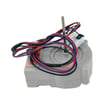
- Noisy or warm fridge section due to airflow issues: refrigerator evaporator fan motor 4681JB1027C
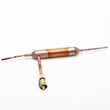
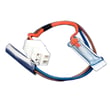
- Frost buildup or temperature swings: refrigerator defrost sensor assembly 6615JB2005H or LG refrigerator defrost heater 5300JK1005D
- Light or door alarm issues: LG refrigerator door switch 6600JB1010A
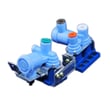
- Ice maker not filling or slow fill: refrigerator ice maker water inlet valve 5221JB2006K
Repairs that change the math (sealed system)
Sealed-system work (compressor, condenser, evaporator) is higher cost and more labor-intensive. The warranty section in the owner's manual is the first place we look because coverage can significantly reduce out-of-pocket cost.
| Repair type | Typical cost impact | Usually worth it when… |
|---|---|---|
| Fan, defrost, switch, valve | Low to moderate | Unit is otherwise cooling well and repair is straightforward |
| Control board | Moderate to high | Clear diagnosis and refrigerator is mid-life |
| Sealed system | High | Warranty coverage applies or refrigerator is relatively new |
Why it matters
A refrigerator repair decision is really a risk and downtime decision. Fixing a single failed component can restore reliable cooling; repeated cooling failures or a high-cost sealed-system repair can lead to more food loss and more service calls.
Last updated: February 2026
How to reset LG lower ice maker?
To reset the ice maker on your LG LFX25950SW, we turn the ice maker off, clear and reinstall the ice bucket correctly, then restore power and allow time for a new harvest cycle. After a reset, normal ice production can take several hours.
Reset steps (safe, reliable method)
- Remove the ice bucket; lift slightly and pull it out slowly.
- Check that no ice is jammed around the ejector area or shutoff arm.
- Reinstall the bucket slightly slanted so it does not contact the ice maker; avoid bumping the shutoff arm.
- If your model has an ice maker power switch, set it to O (OFF) for 30 seconds, then back to I (ON).
- If you unplugged the refrigerator, wait at least 5 minutes before plugging it back in.
- Close the ice room door firmly until you hear it click.
What to expect after the reset
Ice makers do not “reset” like a phone; they restart their normal cycle.
| Time after reset | What you may notice | What it means |
|---|---|---|
| 0 to 30 minutes | No ice yet | Unit is stabilizing temperatures and refilling |
| 1 to 3 hours | First batch may be small or irregular | Normal after restart |
| Up to 24 hours | Full production returns | Normal household conditions |
If it still is not making ice
These checks solve most “lower ice maker not working” complaints:
- Confirm the ice bucket is seated correctly; a misaligned bin can stop harvesting.
- Make sure the ice room door is fully closed; warm air can cause frost and prevent ice production.
- If the water dispenser is slow too, replace the filter and purge air from the line.
- If cubes are clumping or melting, check for door sealing issues and frost buildup.
- If you suspect no water is entering the ice maker, the inlet valve may be the cause.
Helpful resources:
- LFX25950SW owner's manual
- How to purge air from a refrigerator water dispenser video
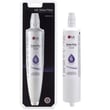
- Related parts: refrigerator ice maker AEQ36756901, refrigerator ice maker water inlet valve 5221JB2006K, refrigerator water filter 5231JA2006A
Why it matters
A proper reset clears minor jams and restores the normal fill and harvest cycle. Correct bucket alignment and a tightly closed ice room door prevent warm-air leaks that lead to frost, melting, and repeated ice maker failures.
Last updated: February 2026
What is the most common problem with the LG refrigerator?
For the LG LFX25950SW refrigerator, the most common customer-reported problem is a cooling issue (fresh food or freezer not staying cold). In many cases, the root cause is airflow or defrost-related (dirty condenser coils, doors not sealing, or frost buildup affecting circulation) rather than a single “one part” failure. See the troubleshooting section in the owner's manual.
Most common symptoms we see
- Refrigerator section warm but freezer colder than normal
- Freezer warming up or ice cream soft
- Compressor seems to run too much
- Frost or ice buildup on the back wall of the freezer
- Clicking, humming, or fan noise changes
- Water leaking or puddles that later lead to icing
Quick checks that fix many “not cooling” complaints
- Confirm doors close fully and nothing is holding them open.
- Clean condenser coils (dust buildup makes the unit run longer and cool worse).
- Check airflow: keep food from blocking vents.
- Look for frost buildup: heavy frost points to a defrost problem.
- Verify temperatures: set refrigerator to about 37°F and freezer to about 0°F; allow 24 hours to stabilize.
Parts that commonly relate to cooling and airflow
If your checks point to a specific failure, these model-matched parts are often involved:
| Symptom | Likely area | Example model-matched part |
|---|---|---|
| Frost buildup, warm temps | Defrost system | Refrigerator defrost sensor assembly 6615JB2005H |
| Frost buildup, no defrost heat | Defrost heater circuit | LG refrigerator defrost heater 5300JK1005D |
| Warm fridge, weak airflow | Evaporator fan | Refrigerator evaporator fan motor 4681JB1027C |
Why it matters
Cooling problems can snowball: longer run times raise energy use, temperature swings spoil food, and frost buildup can block vents and make the refrigerator seem “dead” even when it is running.
Last updated: February 2026
What is the life expectancy of an LG fridge?
Most LG refrigerators, including the LG LFX25950SW, typically last 10 to 15 years with normal household use. Consistent cleaning, good airflow, correct temperatures, and quick attention to cooling or ice maker issues are the biggest factors that help you reach (or beat) that range.
Typical lifespan and what affects it
A refrigerator’s life depends more on operating conditions and maintenance than the badge on the door.
- Heat and airflow: Dusty condenser areas and tight clearances make the compressor work harder.
- Door seal condition: Leaky gaskets cause longer run times and temperature swings.
- Defrost performance: Frost buildup can reduce airflow and cooling.
- Water system health: Clogged filters and low water flow can stress the ice maker system.
- Usage patterns: Frequent door openings and overpacking reduce efficiency.
For model-specific care and cleaning routines, follow the maintenance guidance in the owner's manual.
Maintenance checklist to help your fridge last longer
Use this as a simple routine for an LG bottom-mount refrigerator like the LFX25950SW:
- Keep fresh food at 37°F and freezer at 0°F (adjust as needed for performance).
- Leave space around vents inside the compartments for proper air circulation.
- Clean spills promptly; odors and residue can spread through airflow.
- Replace the water filter on schedule; use the correct refrigerator water filter 5231JA2006A.
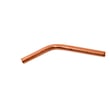
- If you see water under the fridge, inspect and clear the drain path; a damaged or misrouted refrigerator drain tube 5251JA3003D can contribute to leaks.
Quick “repair or replace” guide by age
This helps set expectations when problems start showing up.
| Fridge age | What we typically recommend | Why |
|---|---|---|
| 0 to 5 years | Repair is usually worthwhile | Parts and labor are often lower than replacement cost |
| 6 to 10 years | Repair common failures | Many issues are single-part fixes |
| 11 to 15 years | Compare repair cost vs. condition | Efficiency and wear become bigger factors |
| 16+ years | Plan for replacement | Major sealed-system repairs rarely make sense |
Why it matters
A refrigerator that runs longer than it should (from poor airflow, frost buildup, or a weak door seal) uses more energy and wears key components faster. Staying ahead of airflow, defrost, and water filtration issues is the simplest way to extend service life.
Last updated: February 2026
Why is my LG refrigerator leaking from the bottom?
A bottom leak on our LG LFX25950SW refrigerator is typically caused by a clogged or frozen defrost drain, a leak in the ice maker or dispenser water supply line, or an issue with the drain pan. Use the owner's manual for safety steps and access points.
Quick checks (most common causes)
- Defrost drain clogged or frozen: Meltwater backs up, then runs down and leaks at the bottom.
- Water tubing or fitting leak: Drips behind the unit or under the crisper area.
- Ice maker fill leak: Seep at the valve, fitting, or fill tube during ice maker fill.
- Drain pan problem: Pan shifted, cracked, or overflowing from restricted drainage.
- Door not sealing: Excess condensation can mimic a leak and create puddles.
Step-by-step troubleshooting
- Unplug the refrigerator before inspecting wiring, fans, or internal panels.
- Identify the water: clear water points to defrost or supply; sticky or colored points to a spill.
- Check for ice on the freezer floor or rear panel; ice buildup strongly indicates a drain restriction.
- Inspect water lines and connections from the inlet valve to the cabinet:
- Look for kinks, rub-through, or loose push-in fittings.
- Dry everything, then watch for fresh drips during an ice maker fill.
Parts that commonly relate to bottom leaks
| Leak source you find | Model-matched part to consider |
|---|---|
| Defrost water not routing correctly | Refrigerator drain tube 5251JA3003D |
| Cracked or leaking water line | Refrigerator water tubing MJU62070602 |
| Seeping inlet valve | Refrigerator ice maker water inlet valve 5221JB2006K |
Why it matters
Water at the bottom can damage flooring and can drip into the lower machine compartment. Fixing the source quickly also helps prevent recurring ice buildup and moisture problems.
Last updated: February 2026