Owner’s manual
 View engine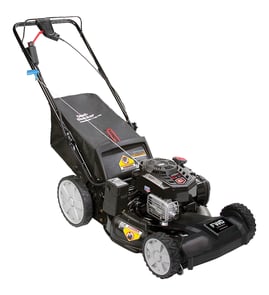


Is it cheaper to repair or replace a lawn mower?
For a Craftsman gas walk-behind mower model 917377170, it’s cheaper to repair when the problem is routine wear (blade, belt, wheel parts, tune-up items). Replacement makes more sense when the engine or drive system has major damage and repair costs approach about half the price of a comparable new mower.
Quick decision guide (repair vs replace)
We use these rules of thumb for walk-behind mowers:
- Repair when it needs normal maintenance (oil, spark plug, air filter) or common wear parts.
- Repair when the mower still starts reliably and the deck and crankshaft are straight.
- Replace when the engine has low compression, heavy smoke, or internal knocking.
- Replace when the self-propel drive has multiple worn components and the mower is already in poor overall condition.
- Replace when the deck is rusted through or cracked (structural damage).
Typical costs and what they usually mean
Actual pricing varies, but this comparison helps set expectations.
| Issue type | Common examples | Usually best choice |
|---|---|---|
| Routine wear | Blade, belt, wheels, fasteners | Repair |
| Seasonal tune-up | Oil change, spark plug, air filter | Repair |
| Drive problems | Belt slipping, wheels not driving | Repair first, then reassess |
| Major mechanical | Bent crankshaft, internal engine failure | Replace |
Model-specific tips that affect the decision
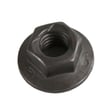
Your 917377170 manual calls out several maintenance items that keep repair costs low over time, including checking oil before each use and replacing the spark plug and air filter yearly. For blade service, it also specifies safe handling steps and a blade bolt torque range of 35 to 40 ft-lbs; following that prevents repeat failures and extra parts costs. Use the owner's manual for the full maintenance schedule and specifications.
Parts that commonly make repair the cheaper option
If the mower is otherwise in good shape, these common parts often restore performance for far less than replacement:
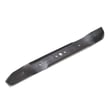
- Lawn mower blade 532406713 (cut quality and vibration issues)
- Belt 532157769 (self-propel slipping or no drive)
- Lawn mower wheel 582976701 (wobble, poor traction)
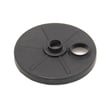
- Lawn mower blade adapter 581547901 (blade fit, vibration)
Why it matters
Repairing a mower that only needs maintenance parts protects the engine and drive system and keeps the mower cutting safely. Replacing a mower with major engine or structural damage avoids sinking money into a machine that will keep needing repairs.
Last updated: February 2026
Should I use 87 or 89 gas for lawn mower?
For the Craftsman 917377170 gas walk-behind lawn mower, use unleaded regular gasoline (87 octane). Higher octane (89) does not improve performance in this mower and is unnecessary unless your fuel source only offers mid-grade; follow the fuel guidance in the owner's manual.
What the mower is designed to use
The product specifications for this model call for unleaded regular fuel.
- Use fresh, clean unleaded gasoline
- Use 87 octane (regular)
- Avoid overfilling; leave room for fuel expansion
- Let a hot engine cool before refueling
- Wipe up spilled gasoline before starting
When 89 octane makes sense (and when it does not)
89 octane is not harmful by itself, but it is not a fix for common small-engine issues.
| Fuel choice | Use it when | What to expect |
|---|---|---|
| 87 octane (regular) | Normal mowing and storage routines | Correct fuel for this mower |
| 89 octane (mid-grade) | Regular is unavailable | No added power or reliability benefit |
Why it matters
Using the correct fuel helps your mower start easier, run consistently, and reduces avoidable fuel-related problems that can feel like carburetor or ignition trouble.
If you are chasing a hard-start or rough-run symptom, focus on basics first (fresh fuel, correct oil level, clean air path) and use the fuel and safety steps in the owner's manual.
Last updated: February 2026
What are the common problems with Craftsman lawn mowers?
Common problems on the Craftsman 917377170 gas walk-behind lawn mower are no-start conditions (stale fuel, dirty air filter, disconnected spark plug wire, bad spark plug), rough running or stalling (fuel or airflow restriction), poor cut quality (worn or loose blade, uneven wheel height), and abnormal vibration (loose or damaged blade or blade adapter). See the owner's manual troubleshooting chart for the fastest model-specific checks.
Most common symptoms and what to check first
- Won’t start: stale fuel, water in fuel, dirty air filter, spark plug wire disconnected, bad spark plug, control bar released
- Starts then dies or runs rough: stale fuel, dirty air filter, carburetor restriction, over-priming (flooding)
- Hard to push or bogs down: cutting too much grass, deck packed with clippings, dirty air filter, walking speed too fast
- Poor cut or uneven cut: worn/bent/loose blade, uneven wheel height settings, low engine speed, debris under deck
- Vibrates abnormally: stop immediately; check for a loose blade bolt, damaged blade, or broken blade adapter
Quick troubleshooting steps (safe and effective)
- Stop the engine and wait for all moving parts to stop.
- Disconnect the spark plug wire before inspecting the blade or underside (the manual calls this out as a required safety step).
- Confirm fresh fuel and correct priming; in cool weather you may need to prime again, but over-priming can flood the engine.
- Check and clean or replace the air filter if it’s dirty.
- Inspect the blade area for looseness or damage; a loose blade or broken adapter is a common no-start and vibration cause.
Parts that commonly solve these problems
| Problem you notice | Common fix | Example part for this model |
|---|---|---|
| Poor cut, ragged grass | Replace a worn blade | Lawn mower blade 532406713 |
| Vibration, blade won’t stay tight | Inspect/replace blade adapter | Lawn mower blade adapter 581547901 |
| Self-propelled won’t move (if equipped) | Inspect/replace drive belt | Belt 532157769 |
Why it matters
Running with a loose blade, broken blade adapter, or abnormal vibration can quickly damage the mower and creates a serious safety risk. Catching fuel, airflow, and blade issues early also improves starting reliability and cut quality.
Last updated: February 2026
What year is Craftsman Model 917377170?
Craftsman model 917377170 is a model number, not a date code, so it does not directly tell you the year of manufacture. To identify the year, we use the mower’s product identification label information and match it to the model’s documentation in the owner's manual.
Where to find the date information
Look for the product identification label on the mower (commonly on the rear of the deck, near the handle mounts, or on the frame). Record these items:
- Model number: 917377170
- Serial number (or product number)
- Any date code printed on the label
- Engine model and type (helpful if the label is worn)
How to determine the year (practical method)
For Craftsman walk-behind mowers, the most reliable way is to use the identification label details and confirm the configuration against the illustrated parts information.
- Compare your mower’s handle, deck, and drive system to the diagrams and parts lists in the owner's manual
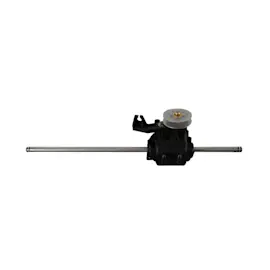
- If your mower is self-propelled, confirm drive components such as the belt and gearcase match what’s shown
- Use the serial number to narrow down the production run when ordering parts
Quick cross-check using common wear parts
If you are already replacing parts, matching the part callouts helps confirm you are working from the correct version of the model.
| What you’re checking | What it helps confirm | Example part for this model |
|---|---|---|
| Blade size and mounting style | Deck and blade system version | Lawn mower blade 532406713 |
| Self-propel drive behavior | Drive system version | Belt 532157769 |
| Wheel and height adjust setup | Chassis configuration | Lawn mower wheel 582976701 |
Why it matters
The correct year and production run affect parts fitment (blade adapter style, drive belt routing, wheel hardware). Confirming the exact configuration prevents ordering a blade, belt, or gear part that looks right but mounts differently.
Last updated: February 2026