Installation guide
 Owner’s manual
 Error Codes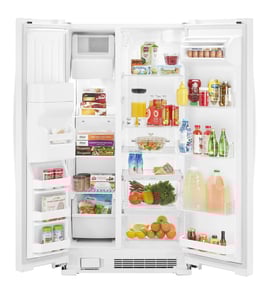

Are KitchenAid appliances high end?
Yes. KitchenAid appliances are generally positioned as upper-mid-range to high-end, and the KitchenAid built-in refrigerator model KSSC48QMS02 fits that premium tier with built-in styling, strong feature sets, and long-term service support outlined in the KSSC48QMS02 owner's manual.
KitchenAid typically sits above entry-level brands because you are paying for design, materials, and performance features, not just basic cooling or cooking.
Common “high-end” signals include:
- Built-in and integrated-style designs (like many KitchenAid built-in refrigerators)
- Heavier-duty hinges, door construction, and interior trim
- More precise temperature management and airflow features
- Better fit-and-finish (handles, panels, lighting, shelving)
- Longer expected service life when maintained correctly
KitchenAid is usually a step up from standard freestanding models, but below ultra-luxury lines.
| Tier | Typical examples | What you usually get |
|---|---|---|
| Standard | Basic top-freezer, basic side-by-side | Fewer features, simpler controls |
| Premium (KitchenAid) | Built-in side-by-side like KSSC48QMS02 | Built-in look, upgraded components, stronger feature set |
| Ultra-luxury | Designer brands and fully custom systems | Highest customization, highest price point |
A “high-end” refrigerator is worth it when you want built-in aesthetics, consistent temperatures, and parts availability for repairs over time. For example, common service items like switches and dispenser components are replaceable, such as the refrigerator light switch W11384469 when interior lights stop responding to the door.
We recommend using your documentation to confirm features and maintenance expectations for your exact unit.
- Confirm your exact model number is KSSC48QMS02 (from the rating plate)
- Review care, use, and feature details in the KSSC48QMS02 owner's manual
- Use OEM parts when possible for fit and performance
- Keep condenser areas clean and airflow unobstructed
- Address small issues early (door switch, dispenser light, fan noise) to prevent bigger problems
Last updated: February 2026
Does KitchenAid make a 33 inch wide refrigerator?
Yes. KitchenAid makes 33-inch wide refrigerators, but your KitchenAid KSSC48QMS02 is a built-in side-by-side model in a different size class than typical 33-inch freestanding units. For exact built-in cutout and panel requirements, use the KSSC48QMS02 installation guide.
Most 33-inch KitchenAid refrigerators are freestanding models designed for standard kitchen openings. Built-in models like the KSSC48QMS02 use different sizing rules (cabinet cutout, side trim, door panels, grille, and leveling) that do not match freestanding 33-inch specs.
Common 33-inch configurations you will see:
- French door refrigerators
- Bottom-freezer refrigerators
- Standard-depth or counter-depth freestanding cabinets
- Interior water dispenser or external dispenser (varies by model)
Use these checks to avoid clearance and installation problems:
- Measure the opening width at top, middle, and bottom
- Confirm opening depth and door swing clearance
- Verify hinge and handle clearance to walls or cabinets
- Check if you need custom panels or a filler panel
- Confirm the refrigerator can be leveled so all leveling legs support the weight
| Feature | 33-inch freestanding KitchenAid | KitchenAid KSSC48QMS02 built-in |
|---|---|---|
| Intended opening | Standard cabinet space | Built-in enclosure with trim/panels |
| Installation focus | Clearance and leveling | Cutout specs, panels, grille, leveling legs |
| Sizing reference | Overall cabinet width | Design specifications and cutout dimensions |
A 33-inch freestanding refrigerator and a built-in refrigerator like the KSSC48QMS02 are not interchangeable by “width” alone. Built-in installs depend on the correct cutout dimensions, panel setup, and leveling so the cabinet is supported properly and doors align.
Last updated: February 2026
How much freezer space is in a side-by-side?
A side-by-side refrigerator freezer typically holds about 7 to 11 cubic feet. For your KitchenAid KSSC48QMS02 built-in side-by-side, use the capacity listed in the product specifications and confirm storage layout details in the KSSC48QMS02 user manual.
Most side-by-side designs split the cabinet vertically, so the freezer is tall and narrower than a top-freezer or chest freezer.
- Common freezer capacity: 7 to 11 cu. ft.
- Common total capacity: 22 to 31 cu. ft.
- Best for: organized frozen foods on shelves and door bins
- Tradeoff: less width for large pizza boxes and wide trays
Even with the same cubic-foot rating, usable freezer space changes based on shelves, baskets, and airflow.
- Leave space around packages so cold air can circulate
- Keep vents clear so temperatures stay even
- Use the lower basket for bags that slide off shelves
- Group similar items to reduce door-open time
- Avoid overpacking; the door must close tightly
| Item type | Fit in side-by-side freezer | Storage tip |
|---|---|---|
| Bagged vegetables, frozen fruit | Excellent | Use the basket for loose bags |
| Boxed meals, ice cream | Very good | Keep on shelves for visibility |
| Meat packages | Very good | Store together to stay colder longer |
| Large pizza boxes, sheet pans | Fair | Measure shelf width before buying |
Freezer “space” is a mix of capacity and accessibility. Checking the KSSC48QMS02 shelf and basket configuration in the manual helps you plan for bulky items and keep airflow open for consistent freezing.
Last updated: February 2026
What is the average lifespan of a KitchenAid refrigerator?
KitchenAid refrigerators typically last 12 to 15 years on average, and many run 10 to 17 years with normal use and good maintenance. For your KitchenAid built-in refrigerator model KSSC48QMS02, keeping airflow clear, temperatures correct, and seals tight helps you reach the full service life.
Most refrigerators age out due to cooling-system wear, airflow problems, or door-seal leaks rather than the cabinet itself.
- Average range: 12 to 15 years
- Common overall range: 10 to 17 years
- Built-in models: often reach the higher end when kept clean and properly ventilated
- High-use features (ice maker, dispenser) can shorten life if not maintained
Your warranty coverage can help you decide whether a repair makes sense as the unit ages. Details and terms are listed in the KSSC48QMS02 owner’s manual.
| Coverage area | What it generally applies to | Time period (from purchase date) |
|---|---|---|
| Full appliance limited warranty | Defects in materials/workmanship (parts and labor) | 2 years |
| Sealed refrigeration system (parts and labor) | Compressor, evaporator, condenser, dryer, connecting tubing | Years 3 to 6 |
| Sealed refrigeration system (parts only) | Compressor, evaporator, condenser, dryer, connecting tubing | Years 7 to 12 |
These steps reduce compressor run time, prevent warm spots, and protect food temperatures.
- Set temps to about 37°F fresh food and 0°F freezer
- Keep vents inside the compartments unblocked
- Clean condenser area regularly (especially on built-in units)
- Keep door gaskets clean and sealing evenly
- Replace failed door switches promptly (lights staying on add heat)
A refrigerator that is running hot, frosting up, or leaking air works harder; that extra run time accelerates wear on the sealed system and fans. Preventive care is usually the difference between a 10-year fridge and a 15-year fridge.
Last updated: February 2026
What is the most common problem with a KitchenAid refrigerator?
For the KitchenAid KSSC48QMS02 built-in side-by-side refrigerator, the most common customer-reported issues are ice maker and dispenser problems (no ice, slow ice, jams) and cooling complaints (warm fridge, frost buildup), often tied to airflow, water supply, or door sealing.
- Ice maker not making ice or slow production: restricted water flow, air in the line, or a filter or supply issue
- Ice dispenser jams or won’t dispense: ice clumping, worn dispenser drive parts, or a coupler/shaft issue
- Refrigerator section warm but freezer cold: weak evaporator airflow or an air baffle problem
- Frost buildup or temperature swings: defrost system trouble or doors not sealing consistently
- Water leaks or puddles: defrost drain restriction or water line connection issues
- Confirm the doors close fully and the gaskets seal all the way around.
- Make sure vents inside the fresh food section are not blocked by food packages.
- If water or ice is slow, purge air and confirm steady household water pressure.
- If the dispenser area is dark or hard to use, check the dispenser light.
- Review model-specific operating and care steps in the KSSC48QMS02 owner’s manual.
| Symptom | What it usually means | What to check next |
|---|---|---|
| No ice, water still dispenses | Ice maker issue or frozen fill path | Ice mold, fill tube area, freezer temp |
| Ice dispenses slowly or jams | Clumped ice or worn drive parts | Bucket condition, coupler/shaft wear |
| Warm refrigerator, freezer OK | Airflow problem | Evaporator fan, air baffle |
| Lights stay off or act odd | Door switch issue | Door switch function at the frame |
- If the dispenser light is out, the dispenser bulb WP22002263 is a common replacement.
- If airflow is weak or noisy, inspect the refrigerator evaporator fan blade WP2169142 for damage or rubbing.
- If the interior light behavior suggests a switch problem, check the refrigerator light switch W11384469.
Ice and cooling problems usually get worse over time; addressing airflow restrictions, door sealing, and water supply early helps protect food temperatures and reduces strain on the sealed refrigeration system.
Last updated: February 2026