 Error Codes



How to adjust the amount of water in an ice maker?
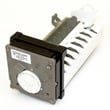
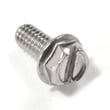
On the Maytag UKI1000AXX ice maker kit, water fill is typically adjusted at the ice maker module using the small fill-adjustment screw. Turn the screw clockwise in small increments to reduce water fill; turn it counterclockwise to increase water fill.
Before you adjust anything
- Unplug the refrigerator or switch off power at the breaker.
- Locate the ice maker head (the front cover usually snaps off).
- Find the fill-adjustment screw (often labeled “+ / -” or “increase / decrease”).
- Make only small changes; a little turn makes a noticeable difference.
- Restore power and let the ice maker run several cycles before judging results.
How much to turn the screw
Most ice makers respond well to small, repeatable adjustments.
| Adjustment | Direction | Typical change | When to use it |
|---|---|---|---|
| Decrease fill | Clockwise | 1/4 turn | Cubes are fused together, hollow “shell” cubes, water sloshes in mold |
| Increase fill | Counterclockwise | 1/4 turn | Small cubes, incomplete cubes, cubes look thin |
| Re-check | After 2 to 3 harvests | N/A | Confirms the change without overcorrecting |
If adjusting does not fix the problem
Water fill issues are often caused by water supply restrictions or a weak inlet valve, not the adjustment screw.
- Check the household shutoff valve is fully open.
- Inspect the fill tube for ice blockage; thaw carefully with warm air.
- Replace a sticking or weak inlet valve if water flow is inconsistent: refrigerator water valve WP61005273.
- If the ice maker is not cycling correctly, the control module can be the root cause: ice module WPW10190972.
- If cubes are not releasing cleanly, inspect the mold and heater assembly: refrigerator mold and heater D7824706Q.
Why it matters
Correct water fill prevents hollow cubes, clumping, overflow into the ice bin, and slow ice production. A properly set fill level also reduces strain on the inlet valve and helps the ice maker harvest consistently.
Last updated: January 2026
Why is water not going into my refrigerator ice maker?
For the Maytag UKI1000AXX ice maker kit, no-water filling is usually caused by a shutoff water supply, a kinked or frozen fill tube, or a failed inlet valve that is not opening to send water to the ice maker. Start with the supply and tubing checks, then test the valve and ice maker components.
Quick checks we recommend first
- Confirm the household shutoff valve is fully open.
- Check the water line for kinks, pinches, or a crushed section behind the refrigerator.
- Look for a frozen fill tube at the back of the ice maker (ice blockage stops filling).
- Make sure the freezer is cold enough; most ice makers need about 0 F to 10 F to cycle reliably.
- If you recently moved the refrigerator, recheck the line connection for leaks or restrictions.
Parts that commonly cause “no water to ice maker”
If the supply is good and the fill tube is not frozen, the next most common failure is the inlet valve.
| Symptom | Most likely cause | What to do next |
|---|---|---|
| No water sound at all during fill | Inlet valve not opening | Test/replace refrigerator water valve WP61005273 |
| Fill tube keeps freezing | Seeping inlet valve or low airflow | Replace valve; clear ice; verify freezer temp |
| Ice maker cycles but stays dry | Valve, fill cup, or module issue | Inspect refrigerator ice maker fill cup WP628356 and module |
| Intermittent fill | Weak valve coil or wiring issue | Check connections; test valve coil resistance |
How to troubleshoot safely (basic DIY)
- Unplug the refrigerator before inspecting wiring or removing the ice maker.
- Thaw a frozen fill tube with warm air (hair dryer on low) and clear any ice blockage.
- If the tube refreezes within a day or two, replace the inlet valve because it often seeps and refreezes.
- If you have a multimeter, check the valve coil for continuity and inspect harness connections for corrosion.
For electrical testing help, use how to use a multimeter to test electrical parts video.
Why it matters
When the ice maker cannot fill, it will stop producing ice and can also lead to repeated cycling, small cubes, or a frozen fill tube. Fixing the water supply restriction or replacing the inlet valve restores normal fill volume and protects the ice maker module.
Last updated: January 2026
How often should ice machine water filters be replaced?
For a Maytag UKI1000AXX ice maker kit, we replace the ice machine water filter about every 6 months in most homes. Replace it sooner if ice production slows, cubes get smaller or hollow, or you notice taste or odor changes.
Typical replacement schedule
Most ice maker and refrigerator water filtration setups follow one of these intervals:
- Every 6 months (most common)
- Around 2,000 gallons of water filtered (if your system tracks usage)
- Immediately after long periods of non-use (vacation) if water tastes stale
- Sooner with hard water, heavy ice use, or noticeable sediment
Signs your filter needs changing
A filter can clog gradually, which reduces water flow to the ice maker. Watch for:
- Smaller cubes or hollow cubes
- Slow ice production or no ice
- Cloudy ice or black specks (carbon fines) in the first batches after a change
- Off taste or odor in ice
- Water leaks at the filter head or connections
Quick troubleshooting if ice is slow after a filter change
If ice production drops right after installing a new filter, these checks usually help:
- Flush several batches of ice (or run water through the system if applicable)
- Confirm the filter is fully seated and locked
- Check the supply shutoff valve is fully open
- Inspect the inlet valve and tubing for restrictions; the refrigerator water valve WP61005273 is a common flow-control part in many Maytag and Whirlpool-built systems
Filter timing at a glance
| Household situation | Replace about every |
|---|---|
| Average use, normal water quality | 6 months |
| Heavy ice use (large family, entertaining) | 3 to 6 months |
| Hard water or sediment | 2 to 4 months |
| Seasonal/vacation home | At start of season |
Why it matters
A fresh filter helps maintain steady water flow to the ice maker, supports normal cube size, and reduces taste and odor issues. It also helps protect water system components from sediment buildup.
Last updated: January 2026
Where is the water filter for the ice maker located?
On the Maytag UKI1000AXX ice maker kit, the water filter is typically not built into the ice maker itself. In most installations, filtration is either handled by the refrigerator’s main water filter (if equipped) or by an inline filter installed in the water supply line behind the refrigerator.
Most common filter locations to check
- Inside the fresh food compartment (often upper right area) behind a small cover
- In the base grille or kick plate at the bottom front of the refrigerator
- Inline on the 1/4-inch water line behind the refrigerator (a small cylinder or cartridge housing)
- Under-sink inline filter feeding the refrigerator water line
Quick way to identify what you have
Use this checklist before buying a replacement:
- If you see a twist-in cartridge inside the refrigerator, that is the filter
- If there is no cartridge inside, pull the refrigerator forward and look for an inline filter on the tubing
- If the ice maker fills slowly or makes hollow cubes, suspect a restricted filter or water valve
- If you recently installed the kit, confirm the water line routing and connections at the valve
Parts that affect water flow to the ice maker
If there is no separate filter, low ice production is often caused by the inlet valve or a restriction in the line.
| Symptom | Common cause | What to check next |
|---|---|---|
| No water entering ice maker | Inlet valve not opening | Test/inspect refrigerator water valve WP61005273 |
| Slow fill, small cubes | Restricted filter or low pressure | Replace filter (if present), verify shutoff valve fully open |
| Leaks at connections | Loose tubing or clamp | Inspect fittings, clamp, and tubing routing |
Why it matters
A clogged or incorrectly located filter reduces water flow; that leads to slow ice production, small cubes, and can make the ice maker cycle inconsistently. Verifying the filter location first prevents ordering the wrong part.
Last updated: January 2026





