 Owner’s manual
 Error Codes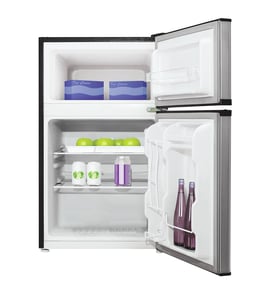

Can you still get parts for Kenmore refrigerators?
Yes. We still help customers get replacement parts for Kenmore refrigerators, including the Kenmore 56461042100 compact refrigerator. The key is using the complete model number and the part number or part description when you search and order parts through Sears PartsDirect.
How to make sure you get the right part
Your Kenmore refrigerator’s model and serial label is typically on a small plate or label on the back of the cabinet. When ordering, we use the same identifiers the manual recommends.
- Use the full model number: 56461042100
- Match the part number when you have it (best match)
- If you do not have a part number, use the part description (for example: door gasket, thermostat, shelf)
- Confirm the part fits your exact model before ordering
- Keep your model and serial information recorded for future repairs
What parts are commonly replaced on compact refrigerators
Compact refrigerators like the Kenmore 56461042100 most often need small maintenance or wear items rather than major sealed-system components.
| Common need | What you may notice | Typical fix |
|---|---|---|
| Door sealing issue | Warm temps, moisture, frost | Inspect and correct the door seal, clean the gasket area |
| Temperature control issue | Too warm or too cold | Adjust control; replace control if it will not regulate |
| Noise or vibration | Rattling, buzzing | Level cabinet; keep it off the wall; clean condenser area |
| Odors | Persistent smell | Clean both sections; check covered containers |
Why it matters
Using the exact model number and a matching part number prevents wrong-part returns and gets your Kenmore refrigerator cooling properly again faster. It also helps when you are troubleshooting issues like noise, odors, or temperature swings.
Helpful reference
For model labeling, ordering details, and operating tips (including airflow clearance and temperature control guidance), use the 56461042100 owner's manual.
Last updated: February 2026
What are the most common problems with Kenmore refrigerators?
The most common problems we see with Kenmore refrigerators (including compact models like 56461042100) are warm temperatures from poor airflow, noisy operation, frost buildup, and water leaks. Many fixes start with cleaning the condenser coils, leveling the cabinet, and confirming the temperature control is set correctly (see the 56461042100 owner's manual).
Most common symptoms and what usually causes them
- Not cooling or too warm: dirty condenser coils, blocked airflow, frequent door openings, or the temperature control set too warm
- Noisy operation: cabinet not level, refrigerator touching the wall, dusty coils, or items inside rattling
- Frost buildup: door not sealing tightly, door opened often, or frost allowed to build up past about 1/4 inch
- Odd tastes or odors: ice kept too long, spills, or food odors lingering
- Stops running and light is off: power issue at the outlet, blown fuse, or tripped breaker
Quick checks we recommend first (fast DIY)
- Give it breathing room: allow about 3 inches above and about 1 inch behind between the wall and the condenser area.
- Clean the condenser coils (typically on the back); clean at least every 3 months.
- Level the refrigerator front-to-back and side-to-side; keep it from touching the wall.
- Adjust the cold control and wait 24 hours before changing it again.
- Reduce door openings and make sure the door shuts fully each time.
Symptom-to-fix guide
| Symptom | Most likely DIY fix | Why it helps |
|---|---|---|
| Refrigerator too warm | Clean coils; adjust control; improve airflow clearance | Helps the system shed heat and circulate cold air |
| Noisy | Level cabinet; stop wall contact; remove rattling items | Prevents vibration and resonance |
| Frost buildup | Improve door seal; reduce openings; defrost if needed | Prevents airflow restriction and temperature swings |
| Odors | Clean interior; remove old food; manage spills | Reduces odor sources and cross-contamination |
Why it matters
Most “major” refrigerator complaints trace back to airflow and heat removal. When coils are dusty or the cabinet is unlevel, the compressor runs longer, temperatures drift warmer, and noise increases. Keeping clearance, coils, and door sealing in good shape prevents repeat problems.
Parts and repair help
We list replacement parts by model when available. If you are shopping by model number or comparing options, search by 56461042100 on Sears PartsDirect.
Last updated: February 2026
Can I replace fridge parts myself?
Yes. On the Kenmore 56461042100 compact refrigerator, you can safely handle many basic repairs yourself, especially cleaning and simple part swaps that do not involve the sealed refrigeration system or complex wiring. Always unplug the refrigerator before servicing anything electrical.
Good DIY repairs vs. repairs to leave alone
Many compact refrigerator fixes are straightforward, but sealed-system work (refrigerant, compressor, tubing) is not a DIY repair.
DIY-friendly tasks (typical):
- Clean the interior and address odors (spills, uncovered food)
- Clean the evaporation tray (remove, clean, reinstall securely)
- Replace the light bulb (unplug first)
- Basic checks when it is too warm (power, outlet, breaker)
- Door seal checks and simple adjustments (if your model uses a gasket)
Leave these to a professional:
- Sealed refrigeration system repairs (compressor, refrigerant, connecting tubing)
- Electrical diagnosis beyond basic power checks
- Anything requiring specialized tools or refrigerant handling
DIY safety checklist (use this every time)
- Unplug the refrigerator before changing the light bulb or doing any service involving the electrical system.
- Keep the door closed during power loss to hold temperature.
- Reinstall the evaporation tray securely; a loose tray can spill defrost water.
- Use the complete model number (56461042100) when identifying parts and procedures.
- Record your model and serial number from the label on the back for future reference.
Quick troubleshooting table
| Symptom | What we check first | What it often points to |
|---|---|---|
| Too warm | Outlet power, plug fully seated, breaker/fuse | Power supply issue or settings/airflow problem |
| Not running and light off | Power source, outlet, breaker/fuse | No power to refrigerator |
| Water under/behind unit | Evaporation tray seated and clean | Tray loose, dirty, or not evaporating efficiently |
| Odor inside | Covered containers, spills, cleaning | Food odors, spills, airflow carrying odors |
Why it matters
DIY repairs save time and money, but knowing the boundary is key. The manual for this model includes specific safety steps (like unplugging before electrical service) and maintenance items (like cleaning the evaporation tray) that prevent leaks, odors, and cooling complaints.
For model-specific procedures and the parts list, use the 56461042100 owner's manual. For broader part searching by model number, use Sears PartsDirect.
Last updated: February 2026





