Installation guide
 Owner’s manual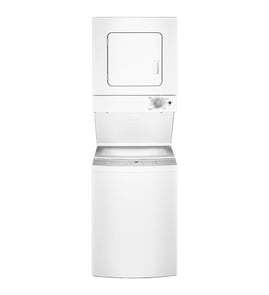


What's the most common Whirlpool error?
On Whirlpool laundry products, the most common “error” customers run into is a drain-related fault (water left in the tub) or a door or lid not fully closed or latched. On the Whirlpool WGT4027EW1 stacked laundry center, start by checking for simple obstructions, oversudsing from too much detergent, and basic power or door-closure issues in the troubleshooting steps in the WGT4027EW1 owner's manual.
What we see most often (and what to check first)
- Drain problems: water remains in the washer, slow drain, or the cycle stops before spin.
- Door or lid not closed: the unit will not start or will stop mid-cycle.
- Oversudsing: too much detergent can prevent proper operation and leave clothes wetter than expected.
- Power supply issues: tripped breaker or blown fuse can cause no-start symptoms (especially on the dryer side).
- Load and cycle mismatch: wrong cycle, too large a load, or unbalanced load can trigger poor performance that feels like an “error.”
Quick troubleshooting steps for WGT4027EW1
- Reset the control: unplug for 1 minute, then restore power.
- Confirm closures: close the washer lid and dryer door firmly.
- Reduce detergent: measure detergent carefully; excess suds can keep the washer from operating correctly.
- Check draining basics: look for kinks in the drain hose and clear obvious clogs.
- Match cycle to load: for heavier loads or dry spots, use the appropriate cycle options (for example, Deep Water Wash when needed).
Common “error-like” symptoms and likely causes
| Symptom | Most common cause | First action |
|---|---|---|
| Washer stops, water left in tub | Drain restriction or oversudsing | Reduce detergent; check drain hose for kinks/clogs |
| Dryer will not run | Door not closed, start not pressed, or power issue | Close door; press and hold start; check breaker/fuses |
| Clothes still damp | Oversudsing, load size, airflow or cycle selection | Use correct cycle; reduce detergent; avoid overloading |
Why it matters
Drain and door-closure issues are the fastest to fix and the most likely to prevent a cycle from completing. Addressing those first helps avoid unnecessary part replacement and gets your washer and dryer back to normal operation quickly.
For model-specific code displays and what each code means, use our Whirlpool wet and ywet error codes reference.
Last updated: February 2026
Do Whirlpool washers have a filter that needs to be cleaned?
Yes, Whirlpool washers can have a filter, but on the Whirlpool WGT4027EW1 stacked laundry center it is typically not a routine, user-cleaned “lint filter” like a dryer. Instead, the most common maintenance is preventing drain restrictions by checking pockets and addressing small items that can get into the pump area; follow the cleaning and care guidance in the owner's manual.
What “filter” means on this model
On laundry centers like the WGT4027EW1, customers usually mean one of these:
- Drain pump trap or pump inlet area: where coins, socks, and debris can restrict draining
- Inlet valve screens: small screens where the fill hoses connect to the washer
- Dryer lint screen: this is on the dryer side and should be cleaned every load (separate from the washer)
The manual specifically calls out that small items can get caught in the pump or between the basket and tub, which can slow draining.
When you should check for a clog
If you see any of these symptoms, focus on drain and pump restriction checks:
- Washer will not drain or spins poorly
- Clothes come out wetter than normal
- You hear unusual humming during drain
- The cycle seems to pause longer than normal during drain
- You find small items missing from loads (baby socks, underwear, etc.)
For step-by-step troubleshooting paths, we recommend our laundry center washer won't drain guide.
Quick maintenance steps we recommend
Use these safe, practical habits to reduce pump clogs and “filter” problems:
- Empty all pockets before washing (coins and hairpins are common culprits)
- Wash small items in a mesh garment bag
- Avoid overloading; tightly packed loads can worsen drain performance
- Use the correct amount of HE detergent to prevent excess suds
- If fill is slow, turn off water and check the inlet hose screens for sediment
Filter locations: common washer designs (comparison)
| Washer type | Most common “filter” location | How often to check |
|---|---|---|
| Top-load (like many laundry centers) | No user-access pump filter; debris may collect at pump inlet | When draining problems happen |
| Front-load | Drain pump filter behind lower front access panel | About every 3 to 6 months |
| Any washer | Inlet valve screens at hose connections | When fill is slow |
Why it matters
A restricted drain path can leave loads wet, cause longer cycle times, and increase wear on drive components during spin. Keeping debris out of the pump area is the simplest way to prevent “washer not draining” complaints.
Last updated: February 2026
Are Whirlpool washer parts interchangeable?
Whirlpool washer parts are only interchangeable when the replacement part is specified to fit your exact washer design; for the Whirlpool WGT4027EW1 stacked laundry center, we recommend using factory-specified parts matched to your model to ensure proper fit, safe operation, and correct cycle performance.
What “interchangeable” really means for WGT4027EW1
Parts can look similar across Whirlpool-built washers, but small differences (mounting points, wiring connectors, shaft sizes, and timer contacts) can prevent a correct repair.
Common examples where exact fit matters:
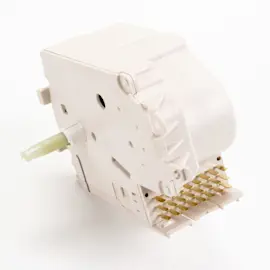
- Electrical parts (timers, switches, wiring harnesses)
- Drive system parts (motor couplings, clutches, drive blocks)
- Water system parts (valves, inlet screens, hoses)
- Suspension and tub sealing parts (springs, gaskets)
How we match the right part
Use your model number WGT4027EW1 and compare the part’s description to the symptom you are fixing. The diagrams and part lists in the owner's manual also help you confirm what the component does and where it installs.
A quick fit-check list:
- Match the model number on the parts list to WGT4027EW1
- Confirm the part type (washer vs. dryer section of the laundry center)
- Compare wire terminals, plug style, and mounting holes
- Replace related wear items when recommended (for example, drive components)
Examples of model-matched parts on this page
These are washer and dryer components commonly replaced on laundry centers like this one:
| Symptom | Likely system | Example part on this page |
|---|---|---|
| Washer won’t agitate or spin | Drive train | Coupling 285753A |
| Washer spins poorly or makes friction noise | Clutch/drive | Clutch 285785 |
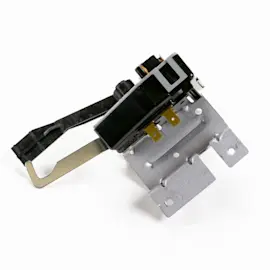
| Dryer won’t start when door closes | Door switch circuit | Dryer door switch WP3406107 |
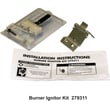
| Dryer tumbles but has ignition issues (gas models) | Burner/ignition | Igniter 279311 |
Why it matters
Using the correct, model-matched part protects the washer’s mechanical alignment and electrical timing. That helps prevent repeat failures, leaks, excessive vibration, and cycle problems that can happen when a “close enough” part does not seat or connect correctly.
Helpful related guidance
If you are troubleshooting by symptom or code, use Whirlpool wet and ywet error codes to narrow the failure to a specific circuit or component before ordering.
Last updated: February 2026
What is the most common problem with Whirlpool washers?
For Whirlpool washers, the most common service issues are not draining or not spinning, excess vibration/banging, and fill or rinse problems. On your Whirlpool WGT4027EW1 stacked laundry center, the most frequent causes are load balance, oversudsing, and hose or drain restrictions; see the troubleshooting charts in the WGT4027EW1 owner's manual.
Most common problems (and what usually causes them)
- Won’t drain or won’t spin: unbalanced load, too many suds, or small items restricting the drain path.
- Banging, walking, or shaking: unit not level, feet not firmly on the floor, or a single bulky item throwing the basket off balance.
- Clothes too wet at end: low spin speed cycle selection or the load redistributing poorly during spin.
- Wrong wash/rinse temperature or poor rinse: hot and cold hoses reversed, kinked hoses, or clogged inlet valve screens.
- Washer pauses or seems to “hesitate”: normal cycle pauses and a brief pre-spin to sense balance.
Quick checks that fix the majority of calls
- Reload correctly: load dry items loosely and evenly around the basket wall; avoid tightly packing.
- Reduce detergent: measure for load size and soil level; excess suds can interrupt draining and spinning.
- Verify water supply: both faucets fully ON; hoses unkinked; screens clear.
- Level the laundry center: all feet firmly on the floor and locked; jam nuts tight (steps are in the installation guide).
- Use Spin when needed: after rebalancing, a Spin selection removes extra water.
Symptom-to-next-step guide
| Symptom | Most likely cause | Best next step |
|---|---|---|
| Won’t drain / won’t spin | Suds, imbalance, restriction | Rebalance, reduce detergent, check drain path for small items |
| Banging loudly | Not level or uneven load | Level feet, redistribute load |
| Wrong temp / poor rinse | Hose/supply issue | Confirm hot/cold routing, clear inlet screens |
| Clothes still wet | Low spin or imbalance | Choose higher spin when appropriate, run Spin after rebalancing |
Why it matters
On the WGT4027EW1, many “major” washer complaints trace back to setup and use (leveling, load size, detergent, hose routing). Correcting those first restores normal draining and spinning and helps avoid unnecessary part replacement.
Last updated: February 2026