


Can a clogged drain cause an FTD error?
Yes. On the GE CDT800P2N2S1 dishwasher, an FTD (fail to drain) error commonly happens when water cannot leave the tub fast enough, and a clogged filter area, drain path, or disposal connection is a top cause.
What to check first (fast, no-parts steps)
- Cancel the cycle and let the unit try to drain; listen for the drain pump running.
- Remove standing water (if needed) so you can inspect the sump area safely.
- Clean the filter and sump area; clear food, labels, glass, and debris.
- Check the sink/disposal inlet where the dishwasher drain hose connects; clear the port.
- Inspect the drain hose for kinks, crushing, or a sag that traps water.
- Verify the high loop or air gap is installed correctly to prevent backflow.
Parts that commonly cause FTD when blocked or failing
If the drain path is clear but the dishwasher still throws FTD, these model-matched parts are the next most common suspects:
| Symptom you notice | Most likely area | Model-matched part to consider |
|---|---|---|
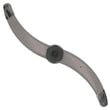
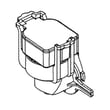
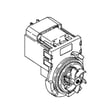
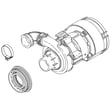
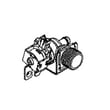
| Hums but drains slowly or not at all | Drain pump/impeller jam or weak pump | Dishwasher drain pump WD19X25461 |
| Drains sometimes, then stops mid-cycle | Drain hose restriction or internal collapse | Dishwasher drain hose WD24X10062 |
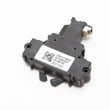
| Won’t fill correctly, then later can’t drain properly | Water level/pressure sensing issue | GE dishwasher pressure sensor WD21X25468 |
Why it matters
FTD is more than an inconvenience; leaving water in the tub can cause poor cleaning, odors, and repeated cycle interruptions. Clearing the drain path first prevents unnecessary part replacement and helps confirm whether the drain pump is actually failing.
Helpful reference
For code meaning and related drain/fill checks, use our GE electronic dishwasher error codes guide.
Last updated: February 2026
Can I plug a dishwasher into a regular outlet?
Yes, a GE dishwasher like model CDT800P2N2S1 can plug into a standard 120-volt outlet, but it should be on a dedicated circuit (not shared with other appliances) and the outlet must be properly grounded. This prevents nuisance tripping and protects the dishwasher’s controls and motor.
What “regular outlet” means for a dishwasher
Most built-in dishwashers in U.S. kitchens are designed for 120 VAC, 60 Hz power. The key is not the outlet style, it’s the circuit capacity and grounding.
Use this checklist:
- Use a grounded 3-prong receptacle (no adapters).
- Put the dishwasher on a dedicated 15-amp or 20-amp circuit.
- Match wire size to the breaker (typical: 14 AWG for 15A, 12 AWG for 20A).
- Avoid extension cords or power strips.
- Keep the outlet accessible (commonly in the adjacent sink base cabinet).
Dedicated circuit: what to do and what to avoid
A dedicated circuit means the dishwasher is the only major load on that breaker.
| Setup | Recommended? | Why |
|---|---|---|
| Dishwasher on its own 15A or 20A breaker | Yes | Stable power for wash motor and heater |
| Dishwasher sharing with disposal (if allowed locally) | Sometimes | Can overload if both run together |
| Dishwasher sharing with microwave/refrigerator/countertop outlets | No | High trip risk and voltage drop |
Why it matters
Dishwashers draw more power during heating and motor operation. If the circuit is shared, voltage drop and breaker trips can cause mid-cycle stops, poor drying, or control glitches.
If your dishwasher has power but will not run
If the outlet tests good but the unit will not start, we use this quick path:
- Confirm the door closes and latches firmly (a failed latch can prevent starting).
- Check for a stuck control lock or demo mode.
- Look for a stored fault code on the display.
Helpful next steps:
Last updated: February 2026
What's the difference between Sani Rinse and High Temp wash?
On the GE CDT800P2N2S1 dishwasher, High Temp Wash boosts wash water temperature to help remove tough, greasy soil, while Sani Rinse is a final, hotter rinse designed to reduce bacteria on dishes. Use High Temp for cleaning performance; use Sani Rinse when sanitation is the priority.
How each option works
- High Temp Wash: Raises the main wash temperature to improve detergent performance and break down stuck-on food.
- Sani Rinse: Extends and heats the final rinse to achieve a sanitizing effect (typically hotter and longer than a normal rinse).
- Either option can increase cycle time and energy use compared to a standard cycle.
When to use which (quick guide)
- Choose High Temp Wash for:
- Baked-on or greasy cookware
- Heavily soiled loads
- Better overall cleaning when your incoming hot water is marginal
- Choose Sani Rinse for:
- Baby bottles and cutting boards (dishwasher-safe items)
- Illness season or extra hygiene needs
- Loads where you want a hotter final rinse for sanitation
- Skip both when:
- Running lightly soiled dishes to save time and energy
Comparison table
| Feature | High Temp Wash | Sani Rinse |
|---|---|---|
| Primary goal | Better cleaning | Better sanitation |
| When it happens | Main wash portion | Final rinse portion |
| Typical impact | Helps remove heavy soil | Reduces bacteria on dish surfaces |
| Tradeoff | Longer cycle, more energy | Longer cycle, more energy |
Why it matters
If dishes are coming out with film or stuck-on food, High Temp Wash often helps because hotter wash water improves detergent action and spray performance. If your concern is hygiene, Sani Rinse targets the final rinse stage where sanitized results are most effective.
For cycle behavior and timing expectations, we recommend reviewing how long is a dishwasher cycle.
Last updated: February 2026
How do I fix my GE dishwasher failure to drain?
If your GE dishwasher model CDT800P2N2S1 won’t drain, we fix most cases by clearing a blockage first (filter area, sump, drain hose, air gap, or garbage disposal inlet). If the drain path is clear, the next most common causes are a failed drain pump or a control-related drain fault.
Quick checks that solve most “won’t drain” problems
- Turn off power at the breaker before accessing internal parts.
- Cancel/Drain the cycle (if your model has that option) and listen for the drain pump running.
- Remove standing water with a cup or wet/dry vac so you can inspect the sump area.
- Check the sink/disposal connection; if a disposal was recently installed, confirm the knockout plug was removed.
- Inspect the drain hose for kinks, crushing, or a high loop that fell too low.
- If you have an air gap, remove the cap and clear debris.
Parts to inspect on CDT800P2N2S1
A drain issue is usually either a restriction or a pump that can’t move water.
| Symptom | Most likely cause | What to do next |
|---|---|---|
| Hums but little or no water leaves | Drain pump jammed or weak | Check for debris; replace dishwasher drain pump WD19X25461 if it won’t move water |
| Drains slowly, then stops | Partial clog in hose or sink/disposal inlet | Clear hose and inlet; verify proper routing |
| Won’t drain and shows an error | Drain fault detected by control | Check GE electronic dishwasher error codes and correct the listed cause |
Why it matters
A dishwasher that can’t drain often leaves dirty water in the sump, which reduces cleaning performance and can trigger repeated drain errors. Restoring proper flow protects the wash system and helps cycles finish normally.
When replacement is the right fix
Replace the drain pump when:
- The drain path is clear but the pump only hums.
- The pump runs but can’t evacuate water.
- You find damage to the impeller area or repeated jamming.
Last updated: February 2026
What is the most common problem with GE dishwashers?
The most common problems we see on GE dishwashers like model CDT800P2N2S1 are draining and cleaning complaints caused by a clog or a failing drain or wash component. Start by checking for standing water, listening for the drain motor, and inspecting the spray arms for blockage.
Most common issues (and what they usually point to)
- Not draining or leaving water in the tub: clogged drain path, kinked hose, or a weak drain motor
- Not cleaning well: blocked spray arm holes, low water fill, or poor wash circulation
- Won’t start or stops mid-cycle: door not latching, control issue, or a safety interruption
- Leaks at the door: worn or mis-seated tub seal
- Odd fill behavior (overfill/underfill): water level sensing or inlet problems
Quick checks you can do first
- Cancel/Drain and listen: you should hear a steady drain sound for 30 to 90 seconds.
- Remove the lower rack and check the sump area for debris (labels, glass, food).
- Spin the spray arms by hand; clear any plugged jets.
- Check the sink drain/disposal connection for a blockage.
- Confirm the door closes firmly; a weak latch can prevent starting.
Common parts tied to these symptoms (CDT800P2N2S1)
| Symptom | Likely area | Example part for this model |
|---|---|---|
| Standing water | Drain system | Dishwasher drain pump WD19X25461 |
| Poor wash, weak spray | Wash circulation | Wash pump main asm WD19X25700 |
| Door won’t start cycle | Door switch/latch | GE dishwasher door latch lock WD21X10490 |
| Leaking at door | Door/tub sealing | Dishwasher tub gasket WD08X23477 |
| Fill problems | Water supply | Dishwasher water inlet valve WD15X26078 |
Error codes can speed up the diagnosis
If your display shows an error code or beeping pattern, match it to the GE list first; it narrows the problem to the right circuit or component. Use GE electronic dishwasher error codes for code meanings and next steps.
Why it matters
Drain and wash issues often look the same (dirty dishes, water left behind), but they come from different systems. A quick symptom check helps you avoid replacing the wrong part and gets your GE dishwasher back to normal cycle times and drying performance.
Last updated: February 2026
What is the average life expectancy of a GE dishwasher?
A GE dishwasher typically lasts 10 to 12 years. For your GE CDT800P2N2S1, consistent cleaning, correct loading, and fixing small issues early (like poor draining or weak spray) are the biggest factors that keep it running closer to the high end of that range.
Typical lifespan and what changes it
Most dishwashers fall into a similar window, but these factors move the needle:
- Water quality (hard water speeds up mineral buildup)
- How often it runs (daily use wears pumps and seals faster)
- Cleaning and maintenance (filters, spray arms, and gaskets)
- Detergent use (too much can cause residue; too little reduces cleaning)
- Early repairs (addressing leaks and drain issues prevents bigger failures)
Quick maintenance checklist (high impact)
Use this routine to extend service life and reduce breakdowns:
- Rinse debris off dishes; avoid loading large food scraps
- Clean spray arm holes; remove buildup on the lower arm
- Run a monthly cleaning cycle (dishwasher cleaner or approved method)
- Check the door seal area for grit and wipe it clean
- Confirm the unit drains fully after each cycle
Common wear items and what they affect
If performance drops, these parts are often involved on GE dishwashers:
| Symptom | Commonly involved part | Example for this model |
|---|---|---|
| Not draining, water left in tub | Drain system | Dishwasher drain pump WD19X25461 |
| Weak cleaning on bottom rack | Lower spray coverage | Dishwasher spray arm, lower WD22X33499 |
| Not filling or fills slowly | Water supply into unit | Dishwasher water inlet valve WD15X26078 |
| Leaks at the door edge | Door sealing surface | Dishwasher tub gasket WD08X23477 |
Why it matters
A dishwasher that is maintained and draining correctly runs at the right water level and pressure; that reduces strain on the wash pump, heater, and seals. Catching symptoms early also helps avoid secondary damage to the sump and control components.
For troubleshooting by code and symptom, use GE electronic dishwasher error codes.
Last updated: February 2026
What are the commonly replaced parts in a dishwasher?
In a GE dishwasher like model CDT800P2N2S1, the most commonly replaced parts are the wash and drain components, door sealing and latching parts, and water-heating and fill parts. These items wear over time or fail after clogs, leaks, or electrical interruptions.
Most commonly replaced dishwasher parts
Here are the parts we see replaced most often, along with what they affect:
- Spray arms (poor cleaning, no spray, debris in jets), such as dishwasher spray arm, lower WD22X33499 and dishwasher spray arm, middle WD22X33498
- Heating circuit parts (wet dishes, cool water), such as element heat WD05X35098
- Door latch and strike parts (won’t start, stops mid-cycle), such as GE dishwasher door latch lock WD21X10490
- Water fill parts (won’t fill, fills slowly), such as dishwasher water inlet valve WD15X26078
- Drain system parts (standing water), such as dishwasher drain pump WD19X25461 and dishwasher drain hose WD24X10062
- Seals and gaskets (leaks), such as dishwasher tub gasket WD08X23477
Quick symptom-to-part guide
| Symptom | Most likely part area | Example part for CDT800P2N2S1 |
|---|---|---|
| Dishes not clean | Spray system, wash pump | Dishwasher spray arm, lower WD22X33499 |
| Water left in tub | Drain pump, drain hose | Dishwasher drain pump WD19X25461 |
| Leaking at door/tub | Gaskets, door sealing | Dishwasher tub gasket WD08X23477 |
| Won’t start or stops | Door latch/lock, controls | GE dishwasher door latch lock WD21X10490 |
| Not drying | Heating circuit, venting | Element heat WD05X35098 |
Why it matters
Replacing the correct part restores cleaning, draining, and drying performance while preventing secondary damage (like leaks reaching wiring or a weak drain causing odor and redepositing soil).
Helpful next steps before ordering parts
- Clean the filter area and check for broken glass or labels
- Spin spray arms by hand; clear clogged jets with warm water
- Confirm the sink drain and garbage disposal inlet are not blocked
- Check the door closes firmly and the latch engages
- If an error code is showing, use GE electronic dishwasher error codes to narrow the failure
Last updated: February 2026
Can I replace dishwasher parts myself?
Yes, for the GE CDT800P2N2S1 dishwasher, we can usually replace many common parts at home if the repair is mechanical and easy to access (like a spray arm, door latch, or drain hose). For electrical diagnostics or leak-related repairs, we still recommend careful troubleshooting and safe shutoffs before replacing parts.
What you can typically replace yourself
These repairs are usually straightforward with basic hand tools:
- Spray arms (clogs, cracks, poor cleaning): dishwasher spray arm, lower WD22X33499, dishwasher spray arm, middle WD22X33498
- Door not latching or unit will not start: GE dishwasher door latch lock WD21X10490
- Slow drain or standing water (after clearing clogs): dishwasher drain pump WD19X25461
- Leaks at the tub opening (inspect for tears or flattening): dishwasher tub gasket WD08X23477
- Drain connection issues or kinks: dishwasher drain hose WD24X10062
Safety steps we follow before any DIY repair
- Turn off power at the breaker (dishwashers are hardwired or plugged in under the sink)
- Shut off the water supply valve under the sink
- Pull the dishwasher out only if needed; protect the floor and water line
- Take photos of wire and hose routing before disconnecting anything
- Run a short test cycle after reassembly and check carefully for leaks
When DIY is still possible, but more advanced
These repairs are doable, but require more disassembly and careful diagnosis:
| Symptom | Common suspect part | Example part for CDT800P2N2S1 |
|---|---|---|
| Not filling or fills slowly | Water inlet valve | Dishwasher water inlet valve WD15X26078 |
| Not heating or poor drying | Heating element | Element heat WD05X35098 |
| Wash performance is weak | Main wash pump | Wash pump main asm WD19X25700 |
| Odd fill or level behavior | Pressure sensing | GE dishwasher pressure sensor WD21X25468 |
Why it matters
Replacing the right part the first time saves time and prevents repeat failures. For example, “not draining” can be a hose kink, a clog, or a failed pump; checking the simple causes first helps avoid unnecessary parts.
For error-code driven troubleshooting on GE models, use GE electronic dishwasher error codes to match the code to the most likely failure.
Last updated: February 2026





