Installation guide
 Error Codes


How to hard reset a Kenmore Elite washer?
To hard reset a Kenmore washer like model 11092480200, unplug it for 1 minute to clear the control, then plug it back in and set the cycle selector to OFF before restarting a cycle. This restores normal operation without changing your installation setup.
- Turn the cycle selector knob to OFF.
- Unplug the washer from the wall outlet.
- Wait 60 seconds.
- Plug the washer back in.
- Select a normal cycle and start the washer.
- If the washer has a Start/Pause button, press and hold Start/Pause for 3 to 5 seconds after power is restored.
A reset helps when the control is “stuck”, but it will not fix a mechanical or installation issue. Check these common causes first:
- Confirm the outlet has power (try a lamp or small appliance).
- Make sure the cycle selector is not between clicks.
- Verify the washer is level; excessive vibration can interrupt operation.
- Check that water faucets are on and hoses are connected correctly.
- If the washer will not drain or spin, look for a drain restriction or pump issue.
| Symptom after reset | Most common cause | What to check next |
|---|---|---|
| No power, no lights | No power at outlet | Breaker, outlet, power cord seating |
| Fills but will not agitate/spin | Drive system issue | Coupling, clutch, gear case |
| Will not drain | Drain path problem | Drain hose, pump, clogs |
Resetting clears temporary control interruptions (power flickers, paused cycles, or a stuck timer position). If the problem returns quickly, the washer usually needs troubleshooting of the drive or drain system rather than repeated resets.
During setup and service checks, we follow the installation guidance to set the selector to OFF and confirm proper grounding and leveling. For leveling leg and setup details, use the installation guide.
Last updated: February 2026
What is the most expensive part to replace on a washing machine?
On a washer like Kenmore 11092480200, the most expensive repairs are typically major drive or tub components: the transmission/gear case, the outer tub or basket, the drive motor, or the timer/control. These parts cost the most because they are large assemblies and labor-intensive to replace.
These are the repairs that most often reach “replace-the-washer” pricing, especially when labor is included:
- Gear case (transmission): drives agitation and spin; a major teardown to replace
- Outer tub or basket: large assemblies; leaks or bearing wear can push costs up fast
- Drive motor: expensive component; replacement often includes additional diagnosis time
- Timer/control: higher-priced electrical part; misdiagnosis is common without testing
- Clutch and drive system parts: can add up if multiple items are worn
For installation and setup details that help prevent vibration and drain issues (which can shorten part life), follow the clearances, standpipe height, and leveling guidance in the installation guide.
Below are examples of higher-cost parts available for this model, which are commonly among the most expensive to replace.
| Part type | Example part on this model | Why it gets expensive |
|---|---|---|
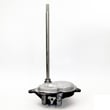
| Transmission/drive | Gear case 3360629 | Major labor; drives the whole wash action |
| Tub assembly | Outer tub (example: 3361596) | Large assembly; leak-related damage can spread |
| Electrical control | Timer (example: WP3946452) | Costly part; requires correct diagnosis |
| Motor | Drive motor (example: WP661600) | High part cost; may involve additional drive checks |
We use these checkpoints to make a practical decision:
- Compare the part cost plus labor to the price of a comparable washer
- If the washer has multiple symptoms (leak plus no-spin, for example), expect stacked repairs
- If the tub area has rust, heavy wear, or recurring leaks, big repairs rarely stay “one-and-done”
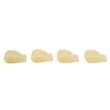
- If the issue is isolated to a smaller drive item, repair is often reasonable (for example, a coupling 285753A or washer drain pump WP3363394)
The “most expensive part” is usually expensive because it sits at the center of the washer’s mechanical system (gear case, tub, motor) or because it is a high-priced electrical component (timer/control). Correct diagnosis and proper installation (level floor, correct drain setup) help avoid repeat failures.
Last updated: February 2026
What causes a washing machine to not spin?
A Kenmore washer model 11092480200 usually won’t spin because the load is off-balance, the lid isn’t fully closed, the washer isn’t level, or the drain setup is causing a drain problem that stops the spin. Mechanical wear (coupling, clutch, pump) can also prevent spinning.
- Redistribute the load; bulky items can throw the basket off balance.
- Make sure the lid is fully closed (an open lid can stop spin).
- Confirm the washer is level; an unlevel cabinet can trigger vibration and poor spinning.
- Check the drain hose height: 34 inches minimum and 72 inches maximum above the floor.
- Make sure the drain hose is not kinked or plugged.
- Ensure the drain hose is not jammed tightly into the standpipe; you need an air gap to prevent siphoning.
If the washer cannot drain correctly, it often will not transition into a proper spin. For this model, the installation guidance calls out several drain conditions that can cause “won’t spin,” including a drain hose set too high (over 72 inches), too low (under 34 inches), kinked/plugged, or fitted too tightly in the standpipe (siphoning).
| Item to check | Correct setup | What happens if wrong |
|---|---|---|
| Standpipe height | 34 in. to 72 in. | No spin or poor drain/spin transition |
| Hose fit in standpipe | Loose fit with air gap | Siphoning, stopping operation |
| Hose condition | No kinks/clogs | Slow drain, no spin |
For the exact installation requirements and spacing guidance, use the installation guide.
If the load, lid, leveling, and drain setup are all correct, worn drive components are the next most common cause on this style of Kenmore top-load washer.
- Motor coupling: If it’s broken, the motor can run but the basket won’t spin. Consider the coupling 285753A.
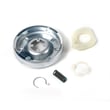
- Clutch: A worn clutch can prevent the basket from reaching spin speed. Consider the clutch 285785.
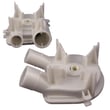
- Drain pump: If the pump can’t move water out, the washer may not spin properly. Consider the washer drain pump WP3363394.
A “won’t spin” problem is often a drain or balance issue, not an electrical failure. Fixing the drain hose height, air gap, and leveling prevents repeat problems like wet clothes, long cycles, and excessive vibration.
Last updated: February 2026
How to unclog drain hose on Kenmore washer?
To unclog the drain hose on your Kenmore washer model 11092480200, unplug the washer, remove as much water as possible, then disconnect and clear the drain hose and pump path. After clearing the blockage, reinstall the hose with the correct standpipe height and a loose air gap as shown in the installation guide.
- Unplug the power cord before touching hoses or the pump
- Turn off both water faucets
- Keep a shallow pan and towels ready for spills
- Wear gloves; small items and sharp debris can be inside the hose
- Remove water from the tub: bail it out, or use a wet/dry vac on the standpipe end of the drain hose.
- Check for kinks and standpipe issues: straighten the hose and confirm it is not shoved tightly into the standpipe.
- Disconnect the drain hose (at the standpipe or laundry tub first), then inspect the hose opening for lint, coins, socks, or sludge.
- Clear the hose:
- Run hot water through it (outside or in a tub)
- Use a small drain snake or a long zip tie to pull debris out
- Flush again until water flows freely
- Check the pump path: if the hose is clear but it still will not drain, inspect the pump inlet and impeller area. A clog often sits in the pump housing.
If the washer drains poorly after you clear the hose, the pump may be restricted or worn. For this model, the replacement pump is the washer drain pump WP3363394.
The installation instructions for this style of washer call out these key points:
| Setup item | What to do | Why it matters |
|---|---|---|
| Standpipe height | Keep hose end at least 34 in. above the floor and no more than 72 in. | Prevents siphoning and drain errors |
| Air gap | Hose must fit with an air gap all around (not snug) | Helps prevent siphoning and slow draining |
| Excess hose | Do not force extra hose down the standpipe | Reduces backups and siphoning |
| Securing | Strap the hose to the tub leg or standpipe | Prevents the hose from popping out and flooding |
A partially clogged drain hose makes the pump work harder, which can lead to slow draining, standing water, and spin problems. Correct hose height and a loose standpipe fit also prevent siphoning that can mimic a “won’t drain” symptom.
Last updated: February 2026