Installation guide
 Owner’s manual
 Error Codes




What does CF mean on a Frigidaire refrigerator?
On a Frigidaire FGTR1845QF1 refrigerator, CF typically points to a control or communication fault during operation or a self-check, meaning the main control and the user interface are not communicating correctly or a related circuit is unstable. Use the FGTR1845QF1 owner’s manual to confirm the control display behavior for your exact version.
What to do first (safe, quick checks)
- Power reset: unplug the refrigerator for 5 minutes, then plug it back in.
- Wait for any self-test to finish; some models run a diagnostic for about 15 minutes after power is restored.
- Confirm the temperature controls are not set to OFF or 0.
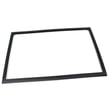
- Check that the doors close fully and the gaskets seal all the way around.
- If the code returns, inspect for loose connections at the display area (if accessible) and at the control housing.
Common causes of a CF code
In this model family, CF is most often tied to an issue in the control circuit rather than a sealed-system cooling failure.
| Likely cause | What you may notice | Typical fix |
|---|---|---|
| Loose or damaged wiring harness | Code comes and goes, display flickers | Reseat connectors, repair harness |
| User interface problem | Buttons do not respond, code persists | Replace the interface assembly |
| Main control board issue | Erratic cooling, repeated code after reset | Replace the control board |
Parts that are commonly involved
If CF persists after a reset and basic checks, these model-matched parts are commonly involved:
- Refrigerator user interface assembly 242249002 (display and button inputs)
- Refrigerator electronic control board and housing assembly 5303918684 (main control that runs cooling and defrost)
- Refrigerator harness 241872713 (wiring between components)
Why it matters
A control communication fault can prevent normal cooling, defrost timing, or fan operation. Addressing CF early helps avoid temperature swings that can lead to food spoilage and excess frost.
For code definitions and what the display is trying to report, we also use the Frigidaire refrigerator error codes reference alongside the model’s manual.
Last updated: January 2026
Which is better, top mount or bottom mount refrigerator?
A top-mount (top-freezer) refrigerator like the Frigidaire FGTR1845QF1 is the better pick when you want lower cost, strong efficiency, and simpler maintenance. A bottom-mount is better when you want fresh-food items at eye level and bend less during daily use.
Quick comparison
| Feature | Top-mount (freezer on top) | Bottom-mount (freezer on bottom) |
|---|---|---|
| Best for | Value, simplicity, frequent freezer use | Fresh-food access, less bending |
| Typical cost | Lower | Higher |
| Service complexity | Usually simpler | Often more complex |
| Organization | Traditional shelves and bins | Often easier fresh-food organization |
When a top-mount is the better choice
- You use the freezer often (frozen foods, ice, bulk storage).
- You want a straightforward design with fewer features to service.
- You want strong value for a primary kitchen or garage fridge.
- You prefer simpler day-to-day operation.
When a bottom-mount is the better choice
- You reach into the refrigerator section many times per day.
- You want fresh food at a more comfortable height.
- You prefer a freezer drawer layout for sorting frozen items.
Installation and space planning (applies to either style)
Use the clearances and leveling steps in the FGTR1845QF1 installation guide. For many top-mount refrigerators, you plan for small side and top gaps plus more space behind the cabinet for airflow and connections.
- Keep the refrigerator level so doors close and seal.
- Leave airflow space around the cabinet and keep the toe grille area clear.
- Avoid extension cords and use a grounded outlet.
- If a doorway is tight, door removal can help (steps are in the FGTR1845QF1 owner’s manual).
Why it matters
Choosing the layout that matches how you cook and shop reduces door-open time, helps temperatures stay stable, and supports good door sealing, which protects food quality and energy use.
Last updated: January 2026
What is the average lifespan of FGTR1845QF1?
A Frigidaire top-mount refrigerator like model FGTR1845QF1 typically lasts 13 years with normal household use. Keeping temperatures stable, doors sealing tightly, and airflow clear helps the compressor and fans run less and extends overall service life.
Typical lifespan and what affects it
Most refrigerators reach their expected lifespan when they avoid heat stress, poor airflow, and heavy frost buildup.
- Keep the refrigerator section near 37°F and the freezer near 0°F
- Clean condenser area periodically so heat can dissipate
- Avoid overpacking; blocked vents reduce cooling efficiency
- Confirm doors close fully and gaskets seal all the way around
- Defrost issues (heavy frost) should be addressed quickly
Quick checklist: signs your refrigerator is nearing end of life
| Symptom | What it often points to | What to do next |
|---|---|---|
| Warmer temps, longer run times | Airflow or sealed-system strain | Check vents, clean condenser area |
| Frost buildup on freezer back wall | Defrost system problem | Inspect defrost components |
| Clicking/humming then stopping | Start components or compressor stress | Consider professional diagnosis |
| Moisture or sweating around doors | Door seal issue | Inspect/replace gasket if needed |
Parts that commonly impact longevity
These parts do not set the lifespan by themselves, but failures here often cause poor cooling or excessive run time.
- Refrigerator defrost heater 242044008 (helps prevent frost that blocks airflow)
- Refrigerator temperature sensor 240597220 (helps the control maintain correct temperatures)
- Refrigerator electronic control board and housing assembly 5303918684 (manages cooling and defrost cycles)
Why it matters
A refrigerator that runs constantly to maintain temperature uses more energy and puts extra wear on the compressor, evaporator fan, and control system. Catching airflow, frost, or door-seal problems early is the easiest way to protect the cooling system.
For model-specific operating guidance (including control settings and cool-down period), use the FGTR1845QF1 owner's manual.
Last updated: March 2026