


Where is the model number on a Craftsman rear tine tiller?
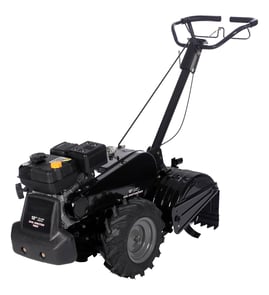
On a Craftsman rear-tine tiller like model 917299641, the model number is printed on a product ID label (a sticker or metal tag) attached to the tiller frame. On many rear-tine units, you will find it near the tine shield/guard area or on the engine area (often near the fuel tank).
Look for a rectangular label with the model number and sometimes a serial number. Check these spots:
- On the tine shield or tine guard (rear of the unit near the tines)
- On the main frame rail near the transmission/gearcase
- Near the engine mounting area
- On or near the fuel tank area (engine shroud or nearby bracket)
- On the front frame section near the handlebar supports
The label usually includes more than just the model number. Capture these details for accurate parts matching:
| Label item | What it’s used for |
|---|---|
| Model number (example: 917299641) | Identifies the exact tiller version |
| Serial number | Helps narrow production run details |
| Product number (if shown) | Can further refine parts lookup |
Craftsman tillers often have multiple versions that look similar, but use different belts, chains, and control cables. Using the exact model number helps us match the correct parts diagram and the right replacement part the first time.
If the sticker is worn off or painted over, these steps still get you to the right parts:
- Clean the frame and tine shield area with a rag and mild degreaser; labels are often hidden under dirt
- Check both sides of the frame rails; labels can be placed on either side
- Look for stamped numbers on the frame near the transmission area
- Use a known part from your tiller (like a clutch cable or belt) to cross-check against the parts list
- When ordering, match by model number first, then confirm by part name and diagram location
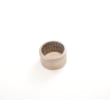
If you are troubleshooting drive or tine engagement while you are identifying the unit, common wear items for this model include the tiller clutch cable 532110675 and the v-belt 532132672.
Last updated: February 2026
Can a rear tine tiller cut through roots?
Yes. A rear-tine tiller like the Craftsman 917299641 can cut through small, shallow roots while tilling, but it is not designed to chew through large roots or stumps. For heavy roots, we recommend loosening soil in passes and removing roots as you expose them.
Rear-tine tillers have the traction and tine drive to break tougher ground than many front-tine models, but roots still have limits.
- Works well on: small feeder roots and thin roots near the surface
- May struggle with: thick, woody roots that wrap around tines
- Not for: stumps, large roots, or buried landscape timbers
- Best approach: multiple shallow passes instead of one deep pass
- Stop if it binds: shut off the engine before clearing debris
Use these steps to reduce shock loads on the drivetrain, belt, and clutch system.
- Till shallow first (skim the top layer), then deepen gradually
- Work in short sections; back up and re-approach if it grabs
- If roots wrap the tine shaft, stop and inspect the drive system
- Keep the clutch engagement smooth; a stretched cable can cause slipping or harsh engagement
- If tine drive feels inconsistent, inspect the tiller clutch cable 532110675 for stretch, kinks, or binding
| Root size you hit | What to do | Typical result |
|---|---|---|
| Hairlike to pencil-thin | Till normally, shallow pass first | Cuts and mixes into soil |
| Finger-thick | Slow down; make repeated passes | May cut, may wrap |
| Wrist-thick or larger | Do not force; remove mechanically first | High risk of damage or kickback |
Roots can suddenly stop the tines, which can overload the belt, chain, and gearcase. Using shallow passes and clearing wrapped roots protects key drive components and keeps your Craftsman 4-hp tiller running smoothly.
Last updated: February 2026
What are the common problems with lawn tillers?
Common problems on a lawn tiller like the Craftsman 917299641 usually come down to fuel delivery, ignition, or drive engagement: old fuel, a dirty carburetor, a fouled spark plug, or a stretched/binding drive system (belt, chain, clutch cable) that keeps the tines or wheels from moving.
- Engine will not start: stale fuel, dirty carburetor, fouled spark plug, kill switch issue
- Starts but dies or surges: restricted fuel flow, carburetor varnish, air leak
- Tines will not engage: clutch cable out of adjustment or damaged, belt worn, linkage binding
- Poor tilling power: belt slipping, chain wear, incorrect depth stake setting
- Excess vibration or noise: loose hardware, worn bushings, chain/gear wear
- Turn fuel valve on (if equipped) and confirm fresh gasoline in the tank.
- Inspect the spark plug; clean or replace if fouled.
- Check the throttle and choke move freely and return smoothly.
- Look for loose fasteners and missing retainers or clips.
- If the engine runs but the tines do not, inspect the clutch cable and drive components.
If your Craftsman 917299641 runs but the wheels or tines do not respond correctly, these model-matched parts are frequent fixes:
| Symptom | Likely area | Model-matched part to inspect |
|---|---|---|
| Tines do not engage | Clutch control | Tiller clutch cable 532110675 |
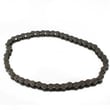
| Grinding, skipping, or no drive | Chain drive | Tiller chain, #25-50 532102134 |
| Slipping under load | Belt drive | V-belt 532132672 |
A tiller that is hard to start or will not engage is usually telling you something is worn, out of adjustment, or restricted. Fixing fuel and ignition issues prevents hard starting and stalling; fixing belt, chain, and clutch issues prevents premature wear in the gearcase and drive system.
Last updated: February 2026
Are Craftsman rear tine tillers any good?
Yes. Craftsman rear-tine tillers like model 917299641 are a solid choice for home gardens because the rear-tine design delivers strong traction and steady soil mixing, especially in tougher ground. With routine maintenance and timely replacement of wear parts, they stay dependable season after season.
A rear-tine tiller is typically considered a good performer when it:
- Starts consistently and runs smoothly at working throttle
- Pulls forward without excessive wheel spin
- Keeps tine speed steady under load (no frequent bogging)
- Shifts and engages drive/tines cleanly
- Leaves an even, well-mixed seedbed with minimal bouncing
If a rear-tine tiller feels weak, hard to control, or inconsistent, it is usually a wear or adjustment issue, not the basic design. On the 917299641, these parts are frequent culprits:
- Stretched or sticking clutch cable: tiller clutch cable 532110675
- Worn or glazed drive belt: v-belt 532132672
- Sloppy drive from chain wear: tiller chain, #25-50 532102134
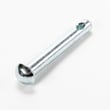
- Poor depth control in hard soil: depth stake 532102156
- Handling and traction issues from wheel wear: tiller wheel 532102190
Use these simple checks to separate “needs service” from “not a good tiller”:
- Confirm the tines fully engage when you squeeze the handle; adjust cable slack if engagement is late.
- Inspect the belt for cracking, glazing, or a burnt smell.
- Listen for chain or gear noise (rattle, clunking) under load.
- Set the depth stake shallow for the first pass, then deepen gradually.
- Till slightly moist soil; very dry or very wet soil makes any tiller struggle.
| What you notice | Most common cause | What to do |
|---|---|---|
| Tines stop or slip in soil | Belt/cable out of adjustment | Inspect belt and cable; replace if worn |
| Jerky forward motion | Chain wear or drive slop | Check chain condition and tension |
| Hard to control, bounces | Depth set too deep too fast | Start shallow; increase depth in passes |
| Weak pull/traction | Wheel wear or soil conditions | Check wheels; adjust technique |
Rear-tine tillers are built for control and bite. When the clutch cable, belt, chain, and depth settings are right, you get smoother operation, better soil breakup, and less operator fatigue.
Last updated: February 2026
How often should I change the oil in my tiller?
For your Craftsman 917299641 4-hp rear-tine tiller, change the engine oil after the first 5 hours on a new or rebuilt engine, then every 25 to 50 hours of use or at least once per season (once per year), whichever comes first.
- New engine or fresh rebuild: first change at 5 hours
- Normal homeowner use: every 50 hours or once per season
- Dusty soil, high heat, heavy loads: every 25 hours
- If oil looks dark, gritty, or smells burnt: change it now
- Park the tiller on level ground and let the engine cool.
- Check the oil level on the dipstick; keep it in the safe range.
- Wipe dirt away from the fill area before opening it (keeps grit out of the crankcase).
- Recheck the level after refilling; do not overfill.
| Item | Typical spec for small 4-hp tiller engines | Notes |
|---|---|---|
| Engine oil | SAE 30 (warm weather) or 10W-30 (variable temps) | Use the viscosity that matches your climate |
| Drain pan | 2-quart capacity | Gives you room even if you drain slowly or spill a little |
| Funnel and rags | Basic shop supplies | Helps prevent spills |
Fresh oil protects the crankshaft, piston, and bearings from wear and overheating. On a rear-tine tiller like the 917299641, dirty oil also increases hard starting and power loss during heavy soil work.
Oil changes are a good time to spot other issues that affect performance:
- Slipping tine drive can point to a worn belt (see v-belt 532132672).
- Poor engagement or no release can point to a frayed cable (see tiller clutch cable 532110675).
- Rattling or grinding from the drivetrain can point to chain wear (see tiller chain, #25-50 532102134).
Last updated: February 2026