Installation guide
 Owner’s manual


How to hard reset kenmore washer?
To hard reset your Kenmore washer model 11021102013, unplug it (or switch off the breaker) for 2 minutes, then restore power and start a normal cycle. This clears many temporary control glitches and is the safest first reset to try; see the 11021102013 owner's manual for model-specific control steps.
- Press Power/Cancel to stop the cycle.
- Unplug the washer (or turn OFF the dedicated breaker).
- Wait 2 minutes.
- Restore power.
- Lift and close the lid once, then select a Normal cycle and press Start.
These checks often fix the underlying issue that looks like a “needs reset” problem.
- Confirm the washer is plugged into a grounded 3-prong outlet (no extension cord).
- Make sure the lid is fully closed; a failed lid lock can prevent starting.
- Check for drain or fill problems that stop the cycle early.
- If the tub will not spin or agitate, inspect the drive system for wear.
| Symptom after reset | Most common cause | Part to consider |
|---|---|---|
| Won’t lock or won’t start | Lid lock not engaging | Washer lid lock assembly W10404050 |
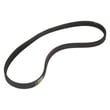
| Hums, won’t spin/agitate | Worn or loose belt | Washer drive belt WPW10006384 |
| Won’t drain, water left in tub | Drain pump issue or blockage | Washer drain pump assembly WPW10276397 |
A hard reset restores the control to a clean startup state, but it will not fix a mechanical failure (like a worn belt) or a safety interlock problem (like a lid lock). Resetting first helps you separate a one-time control glitch from a part that needs attention.
If you’re seeing an error code on a Kenmore 110-series washer, use the Kenmore 110 vmw top load washer error codes guide to match the code to the most likely cause.
Last updated: January 2026
What is the life expectancy of a Kenmore washer?
Most Kenmore washers, including model 11021102013, typically last 10 to 15 years with normal household use, proper installation, and routine care. Heavy loads, frequent use, and poor leveling shorten lifespan; timely repairs often extend it.
These ranges reflect what we see most often across Kenmore top-load and front-load washers:
- 10 to 15 years: typical household use
- 8 to 10 years: heavy use (large family, daily loads)
- 15+ years: lighter use plus consistent maintenance and quick fixes
A washer’s life is mostly about vibration control, water management, and drive-system wear.
- Installation and leveling: an unlevel washer vibrates and wears bearings, suspension, and the drive system faster
- Water pressure and fill performance: restricted flow can strain valves and extend cycle times
- Drain performance: slow draining can leave water behind and stress the pump
- Load habits: chronic overloading accelerates belt, gear case, and motor wear
- Small problems fixed early: a slipping belt or intermittent lid lock can turn into bigger failures
- Keep loads balanced; avoid packing the basket tightly.
- Use the right amount of HE detergent (too much causes residue and odors).
- Check hoses for bulges or leaks and replace as needed.
- Make sure the washer sits solidly on the floor; re-level if it starts walking.
- If the washer will be exposed to freezing temperatures, follow the winterizing guidance in the 11021102013 installation guide.
| Symptom | Often involved part | Example part for this model |
|---|---|---|
| Won’t spin or shifts oddly | Actuator or drive components | Washer actuator WPW10006355 |
| Lid won’t lock, won’t start | Lid lock | Washer lid lock assembly W10404050 |
| Won’t drain or drains slowly | Drain pump or drain hose | WPW10276397, W11244231 |
If your Kenmore washer is already near the 10 to 15 year mark, addressing vibration, draining, and lid-lock issues early is the difference between a simple part replacement and a major drive or tub repair.
Last updated: January 2026
How to unclog drain hose on Kenmore washer?
On Kenmore washer model 11021102013, we unclog the drain hose by safely draining any standing water, then removing the hose at the rear drain port and flushing out lint, coins, or small socks. Reinstall the hose correctly so it drains without kinks or siphoning (see the 11021102013 installation guide).
- Unplug the washer before servicing.
- Turn off both water faucets.
- Have towels and a shallow pan ready for water in the hose.
- If the tub is full, bail out water first to reduce spills.
- Pull the washer forward and access the back.
- Locate the black drain port and the drain hose connection.
- Use pliers to release the spring clamp; slide the hose off the drain port.
- Check the hose end for debris; remove visible obstructions.
- Flush the hose with hot tap water; a small drain snake or straightened coat hanger helps push out packed lint.
- Reinstall the hose fully on the drain port and secure the clamp.
- Run a rinse and drain cycle and watch for strong, steady flow.
The installation setup matters as much as the clog removal.
- Use the drain hose form and avoid sharp bends.
- For a standpipe, keep about 4.5 in. (113 mm) of hose inside the standpipe; do not force excess hose down the pipe.
- Do not lay the hose on the bottom of a laundry tub.
- Make sure the hose is secured so it cannot whip or slip out during drain.
| Symptom | Most likely cause | What to check |
|---|---|---|
| Hums but won’t drain | Hose blockage or pump restriction | Hose for socks, lint, coins; pump inlet area |
| Drains slowly | Partial clog or kink | Hose routing behind washer |
| Water backs up | Standpipe/tub drain issue | Household drain flow and height |
A restricted drain hose makes the drain pump work harder, can leave water in the tub, and often causes poor spin performance. Correct hose placement also prevents siphoning and repeat drain problems.
Last updated: January 2026
How many cubic feet is a Kenmore model 11021102013 washer?
The Kenmore washer model 11021102013 has a 3.5 cu. ft. wash basket capacity. Use this capacity to size loads correctly and to compare similar Kenmore 110 top-load washers; you can also confirm specs in the 11021102013 owner's manual.
A 3.5 cu. ft. top-load washer is designed for typical household loads and many bulky items when loaded loosely.
- Wash everyday mixed loads without packing the basket tight
- For bedding, load one bulky item at a time and keep it below the top of the basket
- Use the correct water level or cycle selection for the fabric type
- Avoid overfilling; tight loads reduce agitation and rinsing
- Balance heavy items (towels, jeans) to help prevent out-of-balance spinning
| Capacity range (cu. ft.) | Typical fit | Common customer goal |
|---|---|---|
| 3.0 to 3.4 | Compact to standard | Save space, smaller loads |
| 3.5 to 3.9 | Standard family size | Everyday loads plus some bedding |
| 4.0+ | Large capacity | Fewer loads, more bulky items |
Knowing the true basket capacity helps prevent overloading, which improves cleaning and reduces strain on drive and spin components such as the washer drive belt WPW10006384. For installation clearances and cabinet dimensions, use the 11021102013 installation guide.
Last updated: January 2026