 Installation guide
 Owner’s manual
 Error Codes





What is the most common problem with GE dishwashers?
The most common GE dishwasher problems (including model GDT545PGJ5BB) are not draining, not starting, poor cleaning, and poor drying. In many cases, the fix is basic maintenance (filter and spray arm cleaning) or correcting a door-latch or control issue; our GDT545PGJ5BB owner's manual is the best model-specific reference.
Most common issues and what usually causes them
- Won’t drain: food debris in the sump area, a restriction in the drain path, or a weak drain pump.
- Won’t start or stops mid-cycle: a tripped breaker, a wall switch turned off, control lock enabled, or a door that is not latching fully.
- Not cleaning well: clogged spray arm holes, blocked detergent dispenser, or loading that prevents water from reaching dishes.
- Suds in the tub: using the wrong detergent (hand dish soap) or a rinse aid spill.
- Not drying: cycle selection, rinse aid use, or a heating problem.
Quick checks we recommend first (fast, no parts)
- Confirm the dishwasher has power (breaker, fuse, and any nearby wall switch).
- Make sure the door closes firmly and the latch engages.
- Verify the control panel is not locked; then try starting again.
- Use only automatic dishwasher detergent (tablet, packet, powder, liquid, gel).
- Re-load so tall items do not block the detergent cup or spray arms.
When a part is commonly involved
If the basic checks do not help, these parts are frequent suspects on drain, start, and wash-performance complaints:
| Symptom | Common part to inspect | What it affects |
|---|---|---|
| Won’t start / intermittent start | GE dishwasher door latch lock WD21X10490 | Confirms the door is closed so the control will run |
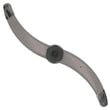
| Poor cleaning / weak spray | Dishwasher spray arm, lower WD22X33499 | Water distribution to the lower rack |
| Not drying / water not heating | Dishwasher heating element WD05X30818 | Water heating and drying performance |
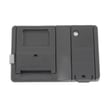
| No response / erratic behavior | Dishwasher electronic control board WD21X24901C | Cycle logic, power distribution, and operation |
Why it matters
Drain and start problems can look like a “dead” dishwasher, but they are often caused by simple issues (power, door latch, control lock, suds). Cleaning and correct detergent use also prevent repeat clogs and poor wash results.
For code-based symptoms, we use the GE electronic dishwasher error codes guide to match the displayed code to the most likely cause.
Last updated: February 2026
What is the average life expectancy of a GE dishwasher?
A GE dishwasher typically lasts 10 to 12 years with normal household use. For your GE GDT545PGJ5BB, regular cleaning, correct detergent use, and keeping seals and spray arms clear are the biggest factors that help it reach (or exceed) that average; see the GDT545PGJ5BB owner's manual for care routines.
Typical lifespan range (what to expect)
Most GE dishwashers fall into this range:
| Usage and care level | Typical lifespan |
|---|---|
| Heavy use, minimal maintenance | 8 to 10 years |
| Average use, basic maintenance | 10 to 12 years |
| Light use, consistent maintenance | 12 to 15 years |
What shortens a dishwasher’s life fastest
We see these issues reduce lifespan more than anything else:
- Hard water buildup and mineral film left untreated
- Running with clogged spray arm holes or a dirty sump area
- Overloading racks so the wash system cannot circulate water well
- Skipping rinse aid when drying performance depends on it
- Door leaks that go uncorrected (gasket and latch alignment issues)
Maintenance that helps GE dishwashers last longer
These habits are simple and make a real difference:
- Clean and de-odorize the interior periodically (citric acid or dishwasher cleaner)
- Wipe the control panel with a lightly damp cloth, then dry
- Check that spray arms spin freely and are not blocked; replace a worn arm such as the dishwasher spray arm, lower WD22X33499 if it is cracked or clogged beyond cleaning
- Confirm the door closes and latches smoothly; a failing latch can prevent proper operation
- Use dishwasher detergents and rinse agents recommended for dishwashers (per GE guidance)
Why it matters
A dishwasher near the end of its expected life often shows up as poor cleaning, longer cycle times, draining problems, or inconsistent heating and drying. Staying ahead of buildup and wash-circulation issues helps protect key components like the circulation pump, heating element, and electronic controls.
Last updated: February 2026
How to fix leaking GE Cafe dishwasher corner baffle replacement?
On the GE GDT545PGJ5BB dishwasher, a “corner baffle” leak is fixed by reseating or replacing the door and tub sealing pieces at that corner, then running a wet test to confirm the leak is gone. Use the GDT545PGJ5BB installation guide wet-test steps to verify the repair.
What to check first (before replacing anything)
- Confirm the leak is at the front door corner, not underneath the unit.
- Look for food debris, detergent buildup, or a folded seal at the corner.
- Check that the door closes squarely and is not rubbing adjacent cabinets.
- Make sure the dishwasher is level and not twisted in the opening.
- Run a short cycle and watch when it leaks (fill vs. wash).
Reseating and cleaning the corner seal area
- Turn off power at the breaker.
- Remove the lower rack for access.
- Clean the tub lip and door sealing surfaces with mild soap and water; rinse and dry.
- Press the seal material firmly back into its channel so it sits flush with no gaps.
- Inspect for tears, hardening, or sections that will not stay seated.
If the seal is damaged: what part usually fixes a corner leak
A corner leak is commonly caused by a worn or deformed tub gasket (the main door opening seal). For this model, the matching part is dishwasher tub gasket WD08X23476.
| Leak pattern | Most common source | Next step |
|---|---|---|
| Drips from one front corner during fill | Seal not seated or door alignment | Reseat seal; check door fit |
| Leaks mainly during wash | Water spray deflecting toward door | Check racks and spray path; clean arms |
| Water under dishwasher (not at door) | Hose, pump, or connection leak | Inspect drain and inlet connections |
Confirm the fix with a wet test
GE’s install procedure calls for running a cycle and checking for leaks under the dishwasher and around the door.
- Start a cycle and ensure the door is fully latched.
- Check around the door perimeter for drips.
- Check underneath for water trails.
- If the door leaks because it rubs cabinets, reposition the dishwasher as outlined in the GDT545PGJ5BB installation guide.
Why it matters
Door-corner leaks usually get worse quickly; even a small gap in the gasket area lets wash water escape and can damage flooring and cabinets.
Last updated: February 2026





