Owner’s manual


What is the PF code on a Kenmore dryer?
PF on a Kenmore dryer means power failure; the dryer detected an interruption in electrical power during the cycle. On Kenmore model 11062802100, press Stop (or Cancel) to clear the display, then restart the cycle once power is stable; see the 11062802100 owner's manual.
- Press Stop/Cancel to clear PF.
- Open and close the door, then select a cycle and press Start.
- If PF returns immediately, unplug the dryer for 1 minute, then plug it back in.
- If the drum light or controls flicker, stop using the dryer until power is steady.
- Loose plug or worn outlet: Make sure the cord is fully seated and the outlet grips the plug firmly.
- Tripped breaker: Electric dryers typically use a 30-amp, 240-volt supply; a partially tripped double breaker can cause PF.
- Power cord/terminal block connection issue: A loose connection can drop voltage under load.
- Household power dips: Heavy loads on the same circuit can cause brief interruptions.
| Check | What you’re looking for | What it suggests |
|---|---|---|
| Breaker panel | Double breaker fully reset (OFF then ON) | Restores full 240V supply |
| Outlet fit | Plug feels tight, no heat marks | Reduces intermittent power loss |
| Dryer behavior | PF happens when heat turns on | Possible voltage drop under load |
A PF code is usually harmless, but repeated power interruptions can stop drying mid-cycle and can point to a supply problem that also causes no heat, long dry times, or nuisance shutdowns.
Last updated: February 2026
Where is the part number on a Kenmore dryer?
On Kenmore dryer model 11062802100, the model and serial information (used to identify the correct replacement parts) is printed on the model and serial number plate. On most Kenmore dryers, you can find that plate just inside the door opening on the cabinet.
The plate typically includes several identifiers. For parts ordering, these are the most useful:
- Model number (for this dryer: 11062802100)
- Serial number (helps confirm production series)
- Electrical ratings (voltage/amps)
- Sometimes a type or manufacturing code
If you are trying to find a specific component’s number (like a belt or heating element), that number is usually not printed on the dryer cabinet label; it is tied to the part itself and the parts list for your model.
Use the model number from the plate, then match the part by name in the parts list or diagram. Common examples for this model include:
| What you’re replacing | What to use to identify it | Example part for 11062802100 |
|---|---|---|
| Drum belt | Model number + belt description | Dryer drum belt 341241 |
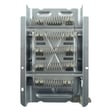
| Heating element | Model number + heater style | Dryer element 279838 |
| Door won’t start | Model number + switch test | Dryer door switch WP3406107 |
Kenmore dryers were built by different manufacturers over the years, so the same-looking dryer can use different parts. Using the model number from the plate prevents ordering the wrong belt, thermostat, fuse kit, or timer.
Last updated: February 2026
How do I know if my Kenmore dryer thermal fuse is blown?
If your Kenmore electric dryer model 11062802100 won’t start or runs but won’t heat, a blown thermal fuse or thermal cut-off is a top suspect. The sure way to know is a continuity test with a multimeter after unplugging the dryer; a blown fuse reads open (no continuity).
- Dryer will not run at all (no motor)
- Dryer tumbles but produces no heat (often caused by a power supply issue or a heat circuit safety opening)
- Cycle seems normal but clothes stay damp because heat shuts off early
- You notice weak airflow at the outside vent hood (overheating can open safety fuses)
- Lint screen is heavily clogged or venting is restricted
- Unplug the dryer (electric shock risk).
- Access the thermal fuse or thermal cut-off on the blower housing or heater housing (location varies by design); use the 11062802100 owner’s manual for access guidance.
- Remove at least one wire from the fuse terminal.
- Test across the fuse terminals.
| Meter result | What it means | What to do next |
|---|---|---|
| Beep or near 0 ohms | Fuse is good | Check airflow, thermostats, and power supply |
| No beep or OL/open | Fuse is blown | Replace the fuse (and fix the overheating cause) |
On this model, the safety devices are often serviced together to prevent repeat failures.
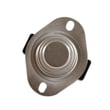
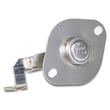
- Dryer thermal cut-off fuse kit 279816 (includes thermal cut-off components used in the heat safety circuit)
- Dryer operating thermostat WP3387134 (regulates normal operating temperature)
- Dryer high-limit thermostat WP3977767 (backup safety limit)
A thermal fuse or thermal cut-off usually opens because the dryer overheated. The most common cause is restricted airflow. Your manual’s troubleshooting also points to clogged lint screens, crushed or blocked vents, and even a single blown house fuse or tripped breaker that can make the dryer run without heat.
Last updated: February 2026
How much does it cost to replace a heating element in a Kenmore dryer?
For Kenmore electric dryer model 11062802100, replacing the heating element typically costs $50 to $120 for the part plus $0 to $250 in labor, so most total repairs land around $100 to $350 depending on service rates and whether any wiring or thermostats also need replacement. See the 11062802100 owner's manual for safety and operating guidance.
- Heating element part: usually $50 to $120 for this style of electric dryer element
- Labor (if hired): commonly $100 to $250 (service call plus installation)
- Optional add-ons: terminals, wire kit, or heat-safety parts if they show damage
- DIY cost: usually just the part (and basic supplies)
| Scenario | What you pay for | Typical total |
|---|---|---|
| DIY element replacement | Part only | $50 to $120 |
| Pro replaces element | Part + labor | $150 to $350 |
| Element + related heat parts | Part(s) + labor | $200 to $450 |
If the dryer overheated or had poor airflow, a technician may recommend replacing additional heat-protection parts at the same time.
- Dryer element 279838 (the heater that produces heat)
- Dryer thermal cut-off fuse kit 279816 (opens the circuit if temperatures get unsafe)
- Dryer operating thermostat WP3387134 (helps regulate drum temperature)
- Dryer high-limit thermostat WP3977767 (backup temperature limiter)
- Dryer heating element wire kit 279457 (repairs heat-damaged wiring/connectors)
A failed heating element is a common “no heat” cause, but restricted venting can also trigger overheating and repeat failures. The manual notes that you should feel for heat after the dryer runs about 5 minutes; if there is no heat, check that both dryer breakers/fuses are OK before moving to parts replacement. Refer to the 11062802100 owner's manual for the recommended checks and safe operation.
Last updated: February 2026