Installation guide
 Owner’s manual
 Error Codes




Is 7.4 cubic feet big for a dryer?
Yes. For the Whirlpool WED94HEXW1 27" electric dryer, 7.4 cu. ft. is considered a large-capacity drum, which is typically big enough for family-size loads and bulky items like comforters, towels, and jeans. Capacity alone does not guarantee fast drying; venting and load size matter too.
A 7.4 cu. ft. dryer is generally a “large” drum size, so you can dry bigger loads with better tumbling space (which helps airflow through fabrics).
- Handles bulky items more comfortably (comforters, blankets, jackets)
- Better for back-to-back laundry days (family loads)
- Helps reduce overstuffing (a common cause of long dry times)
- Still needs proper venting and correct cycle selection for best results
For cycle and load-size guidance specific to this model, use the WED94HEXW1 use and care manual.
Even with a large-capacity dryer, we recommend leaving room for items to tumble freely.
- Small load: about 1/4 full
- Medium load: about 1/2 full
- Large load: about 3/4 full
- Avoid packing the drum tight; it can cause damp spots and wrinkles
- Mix similar fabrics and weights (towels with towels, jeans with jeans)
| What you’re judging | What 7.4 cu. ft. helps with | What matters just as much |
|---|---|---|
| Drying bulky items | More space to tumble | Correct cycle, not overloading |
| Dry time | Can improve airflow in the load | Clean lint screen, strong vent airflow |
| Wrinkles | Less crowding can reduce wrinkles | Using Wrinkle Shield, removing promptly |
Choosing the right capacity helps prevent overloading, which is one of the biggest reasons clothes take too long to dry. On the WED94HEXW1, good airflow (lint screen plus venting) is key to getting the benefit of a large drum.
Last updated: January 2026
How do I reset my Whirlpool Duet dryer?
For Whirlpool model WED94HEXW1, there is not a single labeled “reset” button; the practical reset is to cancel the cycle and restore power, then restart. For model-specific control behavior and indicators, use the WED94HEXW1 use & care manual.
- Cancel and restart: Press POWER to stop/cancel a cycle, then press POWER again to turn the dryer back on.
- Restart after a power failure (PF): Press and hold START/PAUSE to restart the dryer.
- Clear a control lockout: Press and hold Control Lock for 3 seconds to unlock the controls.
- Hard reset (general step): Unplug the dryer or switch the breaker off, then restore power and try a cycle again (the exact wait time is not specified for this model).
These checks come straight from common WED94HEXW1 no-start causes in the troubleshooting guidance.
- Make sure the door is fully closed.
- Press and hold START/PAUSE for 2 to 5 seconds (a quick tap may not start the cycle).
- Check home power: many electric dryers use two household fuses or breakers; if one trips, the dryer can act dead or heat can fail.
- If the display shows L2 (low or no line voltage), confirm the power cord and supply are correct for a 240-volt electric dryer.
| Situation | What to do | What it tells you |
|---|---|---|
| Controls locked | Hold Control Lock 3 seconds | Not a failure; just a lockout |
| PF on display | Hold START/PAUSE | Power interruption occurred |
| Dryer won’t start | Verify door, hold START/PAUSE 2 to 5 seconds | Often a start/door/power issue |
| Auto cycles end early | Check venting and sensors | Usually airflow or sensing, not a reset |
A proper reset sequence helps us separate a temporary control state (lockout or power interruption) from a real problem like low voltage, a tripped breaker, or restricted airflow.
Last updated: January 2026
How long should a Whirlpool Duet dryer last?
Whirlpool does not publish a fixed “expected lifespan” for the Whirlpool WED94HEXW1 electric dryer, so we can’t give a model-specific number of years. In many homes, electric dryers often run reliably for about a decade or longer when airflow is strong and routine maintenance is consistent; see the WED94HEXW1 use & care manual for the care steps Whirlpool recommends.
These factors usually make the biggest difference on WED94HEXW1 and similar Whirlpool electric dryers:
- Vent restriction (crushed duct, too many elbows, clogged hood)
- Lint buildup inside the dryer or venting (heat stress and longer run times)
- Overloading (extra strain on drum support and drive components)
- Power supply issues (electric dryers need proper 240V supply)
- Delayed repairs when new noises or poor drying start
Whirlpool’s guidance emphasizes airflow and lint control. We recommend:
- Clean the lint screen before or after every load
- Use 4-inch (102 mm) heavy metal venting, not plastic or foil
- Keep the vent run as short and straight as possible
- Clean the entire vent system periodically (more often if drying slows)
- Stop using the dryer and correct airflow problems if you see “AF” (low airflow)
If your dryer is otherwise in good shape, these common wear areas are worth inspecting. The exact cause depends on the symptom and what you find during inspection.
| Symptom you notice | Common areas to inspect | Example compatible part for WED94HEXW1 |
|---|---|---|
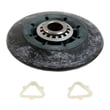
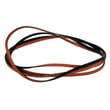
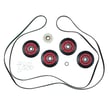
| Rumble, thump, or squeal | Drum support rollers, idler pulley, belt path | Dryer drum support roller WPW10314173 |
| Dryer runs but dries slowly | Venting, blower housing, lint duct, moisture sensor bars | Dryer blower wheel WP697772 |
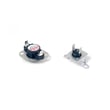
| Overheats or shuts off early | Venting first, then thermostats/thermal cutoffs | Dryer thermal cut-off fuse kit 279973 |
Most “short lifespan” complaints are really airflow problems. Restricted venting makes WED94HEXW1 run hotter and longer, which increases wear on the heater, thermostats, motor, and drum support system.
Last updated: January 2026