Owner’s manual
 Error Codes


Do you have to hook up water to a LG steam dryer?
Yes; on the LG DLGX5102V, you only hook up a water supply if you want to use steam cycles or steam options. The dryer will still run normal non-steam drying cycles with no water connected, as long as you keep steam features turned off (see the DLGX5102V owner's manual).
LG steam dryers are designed to use a standard household water hookup for steam generation; the correct supply temperature (hot vs. cold) and the exact connection point are specified for your model.
- Use the water supply type and temperature listed in the DLGX5102V owner's manual
- Connect to a shutoff valve you can reach easily
- Use new, undamaged hoses and washers to prevent leaks
- Turn the valve on slowly and check for drips at every fitting
Most installations use one of these approaches.
| Setup | What it does | Best for |
|---|---|---|
| Shared supply with washer | Splits an existing washer supply using a Y-connector | Washer and dryer are side-by-side |
| Dedicated supply | Runs a separate shutoff valve and hose to the dryer | Dryer is farther away or you want a standalone line |
| No water connection | Leaves the inlet capped/unused | You never use steam features |
You can still dry clothes normally; just avoid steam selections.
- Do not choose Steam Refresh, Steam Wrinkle Care, or any steam add-on
- Do not save a “favorite” cycle that automatically enables steam
- If a steam option is selected without water connected, the cycle can perform poorly or stop
Steam performance depends on the correct water supply and pressure. Using the supply type specified for the DLGX5102V prevents weak steam output, nuisance errors, and leaks.
Last updated: February 2026
How do I reset a gas regulator in my LG dry?
On the LG DLGX5102V gas dryer, there is no user-reset for a gas pressure regulator. If the dryer is not heating, the practical “reset” is to restore power, confirm gas supply is on, and then troubleshoot the ignition and airflow system using the steps in the DLGX5102V owner's manual.
- Turn the dryer off and unplug it (or switch off the breaker).
- Make sure the gas shutoff valve to the dryer is fully open.
- Check that the dryer is set to a heated cycle (not Air Dry or No Heat).
- Clean the lint screen and confirm the exhaust vent is not crushed or blocked.
- Restore power and run a timed dry heat cycle for a few minutes.
Many “no heat” complaints are caused by ignition or temperature-sensing parts, not a regulator reset.
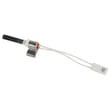
- Weak or failed igniter: consider the LG dryer burner igniter 5318EL3001A.
- Gas valve not opening consistently: consider the dryer gas valve AGM30063309.
- Temperature sensing out of range: consider the dryer thermistor AGM30045804.
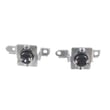
- Overheating protection opening due to restricted airflow: check venting; thermostats such as dryer high-limit thermostat 6931EL3003C can trip when airflow is poor.
| What you observe | What it usually points to | What to check next |
|---|---|---|
| Drum tumbles, no heat, no glow | Ignition not starting | Igniter, wiring, control signals |
| Igniter glows, then shuts off, no flame | Gas valve or flame sensing issue | Gas valve, burner assembly, connections |
| Heats briefly, then stops | Airflow restriction or thermostat opening | Venting, lint buildup, high-limit thermostat |
Gas dryers rely on correct airflow and a working ignition system to heat safely and dry efficiently. A clogged vent or failing igniter can mimic a “regulator problem” and often causes long dry times or repeated no-heat cycles.
For model-specific error displays and what they mean, use LG dryer error codes.
Last updated: February 2026
What is the most common problem with LG dryers?
The most common issue we see with LG dryers like model DLGX5102V is restricted airflow, which causes long dry times, overheating, and cycles that stop early. The first fixes are cleaning the lint screen and confirming the vent path is clear; then check heat and drum-drive parts if symptoms continue.
- Clean the lint screen before every load; a damaged screen can also reduce airflow (see dryer lint screen 5231EL1001C).
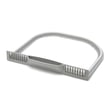
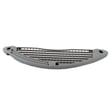
- Inspect the lint screen housing and grille for buildup (see dryer lint screen grille 3550EL1005C).
- Confirm the outside vent hood opens fully and is not blocked.
- Check the entire vent run for kinks, crushed flex duct, or heavy lint.
- Keep the vent run as short and straight as possible; long runs commonly cause slow drying.
Poor drying is usually airflow-related, but it can also be a heat-control problem.
| Symptom | Most likely cause | Parts that often relate (if needed) |
|---|---|---|
| Clothes take too long to dry | Vent restriction, lint buildup | Dryer lint screen 5231EL1001C |
| Dryer heats then shuts off | Overheating from poor airflow, thermostat opening | Dryer high-limit thermostat 6931EL3003C, dryer blower thermostat 6931EL3002M |
| No heat on a gas model | Ignition or gas valve issue | LG dryer burner igniter 5318EL3001A, dryer gas valve AGM30063309 |
Noise and no-tumble complaints are usually wear items in the drum drive system.
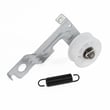
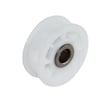
- Thumping or squealing: belt or idler pulley wear (see dryer drum belt 4400EL2001F and dryer idler pulley 4560EL3001A).
- Grinding or rumbling: drum support roller wear (see dryer drum support roller 4581EL2002L).
- Drum not turning but motor runs: broken belt is common (see dryer drum belt 4400EL2001F).
If your LG dryer displays an error code, use it to narrow the troubleshooting path before replacing parts. See LG dryer error codes.
Restricted airflow makes drying slow and can overheat the dryer, which stresses thermostats, sensors, and the burner system. Fixing airflow first often restores normal drying and prevents repeat failures.
For model-specific operating tips and maintenance intervals, follow the cleaning and venting guidance in the DLGX5102V manual.
Last updated: February 2026