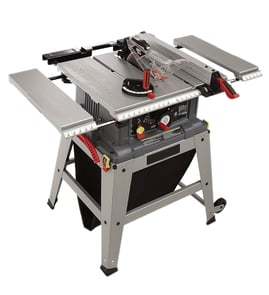

Can an 8 dado blade be used on a 10 table saw?
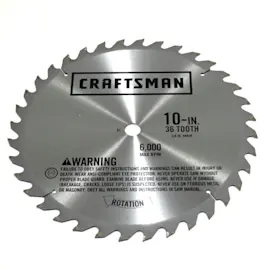
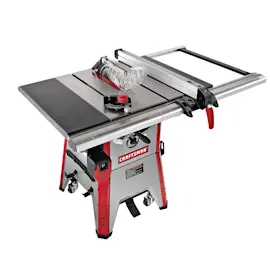
Yes. On a Craftsman 11327610 10-inch tilting arbor bench saw, an 8-inch dado set is the standard choice and works well as long as the arbor size matches and the stacked width stays within the saw’s maximum dado capacity.
What must match for it to work
Check these items before installing any dado stack:
- Arbor diameter: Most table saws use a 5/8-inch arbor; your dado set must match.
- Arbor length (threaded shaft): Must be long enough for the full stack plus washer and nut.
- Maximum dado width: Many 10-inch saws handle about 13/16 inch; keep your stack at or under your saw’s limit.
- Blade speed rating: Dado set RPM rating must meet or exceed the saw’s no-load RPM.
- Throat plate: Use a dado throat plate/insert so the wider cut is supported.
Quick compatibility checklist
| Item to verify | What you want | Why it matters |
|---|---|---|
| Dado diameter | 8 inch | Common size for dado work on 10-inch saws; good clearance |
| Arbor size | 5/8 inch (typical) | Prevents wobble and unsafe mounting |
| Stack width | Within saw’s max (often up to 13/16 inch) | Avoids running out of threads or overloading |
| Insert | Dado insert | Reduces tear-out and improves safety |
Installation and safety notes we recommend
- Unplug the saw before changing blades.
- Remove the blade guard and splitter/riving knife only if required for the dado setup; reinstall standard guarding when you go back to a regular blade.
- Tighten the arbor nut firmly and recheck that the stack spins freely by hand before powering on.
- Make a shallow test cut in scrap wood first.
Why it matters
An 8-inch dado set gives you the width you need for grooves and rabbets while keeping better clearance and control than a 10-inch dado stack on many bench saw setups.
For general DIY safety guidance before you start, review are diy appliance repairs safe.
Last updated: February 2026
What are the common table saw mistakes?
Common table saw mistakes on the Craftsman 11327610 10-inch tilting arbor bench saw include skipping basic safety steps, using the wrong cutting setup, and forcing the work through the blade. Fixing these habits improves cut quality and reduces kickback risk.
Most common mistakes we see
- Not wearing PPE (eye protection, hearing protection, and a dust mask when needed)
- Cutting without a splitter or riving knife when the cut requires it
- Standing directly behind the workpiece (puts you in the kickback line)
- Using the rip fence and miter gauge together for the same cut (can pinch and bind)
- Running a dull, dirty, or incorrect blade for the material
- Setting the blade too high above the workpiece
- Cutting freehand instead of using the fence, miter gauge, or a sled
- Not using push sticks or push blocks for narrow rips
Quick setup checks before you cut
- Confirm the blade is sharp, clean, and installed correctly.
- Set blade height so gullets are just above the top surface of the wood (a low, controlled exposure).
- Use the correct guide method:
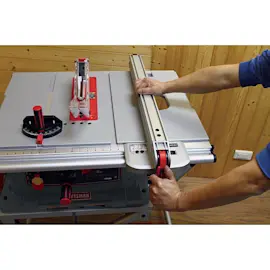
- Rip cuts: fence
- Crosscuts: miter gauge or sled
- Keep the work flat to the table and tight to the guide; do not twist mid-cut.
“Do this, not that” cheat sheet
| Task | Do this | Avoid this |
|---|---|---|
| Rip cutting | Fence + push stick/push block | Freehand ripping |
| Crosscutting | Miter gauge or sled | Using fence and miter gauge together |
| Preventing binding | Splitter/riving knife when appropriate | Letting the kerf close on the blade |
| Body position | Stand slightly to the side | Standing directly behind the board |
Why it matters
Most table saw injuries and ruined cuts come from binding and kickback. Good technique, correct blade height, and the right guiding method keep the cut stable and predictable.
Helpful related reading
Last updated: February 2026
What saw blade makes the smoothest cut?
For the smoothest cut on your Craftsman 11327610 10-inch tilting arbor bench saw, use a high-tooth-count carbide-tipped blade matched to the cut type: a higher tooth count (and smaller gullets) leaves a cleaner edge, especially on crosscuts and plywood.
Quick blade choice guide (smoothness first)
- Crosscuts in hardwood/softwood: 60 to 80-tooth ATB (alternate top bevel)
- Plywood, veneer, melamine: 80-tooth “fine finish” or Hi-ATB (reduces tear-out)
- General purpose (good finish, faster feed): 40 to 50-tooth combination blade
- Ripping thick stock: 24 to 30-tooth rip blade (not the smoothest, but safest feed and cooler cutting)
- Best finish upgrade: choose a blade with premium carbide and a thin, consistent kerf
What to look for on the package
A smoother cut comes from the blade design as much as tooth count.
| Feature | What to choose | Why it matters |
|---|---|---|
| Tooth count | Higher for crosscutting (60 to 80T) | More, smaller bites reduce splintering |
| Grind | ATB or Hi-ATB for wood/plywood | Cleaner shearing action |
| Kerf | Thin-kerf if your saw struggles | Easier on the motor, steadier feed |
| Plate | Laser-cut/anti-vibration slots | Less chatter, smoother surface |
Setup tips that affect cut quality
- Set blade height so gullets clear the top of the workpiece
- Use a sharp blade; dull teeth cause burning and tear-out
- Keep the fence parallel to the blade to prevent binding and rough edges
- Support long boards to avoid twisting during the cut
- Use a zero-clearance insert when you need the cleanest edge on plywood
Why it matters
On a bench table saw like the Craftsman 11327610, the right blade and a steady feed rate reduce tear-out, burning, and sanding time while improving accuracy on finish carpentry cuts.
For more help identifying the exact model details you need when shopping for parts and accessories, use how to find your appliance model number (and what it means for parts).
Last updated: February 2026