Owner’s manual
 Error Codes


What is the average lifespan of a Kenmore Elite refrigerator?
A Kenmore Elite refrigerator typically lasts 10 to 15 years. For the Kenmore Elite 59676592600 bottom-mount refrigerator, regular care (cleaning, good door sealing, and stable temperatures) is what most often determines whether it lands closer to 10 years or pushes beyond 15.
Typical lifespan ranges (what to expect)
Most full-size refrigerators fall into a fairly consistent lifespan range when they are installed correctly and maintained.
- Average: 10 to 15 years
- Often achievable with good maintenance: 15+ years
- Common “end-of-life” repairs: sealed-system or compressor-related issues
| Appliance type | Typical lifespan | Notes |
|---|---|---|
| Bottom-mount refrigerator (like 59676592600) | 10 to 15 years | Heavy use and poor airflow shorten life |
| Refrigerator with ice maker and water | 10 to 15 years | Water leaks and ice maker wear add service needs |
What shortens (or extends) refrigerator life
These are the most common real-world factors we see affecting longevity.
- Dirty condenser area or restricted airflow makes the compressor run hotter and longer
- Worn door gaskets let warm, moist air in, increasing run time and frost
- Fan or airflow problems can cause warm sections and overwork the cooling system
- Defrost problems can lead to ice buildup and poor cooling
- Water system leaks can damage floors, wiring, or components over time
Parts that commonly need attention as the unit ages
If your refrigerator is otherwise cooling well, replacing a worn component can extend useful life.
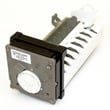
- Ice production issues: refrigerator ice maker D7824706Q
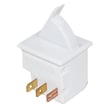
- Temperature swings or warm fresh-food section: refrigerator electronic damper WPW10196393
- Frost buildup or warm freezer: defrost heater, defrost thermostat, evaporator fan motor
- Water dispenser or ice maker not filling: water inlet valve
Why it matters
Once a refrigerator gets into the 10 to 15 year range, small efficiency losses (air leaks, dirty coils, weak airflow) can turn into bigger problems like temperature instability, food spoilage, and expensive cooling-system repairs.
For model-specific care, cleaning, and troubleshooting steps, follow the 59676592600 owner's manual.
Last updated: January 2026
Why is my Kenmore Elite refrigerator leaking water out of the bottom?
Water leaking from the bottom of your Kenmore Elite refrigerator model 59676592600 is usually caused by a defrost drain problem (water cannot route to the drain pan), or a water-supply connection issue such as kinked tubing, low water pressure, or a leaking valve/tube feeding the ice maker. See the 59676592600 owner's manual for the model’s water-connection and leak checks.
Quick checks we recommend first
- Look for water under the freezer area; that often points to a defrost drain backup.
- Check the water line behind the refrigerator for kinks or rubbing.
- Confirm the shutoff valve is fully open and not a self-piercing saddle valve.
- Inspect the ice maker fill tube area for ice buildup or dripping.
- Verify the doors close fully and gaskets seal; warm air can increase frost and meltwater.
Most common causes and what to do
| Likely cause | What you’ll notice | What to do next |
|---|---|---|
| Clogged/iced defrost drain | Water pools inside then leaks to the floor | Clear the drain opening and flush with warm water; check again after 24 hours |
| Leaking water connection/tubing | Drips behind unit or along the floor line | Re-seat fittings, replace damaged tubing, and re-check for leaks for 2 to 3 hours |
| Low water pressure or restricted supply | Slow fill, odd ice maker behavior, occasional leaks | Confirm 35 to 100 psi supply pressure (about 20 psi minimum without a filter) and correct restrictions |
| Water inlet valve leaking | Drips even when not dispensing | Inspect and replace the refrigerator water inlet valve assembly WP67006531 if it seeps or won’t shut off cleanly |
Water-supply connection details that matter on this model
The manual guidance for this Kenmore Elite refrigerator emphasizes installation practices that prevent leaks:
- Use copper tubing rather than plastic (plastic is less durable and more prone to leakage).
- Avoid self-piercing or saddle valves; they can clog over time and contribute to leaks.
- Tighten fittings by hand first, then snug with tools; do not over-tighten.
- After turning the water on, monitor the connection for 2 to 3 hours before final placement.
Why it matters
A small leak can quickly turn into floor damage and can also create ice buildup that affects freezer temperature (recommended around 0°F) and ice maker performance. Fixing the root cause also helps prevent repeat leaks.
Last updated: January 2026
What are the common problems with Kenmore Elite refrigerators?
On the Kenmore Elite 59676592600 bottom-mount refrigerator, the most common issues we see are warm temperatures (often airflow or dirty condenser coils), frost buildup (defrost or door-seal problems), water leaks (water line or drain issues), and unusual operating noises. Use the 59676592600 owner's manual to match symptoms to the correct checks.
Most common symptoms and what usually causes them
- Not cooling or weak cooling: dirty condenser coils, blocked vents, evaporator fan problems, controls set incorrectly
- Runs too often: frequent door openings, warm room conditions, dirty condenser coils, door not sealing
- Frost or ice buildup: door gasket not sealing, defrost system trouble (heater, thermostat, sensor)
- Water leaking: water connection issues, kinked tubing, clogged drain, filter-related flow restriction
- Noises (buzzing, clicking, fan noise): normal operating sounds, fan blade interference, compressor start components
Model-specific checks that solve a lot of calls
The Use & Care guidance for this model highlights several repeat offenders:
- Condenser coils: dirty coils can make the refrigerator run too frequently and cool poorly
- Door sealing and closing: check gaskets and look for internal obstructions that keep doors from closing
- Water pressure: the water and ice system typically needs 35 to 100 psi; low pressure can cause slow water flow and small or hollow ice cubes
- Tubing and valves: saddle valves and plastic tubing commonly lead to restrictions or leaks; kinked copper tubing also reduces flow
Quick part matches (when symptoms point to a failed component)
| Symptom | Common suspect part | Example part for this model |
|---|---|---|
| Ice maker not making ice | Ice maker assembly | Refrigerator ice maker D7824706Q |
| Warm fridge, freezer OK | Damper not opening | Refrigerator electronic damper WPW10196393 |
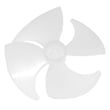
| Fan noise or poor airflow | Fan blade or motor | Refrigerator evaporator fan blade WP2169142 / evaporator motor WPW10128551 |
| Frost buildup, warm temps | Defrost components | Refrigerator defrost heater WP67002493 / refrigerator defrost bi-metal thermostat WP67003426 |
Why it matters
Most “big” refrigerator complaints (warm temps, ice issues, leaks) start with basics: airflow, door sealing, and water supply. Fixing those first prevents unnecessary part replacement and helps protect food quality and ice production.
Last updated: January 2026