


Where is the model number on a tiller?
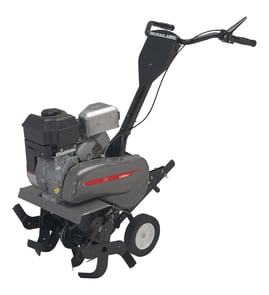
On the Craftsman tiller model 917298240, the model number is printed on a product ID label (a sticker or metal tag) attached to the tiller frame. It is most often found near the tine shield/guard area or on the engine area near the fuel tank.
Look for a rectangular label with the model number and sometimes a serial number. Check these spots in order:
- On the tine shield (tine guard) near the front of the tiller
- On the main frame rail, just behind the tines
- Near the engine mounting plate
- On or near the fuel tank area (engine shroud side)
- Near the handle support brackets where the handles bolt to the frame
Most tiller ID labels include the brand and model number in a simple format.
| What you see on the label | What it means | What to do with it |
|---|---|---|
| Model number (example: 917298240) | Identifies the exact tiller version | Use it to match parts diagrams and parts |
| Serial number | Production identifier | Helpful for service and exact revisions |
| Engine info (HP, displacement) | Engine identification | Useful when ordering engine-specific items |
If you cannot read it right away, these steps usually solve it:
- Wipe the area with a damp rag and mild degreaser
- Use a flashlight and look at an angle for faint printing
- Take a close-up photo and zoom in
- Check both sides of the tine guard and frame rails
- If the label is damaged, use a known part to help confirm the build (for example, the lawn & garden equipment cable bracket 532009484 location and mounting style can help match diagrams)
The model number is the fastest way to get the right Craftsman 5-hp tiller parts (cables, hardware, sheaves, and brackets). Even small model variations can change the correct clutch cable routing, fasteners, and linkage parts.
Last updated: January 2026
Who builds Craftsman tillers?
Many Craftsman tillers, including model 917298240, were built for Craftsman by a third-party manufacturer rather than being made directly by Craftsman. For 917-prefix Craftsman outdoor power equipment, the builder is commonly associated with AYP (American Yard Products), a manufacturer that has produced equipment for multiple brands.
The most reliable way is to use the model number prefix and then confirm by matching parts and assemblies.
- Check the model number on the tiller ID tag; for this unit it is 917298240.
- The 917 prefix is widely tied to AYP-built Craftsman equipment.
- Cross-check by looking at the style of hardware and common AYP part families.
- Confirm by matching the exact replacement parts used on your machine.
- If your tiller has a different prefix (for example, 247, 316, or 917), the builder can differ.
Even when a Craftsman tiller is built by another manufacturer, you still order parts by the Craftsman model number. That ensures you get the correct fit for the frame, tine drive, and controls.
Here are examples of model-matched parts that help confirm you are shopping the right parts list:
| Example part on this model | What it supports | Why it helps |
|---|---|---|
| Cbl/cltch t 583731701 | Clutch/control cable function | Confirms control and drive linkage family |
| Tiller engine sheave 592642101 | Engine-to-drive belt/sheave system | Confirms drive system component match |
| Lawn & garden equipment cable bracket 532009484 | Cable routing and mounting | Confirms handle/control hardware match |
Knowing the builder helps because AYP-built Craftsman tillers often share design patterns (controls, brackets, fasteners, and drive layouts). That makes troubleshooting and parts identification faster, especially for clutch cable and drive components.
Last updated: January 2026
What are the common problems with lawn tillers?
Common problems on a Craftsman 917298240 5-hp front-tine tiller include hard starting or stalling (fuel or ignition issues), tines not turning (belt/clutch linkage problems), and excessive vibration (loose hardware or worn drive components). Most fixes start with fuel quality, spark, and a quick fastener check.
- Won’t start or starts then dies: stale fuel, clogged fuel cap vent, dirty carburetor, fouled spark plug
- Runs rough or lacks power: restricted fuel flow, dirty air filter, incorrect choke setting, old fuel
- Tines won’t engage or slip: stretched clutch cable, misadjusted linkage, worn belt or pulley issues
- Excessive vibration or rattling: loose nuts/washers, bent tine, worn fasteners
- Poor tilling performance: tines installed incorrectly, depth stake set too shallow, soil too wet
- Drain old gasoline and refill with fresh fuel (most tillers run best on fuel less than 30 days old).
- Inspect the spark plug; clean or replace if carbon-fouled.
- Check throttle and choke movement for smooth operation.
- Verify the clutch control moves freely; a stretched cable can prevent full engagement.
- Tighten visible hardware on the handle, guards, and tine area; replace missing fasteners.
| Problem area | What you see | Typical fix |
|---|---|---|
| Fuel delivery | Starts then stalls | Fresh fuel, clean tank/cap vent, service carburetor |
| Ignition | No start, weak start | Replace spark plug, check kill switch wiring |
| Drive/clutch | Tines don’t turn | Adjust/replace clutch cable, inspect belt/pulleys |
| Hardware | Rattle/vibration | Tighten, replace worn nuts/washers |
If you find looseness or engagement issues during inspection, these model-matched parts are common:
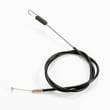
- Cbl/cltch t 583731701 (clutch cable that controls tine engagement)
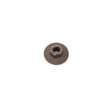
- Tiller engine sheave 592642101 (engine pulley that drives the belt)
- Lawn & garden equipment cable bracket 532009484 (supports cable routing and adjustment)
A tiller that is slightly out of adjustment can quickly wear belts, pulleys, and linkage parts. Catching fuel issues early also prevents hard starting and carburetor varnish buildup.
Last updated: January 2026
What would cause a tiller to not start?
A Craftsman 917298240 5-hp tiller won’t start when it’s missing one of the basics: spark, fresh fuel, or airflow. The most common causes are old gas clogging the carburetor, a fouled spark plug, or a plugged air filter; start with quick checks first.
- Set the stop switch to RUN and throttle to START/FAST.
- Confirm fresh gasoline in the tank; turn the fuel valve ON (if equipped).
- Push the spark plug wire fully onto the plug.
- If flooded, set choke OFF, open throttle, and pull-start several times.
- Check the air intake and filter area for heavy dirt or blockage.
Old fuel leaves varnish that restricts carburetor passages, so the engine won’t get the right mixture to fire.
- Drain old fuel and refill with fresh gas.
- If it starts briefly then dies, clean the carburetor and verify fuel flow to it.
- If it only runs with choke, treat it as a fuel restriction (lean condition).
- Remove the spark plug; replace it if it’s wet, carbon-fouled, or cracked.
- If there’s no spark, inspect kill/stop switch wiring for damage or loose connections.
If the pull cord is unusually hard to pull, the drive may be partially engaged or the tines may be bound.
- Make sure the clutch control is fully released.
- Inspect the clutch cable routing and linkage; replace a damaged cable such as the cbl/cltch t 583731701.
| Symptom | Most likely cause | First action |
|---|---|---|
| Starts then dies | Dirty carburetor, restricted fuel | Drain fuel, clean carb |
| Won’t fire at all | No spark, flooded | Check plug, dry cylinder |
| Runs only on choke | Lean fuel mix | Clean carb, check flow |
Fixing the root cause prevents repeated hard-starting that can foul plugs, strain the recoil starter, and add wear to clutch and drive components.
Last updated: January 2026