Installation guide
 Owner’s manual
 Error Codes
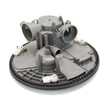


What is the average lifespan of a KitchenAid dishwasher?
A KitchenAid dishwasher typically lasts 10 to 14 years with normal household use and basic care. For your KitchenAid KDTE334GBS0, consistent cleaning, correct detergent and rinse aid use, and avoiding chronic leaks or drain issues are the biggest factors that keep it running longer.
What affects lifespan the most
- Water quality: hard water speeds up mineral buildup on internal parts.
- Maintenance: cleaning filters and spray paths prevents strain on the pump and motor.
- Drying habits: using rinse aid reduces spotting and helps drying performance.
- Loading and cycle choice: overloading and heavy cycles every day increase wear.
- Installation quality: a poor drain setup or loose mounting can cause repeat problems.
Maintenance checklist (best return for the effort)
Use this routine to help your KDTE334GBS0 reach the upper end of the lifespan range:
- Clean the filter area regularly (frequency depends on how much food soil you leave on dishes).
- Run a dishwasher cleaner periodically to reduce odor and buildup.
- Keep rinse aid filled for better drying and to help control hard-water deposits.
- Check that the door closes and latches smoothly; a misaligned door can cause leaks and no-start symptoms.
- Inspect the drain hose routing for kinks and make sure the high loop or air gap setup is correct.
Typical lifespan expectations by usage
| Usage pattern | Typical lifespan | What usually wears first |
|---|---|---|
| Light (few loads/week) | 12 to 14 years | Racks, wheels, seals |
| Average (1 load/day) | 10 to 12 years | Drain components, wash motor wear |
| Heavy (2+ loads/day) | 8 to 10 years | Pump and motor, heater-related issues |
Why it matters
Dishwashers are designed to run long, efficient cycles; many newer units average 2 to 5 hours per load to save energy and still clean well. Longer cycles are normal, but good maintenance keeps those long cycles from turning into premature pump, drain, or heating problems. See the care and operating guidance in the KDTE334GBS0 owner's manual.
Last updated: January 2026
What is the most common problem with the KitchenAid dishwasher?
The most common KitchenAid KDTE334GBS0 dishwasher problems we see are poor cleaning (often from loading issues or restricted wash flow) and “won’t run” symptoms caused by the door not latching or the controls needing to be restarted. Leaks and draining problems are also frequent.
Most common symptoms and what usually causes them
- Dishes still dirty: spray arm blockage, filter buildup, or items blocking the wash system
- Dishwasher won’t start or stops: door not fully closed/latched, Start/Resume timing, control “sleep” after inactivity
- Not draining well: drain path restriction, air gap clogged (if your setup uses one)
- Leaks: door seal wear, hose connection issues, over-sudsing from wrong detergent
- Poor drying: rinse aid low, air-dry option selected, heater-related issue
Quick checks we recommend first (KDTE334GBS0)
KitchenAid notes that pausing during a cycle can be normal. If the Start/Resume light is blinking, press Start/Resume and close the door within 4 seconds. Also confirm the door is closed and latched, and that tall items are not interfering with the racks or spray arm. See the KDTE334GBS0 owner’s manual for the exact Start/Resume and loading guidance.
- Press Start/Resume, then close the door within 4 seconds
- Re-load so nothing protrudes through the rack or hits the spray arm
- Wake the controls (open/close door or press Cancel/Drain), then reselect the cycle
- Use high-quality detergent packs and rinse aid; avoid frequent vinegar rinses
- If you have an air gap and it is not draining well, clean the air gap
Parts that commonly fix these issues
| Symptom | Common part to check | Example part for KDTE334GBS0 |
|---|---|---|
| Won’t start, stops mid-cycle | Door latch | Dishwasher door latch WPW10653840 |
| Not draining | Drain pump or drain hose | Dishwasher drain pump WPW10531320 |
| Not filling | Water inlet valve | Dishwasher water inlet valve W11175771 |
| Not drying well | Heater circuit (varies by symptom) | Element assembly W10703867 |
Why it matters
These problems usually come down to water movement and safety interlocks. If the door latch is not fully engaged or the wash system is blocked by loading, the dishwasher can pause, stop, or clean poorly even though it has power.
Last updated: January 2026
How many decibels is a KitchenAid KDTE334GBS0?
The KitchenAid KDTE334GBS0 dishwasher is rated at 39 dBA for operating sound level. That is a very quiet noise rating; in many kitchens you mainly notice water movement and occasional pump or drain sounds.
What 39 dBA means day to day
A dBA rating is a standardized measurement, but your room acoustics and installation affect what you hear.
- Hard floors and bare walls reflect sound and make any dishwasher seem louder
- The loudest moments are usually fill, drain, and spray pattern changes
- Rattling is commonly caused by loose items or dishes touching each other
- A unit that is not firmly mounted can transmit vibration into cabinets
- A blocked spray arm can create unusual clicking or thumping
Quick sound-level comparison
| Dishwasher noise rating | What it usually feels like | Common expectation |
|---|---|---|
| 39 to 44 dBA | Very quiet | Often blends into background noise |
| 45 to 50 dBA | Quiet | Clearly audible in the kitchen |
| 51+ dBA | Noticeable | Can compete with nearby conversation |
If your KDTE334GBS0 sounds louder than 39 dBA
Use these checks first; they solve most “suddenly loud” complaints.
- Confirm the dishwasher is level and secured using the steps in the KDTE334GBS0 installation guide
- Reload so nothing blocks the spray arms; keep tall utensils from protruding
- Remove loose items (lids, small cups) that can bounce against racks
- Clean the filter area and clear debris that can contact the pump
- If the door does not close firmly, inspect the latch and consider replacing the dishwasher door latch WPW10653840
Why it matters
A 39 dBA rating is a key comfort feature of the KDTE334GBS0. When noise increases, it usually points to vibration, loading issues, or an obstruction, not normal operation.
Last updated: January 2026