Owner’s manual


Why is my LG steam dryer not drying?
If your LG DLEX5170W steam dryer runs but clothes stay damp, the most common causes are restricted airflow (lint screen or venting), a heat problem (heater or thermostats), or a sensor issue (moisture sensor or thermistor) that ends the cycle too soon. Use the DLEX5170W manual to confirm cycle settings and airflow requirements.
Quick checks we recommend first (no tools)
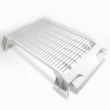
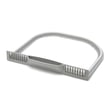
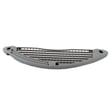
- Clean the lint screen and confirm it is seated correctly; replace it if torn or warped (dryer lint screen by LG 5231EL1001C).
- Make sure the exhaust vent is not crushed, kinked, or packed with lint; check the outside vent hood for strong airflow.
- Avoid overloading; tightly packed loads cannot tumble and dry evenly.
- Verify you are using an appropriate cycle; sensor cycles can stop early if the load is small or mixed fabrics.
- If you recently moved the dryer, recheck the vent connection at the back of the cabinet.
If the dryer tumbles but there is little or no heat
On the DLEX5170W, poor drying often comes down to the heating circuit or airflow overheating protection.
Common parts to inspect or test:
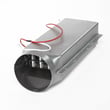
- Heating element: open element means no heat (LG dryer heating element 5301EL1001H).
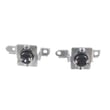
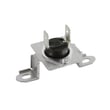
- High-limit thermostat: can open if airflow is restricted or the thermostat fails (dryer high-limit thermostat 6931EL3003D).
- Blower thermostat: helps regulate temperature and protect the heater (dryer blower thermostat 6931EL3002M).
| Symptom | Most likely area | What it points to |
|---|---|---|
| Clothes take too long, dryer feels hot | Venting/airflow | Lint blockage, crushed vent, weak airflow |
| Tumbles but no heat | Heating circuit | Heater, thermostat, wiring |
| Stops early on sensor cycles | Sensors | Moisture sensor bars, thermistor |
If sensor cycles end too soon (steam or “sensor dry” issues)
- Clean the moisture sensor bars inside the drum; residue from dryer sheets can insulate them.
- If cleaning does not help, the moisture sensor or its wiring can be the cause (dryer moisture sensor 6500EL3001A).
- Temperature sensing problems can also affect cycle length (dryer thermistor AGM30045804).
Why it matters
Restricted airflow can make drying slow and can also trigger temperature limits that shut heat down. Fixing airflow first prevents repeat failures and helps the DLEX5170W dry faster with less energy.
Last updated: January 2026
What is the capacity of the LG dlex5170?
The LG DLEX5170W dryer has a 7.3 cu. ft. drum capacity, which is designed to handle large loads like bulky towels or bedding in fewer cycles. For cycle and load guidance specific to this model, use the DLEX5170W user manual.
What 7.3 cu. ft. means for everyday loads
A 7.3 cu. ft. LG electric dryer like the DLEX5170W is considered a large-capacity unit. In practical terms, that capacity typically supports:
- Larger mixed loads (jeans, shirts, towels) with better tumbling room
- Bulky items (comforters, blankets) with fewer re-dry cycles
- Better airflow around items when you avoid overfilling
- More consistent sensor-dry results when loads are not packed tight
Tips to get the best drying results at this capacity
Even with a large drum, airflow and lint control matter as much as size.
- Do not pack the drum tight; leave space for clothes to tumble
- Clean the lint screen before every load; a restricted screen slows drying
- If drying times increase, inspect the venting path for restrictions
- Use the correct cycle for fabric type; sensor cycles work best with similar fabrics together
- If the dryer is not heating correctly, testing heat-related components may be needed (for example, the LG dryer heating element 5301EL1001H)
Quick reference table
| Item | DLEX5170W detail | Why it matters |
|---|---|---|
| Drum capacity | 7.3 cu. ft. | Helps you size loads and reduce total cycles |
| Best practice | Avoid overfilling | Improves airflow and drying performance |
| Common drying bottleneck | Lint/vent restriction | Can cause long dry times and overheating |
Why it matters
Knowing the DLEX5170W capacity helps us choose the right cycle, avoid overloading, and troubleshoot long dry times more accurately (capacity, airflow, and heat output all work together).
Last updated: January 2026
What is the most common problem with LG dryers?
For the LG DLEX5170W dryer, the most common customer-reported issues are long dry times or no heat (usually caused by restricted airflow or a failed heating circuit component) and loud thumping or rumbling noises (often from worn drum support parts). Use the DLEX5170W dryer manual for cycle and maintenance guidance.
Most common symptoms we see
- Clothes take too long to dry (poor airflow, lint buildup, or heat not cycling correctly)
- Dryer runs but doesn’t heat (heating circuit problem)
- Thumping, rumbling, or squealing (drum support or belt drive wear)
- Dryer stops mid-cycle (overheating protection triggered by vent restriction)
- Inconsistent dryness on sensor cycles (moisture sensor contamination)
Quick checks before replacing parts
- Clean the lint screen every load; confirm it seats correctly.
- Check the vent path from the dryer outlet to the outside hood for lint, kinks, or crushed ducting.
- Avoid overloading; heavy loads restrict tumbling and airflow.
- Try a timed dry cycle to compare performance vs sensor dry.
- If the dryer is noisy, stop using it until you identify the source to prevent further wear.
Parts that commonly relate to these problems (for DLEX5170W)
If airflow is good but heat is still weak or missing, these model-compatible parts are common suspects:
- LG dryer heating element 5301EL1001H
- Dryer thermistor AGM30045804
- Dryer high-limit thermostat 6931EL3003D
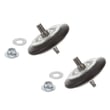
If the issue is noise or vibration, drum support and belt-drive parts are often involved:
Symptom-to-likely-cause guide
| What you notice | Most likely category | First action |
|---|---|---|
| Long dry times | Airflow restriction | Clean lint screen and venting |
| No heat | Heating circuit | Check element, thermostats, thermistor |
| Thumping/rumbling | Drum support | Inspect rollers and belt path |
| Stops mid-cycle | Overheating/airflow | Check venting and lint buildup |
Why it matters
Restricted airflow is the root cause behind many LG dryer complaints because it increases drying time, can trigger overheating safeties, and accelerates wear on components like thermostats, the heating element, and drum support parts.
For display messages or fault codes, we recommend checking LG dryer error codes.
Last updated: January 2026
What does d mean on an LG dryer?
On LG model DLEX5170W, a “d” message is most commonly related to airflow or venting restriction detection (often shown as d80/d90/d95 on many LG dryers). It’s a warning that the exhaust system may be blocked, causing long dry times and overheating risk; see the DLEX5170W manual for your model’s display meanings.
What to check first (fast airflow checklist)
- Clean the lint screen before every load; replace it if torn or warped (see dryer lint screen by LG 5231EL1001C).
- Make sure the lint screen housing and blower inlet are not packed with lint.
- Inspect the flexible vent behind the dryer for kinks, crushing, or excessive length.
- Check the exterior vent hood for a stuck flap, lint buildup, or a bird screen clog.
- Run a timed dry cycle and confirm strong airflow outside.
Why the “d” message shows up
Restricted airflow makes the dryer run hotter and longer. The control can interpret that as a venting problem and trigger a “d” style warning (or d80/d90/d95) to prompt vent cleaning.
Common causes vs. what you’ll notice
| Likely cause | Typical symptom | What to do |
|---|---|---|
| Lint screen clogged | Long dry time, hot cabinet | Clean or replace lint screen |
| Vent hose kinked/crushed | Weak airflow outside | Re-route or replace vent hose |
| Wall duct clogged | Clothes still damp | Clean duct to exterior |
| Blower area lint buildup | Noisy airflow, poor drying | Clean blower housing area |
When a part may be involved
If airflow is clear but drying is still poor, we shift to heat and sensing checks. On DLEX5170W, parts that can affect drying performance include:
- Dryer thermistor AGM30045804 (temperature sensing)
- Dryer blower wheel 5835EL1002A (moves air through the drum)
- Dryer heating element 5301EL1001H (electric heat source)
Why it matters
Good venting protects the heater and thermostats, reduces cycle time, and helps prevent repeated high-limit trips. A clean exhaust path is the single biggest factor in dryer efficiency.
Last updated: January 2026