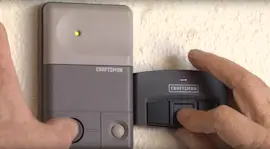
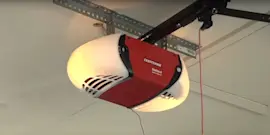
Owner’s manual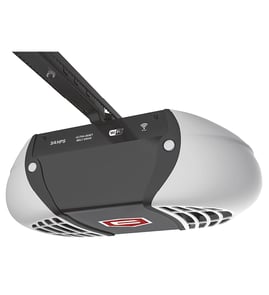




How do I know what model my garage door opener is?
On a Craftsman garage door opener like model 13953910, the model number is printed on a label on the motor unit, typically under a light lens cover. Check both light lens areas and the side opposite the antenna, then match the number to your manual and parts list. See the owner's manual for label locations and diagrams.
Where to look on the opener (most common spots)
- Under the front light lens cover on the motor unit
- Under the left light lens cover (when you are facing the opener from inside the garage)
- On the side of the motor unit opposite the antenna wire
- On the motor unit housing near the hanging brackets
- On the same label that lists voltage and horsepower (often 1/2 HP on this model)
What the model number looks like
For this Craftsman opener, the model is formatted like 139.53910 (you may also see it written without the dot as 13953910). Use the full number exactly as shown.
| What you see on the label | What it means | What to do with it |
|---|---|---|
| 139.53910 | Model number | Use it to match the correct manual and parts |
| 1/2 HP | Motor rating | Helps confirm you are looking at the right label |
| Serial/date code | Production info | Useful for service history, not for parts lookup |
Why it matters
Using the exact model number ensures you get the right Craftsman garage door opener parts and the correct programming and safety sensor instructions (especially for Security+ remotes and the safety reversing sensor system).
Quick next steps after you find it
- Write the model number down exactly (including any dots)
- Compare it to the cover of the owner's manual
- If you are ordering parts, search by model number on Sears PartsDirect
- If the opener is flashing lights or showing a diagnostic pattern, use Craftsman error codes to narrow the issue
Last updated: February 2026
Is it cheaper to repair or replace a garage door opener?
Repairing a Craftsman garage door opener like model 13953910 costs less when the problem is a simple adjustment or a small component (sensor alignment, remote, wiring, travel/force settings). Replacing is the better value when the opener is 10 to 12+ years old, unreliable, or needs major motor or drive work.
Quick decision guide
- Repair when the opener runs and the fix is setup-related (travel limits, force settings, sensor alignment).
- Repair when the issue is intermittent (remote range, loose connection, minor wiring).
- Replace when you have repeated failures or multiple parts are failing.
- Replace when the repair total is about half the cost of a new opener.
- Replace when you want newer features (quieter operation, battery backup, smart control).
Typical cost comparison
| Option | Typical cost range | Best when |
|---|---|---|
| Minor repair/adjustment | $0 to $150 | Sensors, settings, simple wiring |
| Moderate repair | $150 to $350 | Wall control issues, gear wear |
| Major repair | $300 to $500+ | Motor/drive problems, recurring failures |
| Replace opener (installed) | $400 to $1,000+ | Old unit, upgrades, full refresh |
Safety and door-condition checks (important)
If the garage door binds, sticks, or is out of balance, repairs to springs, cables, pulleys, and brackets must be handled by a trained door systems technician because those parts are under extreme tension. Also verify:
- Door is properly balanced and lubricated.
- Door reverses on contact with a 1-1/2 inch object (like a 2x4 laid flat).
- Floor gap under the door is 1/4 inch or less so the safety reversal system works.
For model-specific adjustment and testing steps, use the owner's manual.
Why it matters
A garage door opener is a safety system; correct reversing and sensor operation prevents damage and helps protect people and pets.
For diagnostic light patterns and common faults, use Craftsman error codes. If you decide to shop by model, search on Sears PartsDirect.
Last updated: February 2026
What are the common problems with Craftsman garage door openers?
Common problems on the Craftsman 13953910 garage door opener are safety reversing sensor issues (misalignment, obstruction, or wiring), remote or wall control problems (lock mode, programming, batteries), and travel/force settings drifting, which can cause reversing, blinking lights, or a door that will not close.
Most common symptoms and likely causes
- Door will not close; opener lights blink: safety reversing sensors blocked, misaligned, or not connected.
- Door closes then reverses: down travel limit or force needs adjustment; door may be binding.
- Remotes do not work: wall control lock mode is on, remote needs programming, or battery is weak.
- Closes with wall button but not remote: sensor beam is interrupted or sensors are misaligned.
- Motor hums briefly: door is binding, trolley position is off, or chain tension needs correction.
Quick checks we recommend first
- Confirm sensor indicator lights: orange on the sending eye and green on the receiving eye when aligned.
- Clear the sensor path and wipe the lenses.
- Verify sensor mounting height: typically no more than 6 in. (15 cm) above the floor.
- Compare wall control vs. remote behavior to narrow the cause.
- Run the safety reverse test using a solid object in the door path.
What the lights usually mean
| What you see | What it points to | What to do |
|---|---|---|
| Opener lights flash 10 times | Sensor beam interrupted/misaligned | Align sensors; remove obstructions; prevent direct sun into the receiving eye |
| One/both sensor lights off | Misalignment, blockage, or wiring issue | Check alignment, clean lenses, inspect connections |
| Won’t close from remote | Sensor fault detected | Fix sensors before adjusting force/limits |
Why it matters
The safety reversing sensors are designed to stop and reverse the door if something breaks the beam during closing; when the opener detects a sensor problem, it often refuses to close from a remote for safety.
For model-specific adjustment steps and diagnostic LED guidance, use the owner's manual. For code-based troubleshooting, use our Craftsman error codes guide. To find replacement parts by model number, search Sears PartsDirect.
Last updated: February 2026
Why is my garage door not responding to remotes and/or keypad?
If your Craftsman garage door opener model 13953910 won’t respond to remotes or a keypad, the fastest split is this: if the wall control works, the issue is usually lock mode, programming, batteries, or interference; if the wall control also fails, check the safety sensors and opener diagnostics in the 13953910 owner's manual.
Quick checks (in order)
- Test the wall control: if it runs the door, power and motor control are generally OK.
- Replace remote and keypad batteries; weak batteries often reduce range first.
- Check lock mode on the Premium control console; if the control is blinking, deactivate Lock Mode.
- Look for interference near the opener (common culprits are LED bulbs and nearby electronics).
- Reprogram the remote using the opener’s LEARN button procedure.
- If the remote still won’t work, check the motor unit diagnostic LED for flash codes.
Reprogram the remote (LEARN button method)
The manual procedure is:
- Press and release the LEARN button on the motor unit (learn light stays on about 30 seconds).
- Within that window, press and hold the button on the remote you want to use.
- Release when the opener lights blink (or you hear clicks if bulbs are not installed).
If you suspect a lost or unwanted remote code, erase and rebuild your programming:
| Task | What it does | What you do next |
|---|---|---|
| Erase all codes | Clears all remotes/keyless entries from memory | Reprogram each remote/keypad you still use |
| Reprogram one remote | Adds a single remote back | Test range and operation |
If the door won’t close (or lights blink)
On this model, the opener will not close from a remote if either safety sensor indicator light is off (misalignment or obstruction). Confirm both sensors are aligned, mounted low, and have solid indicator lights; then retest.
For model-specific flash patterns and what they mean, use Craftsman error codes.
Why it matters
Remote and keypad failures are often simple (lock mode, batteries, programming), but sensor alignment and safety reversal operation directly affect safe closing. The manual calls for testing the safety reversal system monthly and retesting after any force or travel adjustments.
You can also search by model number to find compatible replacement parts and accessories through Sears PartsDirect.
Last updated: February 2026