Owner’s manual



Can you put 87 gas in a pressure washer?
Yes. For the Craftsman pressure washer model 580768340, regular unleaded gasoline with an 87 octane rating is the correct everyday fuel choice; fill only after the engine cools and follow the fueling and safety steps in the 580768340 owner's manual.
Fueling basics (safe, reliable starts)
- Shut the engine off and let it cool before refueling.
- Refuel outdoors with plenty of ventilation; never run the unit in an enclosed area.
- Keep gasoline away from sparks, open flames, and smoking materials.
- Wipe up spills immediately and move the unit away from the fueling area before starting.
- Before starting, confirm you added engine oil to the proper level and turned the water supply fully on.
87 vs higher octane: what changes
Higher octane (88 to 93) is not “more power” fuel for most small engines; it mainly resists knock. If your engine runs smoothly on 87, there is no performance benefit to going higher.
| Fuel choice | When it makes sense | What you may notice |
|---|---|---|
| 87 octane unleaded | Normal use for most conditions | Normal starting and power |
| Higher octane (88 to 93) | Only if the engine knocks under load or the manual specifies it | Usually no change |
| Old or contaminated gas | Never recommended | Hard starting, surging, loss of power |
If it runs rough after fueling
Use these quick checks before replacing parts:
- Confirm the water supply is on and not exceeding 140°F.
- Check for kinked or damaged high-pressure hose connections.
- Drain and replace old fuel with fresh 87 octane.
- Verify the choke setting for a cold start.
- If power drops under load, follow pressure washer engine losing power troubleshooting.
Why it matters
Using the correct fuel and refueling safely helps prevent hard-start issues, surging, and avoidable engine damage; it also reduces fire risk when handling gasoline around a hot engine.
Last updated: January 2026
Is it worth repairing a pressure washer?
Repairing a pressure washer is worth it when the problem is a wear item or a simple leak, and the machine is otherwise in good shape. For the Craftsman 580768340, we usually recommend repair when the fix is straightforward (hose, seals, fittings) and you can restore safe, reliable pressure.
Quick decision checklist
- Repair it if the issue is a leak at a connection, a worn seal, or a damaged accessory (hose, wand).
- Repair it if the engine runs well and the pump was not run without water.
- Replace it if the pump or engine has major internal damage, or it keeps failing season after season.
- Replace it if the repair cost is close to half the cost of a comparable new gas pressure washer.
- Replace it if safety is compromised (cracked pump housing, damaged high-pressure components).
What to check first on model 580768340
Start with the basic inspections and maintenance steps in the 580768340 owner's manual. The manual calls out checking the inlet screen and inspecting the high-pressure hose for cuts, leaks, abrasions, bulging, and damaged couplings before each use.
Common “worth repairing” fixes
| Symptom | Likely cause | Typical fix |
|---|---|---|
| Water leaking at hose ends | Worn O-ring, loose coupling | Replace O-ring, tighten, replace hose if coupling is damaged |
| Hose cover bulging or cracked | Hose failure | Replace the hose (do not patch) |
| Low pressure but engine sounds normal | Clogged inlet screen, nozzle/filter restriction | Clean inlet screen, service in-line filter, verify spray tip |
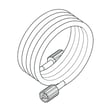
If your hose is leaking or damaged, replacing it is often the most cost-effective repair. Use a hose rated for the washer’s maximum pressure; a common replacement option is the hose 84006753.
Why it matters
High-pressure components fail fast when they are kinked, abraded, or run dry. The manual specifically warns to replace a high-pressure hose rather than repair it, which helps prevent sudden hose rupture and injury.
If the repair points to a pump control issue
If pressure surges, spikes, or drops unpredictably after you confirm good water supply and a good hose, the unloader system is a common next step. Use our guide: how to replace a pressure washer unloader valve.
Last updated: January 2026
What PSI should my pressure washer be?
For the Craftsman pressure washer model 580768340, the rated pressure is 2400 PSI, which is the PSI you should expect when the unit is operating correctly with proper water supply and a clean spray tip. For most home cleaning jobs, 2400 PSI is a solid all-around range.
What 2400 PSI is good for
A 2400 PSI gas pressure washer typically handles common outdoor cleaning without being overly aggressive.
- Washing siding and outdoor furniture (with the right spray tip and distance)
- Cleaning decks and fences (test a small area first)
- Rinsing patios and driveways for light to moderate grime
- Washing vehicles using a wider fan tip and lower pressure technique
- General home maintenance cleanup
Quick checks if your PSI seems low
If the spray feels weak, we focus on the most common causes first.
- Confirm the water supply valve is fully open
- Use a water source that can supply more than 2.4 GPM
- Inspect the high-pressure hose for kinks, cuts, or damage
- Purge air from the pump by running water through the system before starting
- Check the nozzle for clogs or wear (a partially blocked tip can change pressure)
| What you notice | Common cause | What to do |
|---|---|---|
| Pulsing spray | Air in pump, restricted inlet | Purge air; verify inlet flow |
| Low pressure | Worn nozzle, leak, hose issue | Inspect connections and hose |
| Pressure drops after a few minutes | Overheating from trigger not used | Avoid idling; keep water moving |
Why it matters
Using the correct PSI helps you clean efficiently while reducing the chance of surface damage. It also protects the pump; running without adequate water flow or with the water off can damage the pump quickly.
For operating and setup details (including water temperature limits and pre-start checks), follow the 580768340 owner's manual.
Last updated: January 2026