
How many quarts is the KitchenAid K45 series?
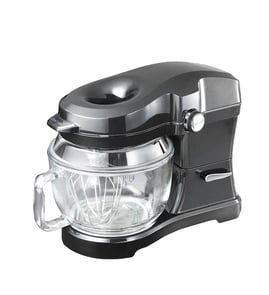
The KitchenAid K45 series stand mixer uses a 4.5-quart mixing bowl capacity, which is the standard bowl size for this Classic-style tilt-head mixer family. If you are matching parts (like a bowl, beater, or dough hook), confirm your exact model tag reads K45 before ordering on Sears PartsDirect.
What “4.5 quarts” means in everyday use
A 4.5-quart bowl is designed for typical home baking and mixing tasks. It is a good fit for:
- Cookie dough and cake batter in standard batch sizes
- Whipping cream or egg whites (use the correct whisk for best volume)
- Mixing mashed potatoes and lighter doughs
- General everyday mixing across multiple speed settings
Quick capacity check
Use this as a simple reference when comparing stand mixer bowl sizes.
| Bowl size | Best for | What you’ll notice |
|---|---|---|
| 3.5 qt | Small batches | Less headroom for large recipes |
| 4.5 qt (K45) | Everyday baking | Balanced capacity and footprint |
| 5 qt and up | Larger batches | More bowl volume, often heavier loads |
Why it matters when buying parts
Bowl capacity is tied to fit and compatibility. For the KitchenAid K45, the bowl size helps determine which accessories and replacement parts will mount and lock correctly.
- Bowls must match the tilt-head style and locking geometry
- Flat beaters and dough hooks must match the bowl diameter and clearance
- Whisks must match the head design to avoid rubbing or poor whipping
- Using the wrong size can cause uneven mixing or contact with the bowl
Helpful ordering tip
If you see similar-looking KitchenAid mixers, don’t rely on color or “Classic” naming alone. Use the model number to match the correct parts list.
- Locate the model tag on the mixer
- Confirm it reads K45 (not a close variant)
- Then choose the matching bowl or attachment by model
Last updated: February 2026
What is the #1 rated stand mixer?
There is no single, permanent “#1 rated” stand mixer because ratings change by reviewer, test method, and price tier. For most home bakers, a KitchenAid tilt-head stand mixer like model K45 is consistently a top pick for everyday mixing, while bowl-lift mixers often rank higher for frequent heavy dough work.
How to choose the best-rated mixer for your needs
When reviewers rank stand mixers, they usually score the same core areas. Use these to match the “#1” choice to what you actually bake.
- Capacity: 4.5 to 5 qt is ideal for most households; 6 to 8 qt fits big batches
- Power and gearing: stronger drive systems handle stiff dough with less strain
- Attachments and hub: pasta rollers, grinders, and slicers expand what the mixer can do
- Stability: heavier bases walk less during kneading
- Serviceability: access to gears, brushes, and internal parts matters long-term
Quick comparison: tilt-head vs bowl-lift
| Feature | Tilt-head (like K45) | Bowl-lift |
|---|---|---|
| Best for | Cookies, cakes, frosting, light bread | Frequent bread, large batches, dense dough |
| Typical bowl size | 4.5 to 5 qt | 5.5 to 8 qt |
| Ease of adding ingredients | Very easy | Easy (more clearance varies by model) |
| Footprint/weight | Usually smaller/lighter | Usually larger/heavier |
Why it matters
The “#1 rated” mixer is the one that matches your batch size and dough stiffness. Choosing the right style reduces motor strain, improves kneading results, and helps your mixer last longer.
Parts and model matching tip
If you’re shopping for replacement parts for your KitchenAid K45 stand mixer, match parts by the full model number and the exact symptom (noise, slipping, speed issues). We list model-specific parts and diagrams on the model page, and you can also search by model number on Sears PartsDirect. For help confirming the correct model number format, use how to find your appliance model number (and what it means for parts).
Last updated: February 2026
What is the most common problem with the KitchenAid mixer?
On KitchenAid stand mixers like the KitchenAid K45, the most common issues customers troubleshoot are noisy operation or grinding, the beater not turning properly under load, grease seepage from the planetary area, and beater-to-bowl clearance being off. These problems usually trace back to wear in the drive system, aged grease, or a simple adjustment.
Common problems and what they point to
- Grinding/clicking noises: wear in the gear train or a damaged drive component
- Motor runs but beater slows or stops: drive system wear, overload, or a slipping connection
- Grease drips or seepage: grease separating after storage or grease that needs to be replaced
- Beater hits the bowl or misses ingredients: beater-to-bowl clearance needs adjustment
- Inconsistent speeds: speed control components out of calibration or wearing
Quick checks to do first (no teardown)
- Unplug the mixer; remove the bowl and attachment before inspecting anything.
- Run it empty on low speed; note whether the sound is smooth or grinding.
- Confirm the bowl is locked and the attachment is fully seated.
- If the beater is contacting the bowl, do the beater-to-bowl clearance adjustment for your specific K45 configuration.
- If you see grease, wipe and monitor; repeated drips mean it is time to service and regrease.
Symptom-to-fix guide
| What you notice | Most likely area | Typical next step |
|---|---|---|
| Grinding, reduced mixing power | Gear train/drive | Inspect gears, replace worn parts, regrease |
| Beater hits bowl | Clearance/adjustment | Adjust beater height/clearance |
| Grease leaking | Gear housing lubrication | Clean out old grease, regrease |
| Beater stops in dough | Load/drive wear | Reduce batch size; inspect drive components |
Why it matters
Continuing to run a mixer that is grinding or slipping can accelerate wear in the drive system and turn a small repair into a larger parts replacement.
Parts lookup and repair planning
Use the model-based parts list for KitchenAid K45 to match the correct replacement parts, then order through Sears PartsDirect. For DIY prep and safe disassembly habits, we recommend must have tools for appliance repair.
Last updated: February 2026
What year was the KitchenAid K45 made?
The KitchenAid K45 is a long-running stand mixer model line, so there is no single “made year” that applies to every K45. The exact production year depends on the serial number on your specific mixer; we use that serial to narrow it to a manufacturing date range.
How to find the year for your specific K45
To date a K45 accurately, we match the serial number (and sometimes the model suffix on the data plate) to the manufacturer’s date code format.
- Unplug the mixer and look for the model and serial tag (often under the base or on the rear housing).
- Write down the full model shown (for example, K45 plus any letters after it).
- Write down the entire serial number exactly as printed.
- If the tag is worn, take a clear photo and zoom in to confirm characters.
- Use the model and serial to search parts and identify the correct version on Sears PartsDirect.
What “K45” means (and why the year varies)
K45 is commonly used as a model family identifier for certain KitchenAid tilt-head stand mixers. Over time, KitchenAid produced multiple K45 variants with changes to items like the speed control, motor brushes, gearcase, and planetary assembly. Those running changes are why the year is tied to the serial, not just “K45.”
Typical identifiers you may see
| What you have | What it tells us | Why it matters |
|---|---|---|
| Model reads K45 only | Base model family | Year still depends on serial number |
| Model includes extra letters (suffix) | Specific revision/version | Helps match the right parts |
| Serial number/date code | Manufacturing window | Best way to determine the year |
Why it matters
Knowing the correct production window helps us match the right replacement parts (for example, a speed control plate or worm gear) and avoid ordering a part that fits a different K45 revision.
Helpful related resource
If you need help locating the tag, use how to find your appliance model number (and what it means for parts).
Last updated: February 2026