Installation guide
 Owner’s manual


How do I tell what model my Kenmore dryer is?
Your Kenmore dryer’s model number is printed on the model and serial label, typically located at the top inside the dryer door well. For Kenmore model 11076742500, you’ll see a number that starts with 110 on that label; record it exactly to match parts and manuals.
Where to look on Kenmore 11076742500
Check these common label locations in this order:
- Top inside the dryer door well (most common for this model)
- Inside the door opening on the cabinet frame
- Back panel (less common)
- Near the lint screen housing (varies by design)
What to write down (and why)
Copy the information exactly as shown on the label:
- Model number (example: 11076742500)
- Serial number
- Purchase date (if available)
We recommend saving it with your paperwork and referencing the 11076742500 owner’s manual when you need cycle details, specifications, or service information.
Quick guide: model number vs. serial number
| Item | What it tells us | Used for |
|---|---|---|
| Model number | Exact dryer design and parts list | Ordering parts like a belt, thermostat, or door switch |
| Serial number | Production run details | Service history, manufacturing info |
Why it matters
Kenmore dryers can look similar across different series, but parts can differ by model. Using the exact model number helps us match the correct replacement parts and avoid fit or wiring issues.
Last updated: February 2026
How do I troubleshoot my 11076742500?
To troubleshoot your Kenmore dryer 11076742500, we start by matching the symptom (won’t start, no heat, long dry times, noise, or won’t tumble) to the most common causes: power and door switch issues, airflow restrictions, ignition components, and drum drive wear. Use the owner's manual for model-specific checks.
Quick safety first
- Unplug the dryer before removing panels.
- For gas models, shut off the gas supply before servicing.
- If you smell gas, stop and have the gas supply and connections checked by a qualified technician.
Symptom-based checks (fastest wins)
- Won’t start: confirm outlet power, check the door closes firmly, test the dryer door switch WP3406107.
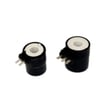
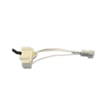
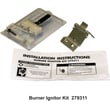
- Runs but no heat (gas): check for proper airflow first; then suspect ignition parts like the igniter 279311 or the dryer valve coil kit 279834.
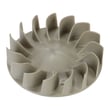
- Long dry times: clean lint screen and venting; inspect blower area and consider the dryer blower wheel WP694089 if airflow is weak.
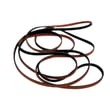
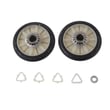
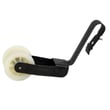
- Squealing or thumping: inspect belt and support parts; the dryer drum belt 341241 and dryer idler pulley WP691366 are common wear items.
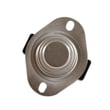
- Overheats or shuts off: restricted venting is most common; also check the dryer high-limit thermostat W11050897 and operating thermostat.
What to check in what order
| Step | What you’re verifying | Why it matters |
|---|---|---|
| 1 | Airflow (lint screen, vent duct, outside hood) | Prevents overheating and no-heat complaints |
| 2 | Door and start conditions | A failed switch stops the motor circuit |
| 3 | Heat system (igniter, coils, sensor, thermostats) | Restores consistent burner operation |
| 4 | Drum drive (belt, idler, rollers) | Fixes no-tumble and noise |
Helpful DIY reference
If your dryer displays an error code or you’re diagnosing an electronic-control symptom, use Kenmore 110 series electronic control model dryer error codes to narrow the failure to a circuit or component.
Why it matters
Troubleshooting by symptom prevents unnecessary part replacement and reduces repeat failures. On model 11076742500, airflow problems often mimic failed heat parts, so vent checks come first.
Last updated: March 2026
What is the average lifespan of 11076742500?
A Kenmore dryer like model 11076742500 typically lasts 13 years with normal household use and basic maintenance (lint removal, good airflow, and not overloading). Keeping the venting clear and replacing wear items early helps you reach that full service life.
What affects lifespan the most
- Airflow and venting: restricted vents overheat the dryer and shorten component life.
- Load size: frequent overloading strains the drum support, belt, and motor.
- Heat stress: repeated overheating can damage thermostats and sensors.
- Maintenance habits: cleaning lint paths prevents long dry times and overheating.
- Wear parts: rollers, idler pulley, and belt wear out before the cabinet does.
Maintenance checklist (high impact)
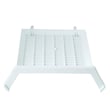
- Clean the lint screen before every load; replace a damaged screen such as the dryer lint screen W11778253.
- Inspect and clean the vent duct regularly; keep the run short and free of kinks.
- If drying times increase, clean the internal lint chute and blower area.
- Level the dryer to reduce vibration and drum support wear.
- Follow cycle and load guidance in the owner's manual.
Common wear items and what they do
| Part | What you may notice | Example part on this model |
|---|---|---|
| Drum belt | Drum stops turning, motor runs | Dryer drum belt 341241 |
| Idler pulley | Squealing, thumping, belt wear | Dryer idler pulley WP691366 |
| Blower wheel | Poor airflow, rumbling, long dry times | Dryer blower wheel WP694089 |
| Operating thermostat | Overheating or weak heat control | Dryer operating thermostat WP3387134 |
Why it matters
A dryer that runs hot or takes too long to dry uses more energy and puts extra stress on the motor, thermostats, and gas burner components. Simple airflow maintenance is the fastest way to protect the 13-year lifespan.
Last updated: March 2026