

How much does it cost to replace drum bearings on a dryer?
Replacing drum bearings (or the drum support system) on a Roper dryer model REX4635EQ1 typically costs $150 to $400 total when you pay for service; DIY is usually $20 to $120 in parts depending on what’s worn (bearing ring, drum support, belt, idler pulley).
What you’re usually paying for
Most of the cost is labor because the dryer cabinet and drum have to come apart to access the drum support parts.
- Service call/diagnosis: often included in the repair or billed separately
- Labor time: commonly 1 to 2 hours for drum support work
- Parts: bearing ring, drum support, belt, idler pulley, and sometimes a blower wheel
- Optional add-ons: cleaning lint buildup and checking the vent path
Parts that commonly get replaced together
On REX4635EQ1, “drum bearing” complaints are often caused by multiple wear items. If you’re already opening the dryer, replacing the common wear parts together helps prevent repeat teardown.
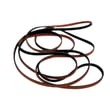
- Drum belt 341241
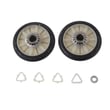
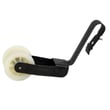
- Dryer idler pulley WP691366
- Support 349241T
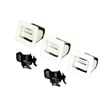
- Dryer drum front bearing ring WP3394509
- Dryer blower wheel WP694089 (only if it’s cracked, loose, or noisy)
Typical cost breakdown (parts vs. labor)
| Repair approach | Typical total cost | What’s included |
|---|---|---|
| DIY parts only | $20 to $120 | Parts you choose; no labor |
| Pro repair (common) | $150 to $400 | Labor + parts + basic checks |
| Pro repair (multiple worn parts) | $250 to $500 | More parts, more time |
Why it matters
Worn drum support parts can cause squealing, thumping, or scraping, and they can also damage the drum, belt, or motor pulley over time. Fixing the support system early keeps drying performance steady and prevents bigger failures.
Quick tip before you buy parts
If the dryer is noisy, confirm where the sound comes from (front drum area vs. blower housing vs. motor). A failing blower wheel or idler pulley can sound like “bad bearings.” For maintenance steps that reduce wear, use how to clean and maintain your clothes dryer.
Last updated: February 2026
How to find model number on roper dryer?
For a Roper dryer, including model REX4635EQ1, the model number is printed on the appliance’s rating label. On most Roper dryers, you’ll find that label just inside the door opening on the cabinet frame; if it’s not there, check the back of the dryer near the top.
Where to look on a Roper dryer
Check these common label locations in this order:
- Inside the dryer door opening on the cabinet frame (most common)
- On the back panel near the top edge
- Along the door opening edge near the lint screen housing (some builds)
- Behind the lower front access panel (if your dryer has one)
- On the side panel near the rear (less common)
What the label looks like and what to write down
The label usually includes several identifiers. We recommend copying these exactly:
- Model number (example: REX4635EQ1)
- Serial number (helps match production run)
- Type (electric or gas)
- Electrical rating (volts/amps) or gas information
| What you see | Why it matters when ordering parts |
|---|---|
| Model number | Matches the correct parts diagrams and part fit |
| Serial number | Helps confirm version changes within the same model |
| Electric or gas | Prevents ordering the wrong heating or ignition parts |
Why it matters
Roper dryers often share similar cabinets across multiple models, but internal parts can differ by model and production series. Using the exact model number helps ensure you get the right drum belt, heating parts, thermostats, and switches for your dryer.
Related parts you might see referenced during repairs
If you’re opening the cabinet to confirm the label location or doing a common repair, these are frequently replaced on REX4635EQ1:
- Drum belt 341241 (drum won’t turn, squealing, belt broken)
- Door switch WP3406105 (dryer won’t start when door is closed)
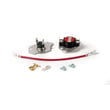
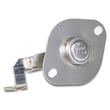
- Dryer thermal fuse WP3392519 (dryer won’t run or stops due to overheating)
Last updated: February 2026
Why is my Roper dryer not drying completely?
Your Roper REX4635EQ1 dryer usually won’t dry completely because airflow is restricted (venting or lint buildup), heat is cycling off too soon (thermostat or thermal fuse issue), or the drum isn’t tumbling efficiently (belt or idler problem). Fixing airflow first solves most “long dry time” complaints.
Quick checks that fix most long-dry problems
- Clean the lint screen before every load; wash it with warm water if you use dryer sheets.
- Check the exhaust vent hose for kinks, crushing, or a long run with too many elbows.
- Confirm strong airflow outside at the vent hood while the dryer runs.
- Avoid overloading; heavy loads need space for air to move through fabrics.
- Use a timed dry test (high heat) to separate “sensor/cycle” issues from heating/airflow issues.
Parts that commonly cause poor drying on REX4635EQ1
If airflow is good but drying is still slow, these parts are common culprits:
| Symptom | Most likely area | Part to consider (if failed) |
|---|---|---|
| Runs but heat is weak or stops early | Safety heat cutoff | Cut-off kit 279816 |
| Runs but no heat at all (electric) | Heater circuit | Dryer element 279838 |
| Heat seems normal but clothes still damp | Air movement | Dryer blower wheel WP694089 |
| Drum turns slowly, squeals, or stops under load | Drive system | Drum belt 341241 and dryer idler pulley WP691366 |
Why airflow matters most
A dryer can make plenty of heat, but if the blower cannot move air through the drum and out the vent, moisture stays in the load and cycle times climb. Restricted venting also overheats the dryer, which can trip safety devices and reduce heat even more.
When to stop and get service
- You smell burning, see scorching, or the dryer shuts off repeatedly.
- The breaker trips or the cord/terminal area looks damaged.
Last updated: February 2026