





Is WTW5010LW1 high efficiency?
Yes. The Whirlpool WTW5010LW1 is a high-efficiency (HE) top-load washer, so it’s designed to use less water and energy than traditional deep-fill agitator models while still cleaning effectively.
HE washers like the WTW5010LW1 typically clean by using a lower water level and more mechanical action (basket movement and load turnover) instead of filling the tub to the top.
- Water level is usually lower than the top of the load
- Cycles can run longer to compensate for lower water use
- High spin speeds help remove more water, reducing dry time
- Detergent choice matters; HE detergent is required
Using the right detergent prevents oversudsing, poor rinsing, and residue on clothes.
- Use HE-labeled detergent only
- Measure carefully; more soap does not mean cleaner clothes
- For soft water, use even less detergent
- If you see lots of suds, reduce the dose on the next load
| Feature | HE top-load (WTW5010LW1) | Traditional top-load |
|---|---|---|
| Water use | Lower | Higher |
| Wash action | Impeller or low-profile action | Agitator-driven |
| Cycle time | Often longer | Often shorter |
| Detergent | HE required | Regular or HE |
When you treat the WTW5010LW1 like an HE washer (proper detergent, correct load size, and cycle selection), you get better rinsing, fewer odors, and more consistent cleaning performance.
If you’re troubleshooting performance issues such as not draining or not spinning, our troubleshooting a top load washer that wont drain or spin video walks through the most common causes.
Last updated: February 2026
How do I tell how old my Whirlpool washer is?
To tell how old your Whirlpool washer (model WTW5010LW1) is, we use the serial number on the model and serial tag; the serial format encodes the manufacture date (week and year) so you can determine the washer’s age from that code.
On most Whirlpool top-load washers like WTW5010LW1, the tag is typically in one of these spots:
- Under the lid on the top rim of the washer opening
- On the underside of the lid
- Along the rear edge of the lid opening
- On the back panel of the cabinet
Once you find the serial number, we decode it to identify the build date. Whirlpool serial numbers commonly include a year code and a week-of-year code.
- Write down the full serial number exactly as shown
- Identify the characters that represent the year
- Identify the digits that represent the week (01 to 52)
- Convert that week and year into an approximate manufacture date
If the serial indicates week 14 of 2021, the washer was built around early April 2021.
Knowing the build date helps us match the right repair approach and parts for your washer, especially when Whirlpool makes mid-series updates to components like the drive system, lid lock, or drain pump.
| What you find | What it usually means | What to do next |
|---|---|---|
| Serial decodes to a recent year | Normal wear issues are less likely | Focus on installation, loads, and error codes |
| Serial decodes to 5+ years ago | Wear items become more likely | Check belt, pulley, suspension, and drain performance |
| Tag is missing or unreadable | Age cannot be confirmed from the unit | Use purchase/installation records as the baseline |
If you are checking age because of noise, shaking, or draining problems, these model-matched parts are common suspects:
- Drive belt W11239857
- Whirlpool washer drive pulley W10721967
- Pump assembly, drain W11399437
- Latch, lid lock assembly W11513248
Last updated: February 2026
How do I do a hard reset on my Whirlpool washer?
For a Whirlpool WTW5010LW1 washer, a hard reset is usually a power reset: unplug the washer (or switch the breaker off) for 5 minutes, then restore power and try a cycle again. If the control is still unresponsive, run a basic diagnostic reset routine.
- Press Power/Cancel to stop the cycle.
- Unplug the washer (or turn the breaker OFF).
- Wait 5 minutes (this lets the control fully discharge).
- Restore power.
- Select a normal cycle and press Start.
These steps often clear a stuck control state on top-load Whirlpool washers.
- Lid switch reset: open and close the lid firmly 6 times within 12 seconds.
- Control reset attempt: turn the cycle selector knob slowly, then press Start and Cancel once each.
- Drain first: if the tub is full of water, try Drain/Spin before starting a wash cycle.
- Check for a lid lock issue: if the washer will not start and the lid will not lock, inspect the latch, lid lock assembly W11513248.
- Confirm the outlet has power (test with a lamp) and the breaker is not tripped.
- Make sure the lid closes fully and nothing is caught under the lid.
- Reduce load size; an off-balance load can stop spin and look like a control problem.
- If the washer will not drain, check the drain hose for kinks and consider the pump assembly, drain W11399437.
| What happens after reset | Most likely cause | What to do next |
|---|---|---|
| Powers up and runs | Control was latched | Resume normal use |
| Powers up but will not start | Lid lock not engaging | Check lid alignment; inspect lid lock |
| Hums, will not drain/spin | Drain problem | Check hose; inspect drain pump |
| Repeats stopping mid-cycle | Drive or sensing issue | Check load size; inspect belt/actuator |
A true hard reset clears a “stuck” electronic state, but it will not fix a failed component. If the washer repeatedly will not start, lock, drain, or spin after resetting, the symptom points to a specific part (lid lock, drain pump, drive system) that needs inspection.
Last updated: February 2026
Are whirlpool washer parts interchangeable?
Whirlpool washer parts are only interchangeable when the replacement part is listed as compatible with your exact model, such as Whirlpool WTW5010LW1. Even within Whirlpool, similar-looking parts can have different mounting points, electrical connectors, or calibrations, so we match by model and part ID, not by appearance.
Parts interchange when they share the same fit and function for the same design platform. For WTW5010LW1, that typically means the part is specified for this model’s drive system, controls, and water handling.
Common areas where “close” parts cause problems:
- Lid lock and safety circuits: wrong latch can prevent starting or spinning
- Drive system: belt and pulley sizes must match the motor and transmission ratio
- Water fill: inlet valve flow and connector style must match the harness
- Drain system: pump ports and impeller design must match the hose routing
- Suspension: rod length and damping rate affect out-of-balance control
Use your model number (WTW5010LW1) and match the exact part ID.
Good examples for this model include:
- Drive belt W11239857
- Whirlpool washer drive pulley W10721967
- Latch, lid lock assembly W11513248
- Pump assembly, drain W11399437
| Check | What to match | Why it matters |
|---|---|---|
| Model match | WTW5010LW1 listed as compatible | Prevents fit and wiring issues |
| Part ID | Exact ID (example: W11239857) | Ensures correct revision |
| Function | Same component type (pump vs. motor vs. actuator) | Avoids wrong operation |
| Connections | Same plug style and mounting | Prevents no-start and leaks |
Using the correct Whirlpool part for WTW5010LW1 helps the washer fill, agitate, drain, and spin as designed. A “nearly identical” substitute can cause leaks, noise, out-of-balance shutdowns, or error conditions.
Last updated: February 2026
What is the most common problem with Whirlpool washers?
The most common problem we see with Whirlpool washers (including model WTW5010LW1) is a no-start condition where the washer has power, but the cycle will not begin. This is often tied to the lid lock system, control inputs, or a drain issue that prevents the washer from advancing.
- Confirm the lid is fully closed and you hear the lid lock engage.
- Press and hold Start (some cycles require a brief hold, not a quick tap).
- Make sure the washer is not stuck trying to drain; check the standpipe and drain hose for kinks.
- Verify the outlet has power and the breaker is not tripped.
- Try a different cycle (a control glitch can show up on one selection but not another).
If the washer powers on but will not start, these are the most frequent culprits on a top-load Whirlpool platform.
| Symptom | Likely cause | Common fix |
|---|---|---|
| Lid closes but won’t lock, or locks intermittently | Failed lid lock | Replace latch, lid lock assembly W11513248 |
| Won’t drain, then won’t spin or start next step | Drain pump problem or blockage | Inspect/replace pump assembly, drain W11399437 |
| Fills but won’t agitate/spin | Drive system issue | Check belt and pulley; replace drive belt W11239857 or Whirlpool washer drive pulley W10721967 |
| Starts then stops, or acts “dead” mid-cycle | Control or motor circuit issue | Check wiring; test motor/capacitor; consider washer start/run capacitor W11395618 |
A Whirlpool washer that will not start is usually protecting itself. If the lid is not locked, the washer will not run for safety; if it cannot drain, it often will not move into spin. Fixing the root cause prevents repeat shutdowns, wet loads, and unnecessary wear on the drive motor.
For step-by-step troubleshooting patterns that commonly apply to Whirlpool washers, we use these resources:
- Whirlpool belt drive top load washer error codes
- Troubleshooting a top load washer that wont drain or spin video
Last updated: February 2026
What are the parts of a top load washing machine?
A top-load washer like the Whirlpool WTW5010LW1 is built around a wash system (basket and washplate/agitator), a drive system (motor, belt, pulley), water handling (inlet valves and drain pump), and safety controls (lid lock). Knowing these core parts helps you pinpoint noises, leaks, and no-spin or no-drain problems faster.
- Wash system: inner basket and washplate/impeller (or agitator on some models) that moves clothes through water
- Suspension system: suspension rods/dampers that keep the tub stable during spin
- Drive system: motor, belt, and pulley that turn the basket and washplate
- Drain system: drain pump and drain hose that remove water
- Fill system: water inlet valve assembly and internal hoses
- Controls and safety: control board, wiring, lid lock/lid switch
These are common “core” parts we see tied to symptoms like shaking, not spinning, not draining, or not filling:
| Washer function | Example part for WTW5010LW1 | What it affects |
|---|---|---|
| Moves clothes in the tub | Impeller W10752283 | Poor wash action, stripped hub feel, unusual grinding |
| Spins and drives the system | Drive belt W11239857 | No spin, burning rubber smell, squeal, intermittent agitation |
| Drains water | Pump assembly, drain W11399437 | Won’t drain, long drain, water left in tub |
| Locks the lid for spin | Latch, lid lock assembly W11513248 | Won’t start, won’t spin, lid won’t lock/unlock |
| Fills with water | Water inlet assembly (complete) W11513255 | Slow fill, no fill, hot/cold mix issues |
- Loud banging or walking: suspension rods/dampers, leveling, overloaded basket
- Won’t drain: drain pump, drain hose, clogs at the tub-to-pump path
- Won’t spin: lid lock, drive belt, shift actuator, drive motor
- Won’t fill or fills slowly: inlet screens, house water pressure, inlet valve
- Burning smell or squeal: belt slipping, pulley issues, overloaded load
Top-load washer problems usually trace back to one system. If you identify whether the issue is fill, wash action, drain, spin/drive, or lid safety, you can choose the right checks and the right Whirlpool replacement part the first time.
Last updated: February 2026
What does E01 and F09 mean on a Whirlpool washer?
On a Whirlpool washer, the E01 F09 code means the washer is taking too long to drain (a long-drain condition). On your Whirlpool WTW5010LW1, this usually points to a drain restriction, a drain pump issue, or a water-level sensing problem that keeps the washer from recognizing the tub is empty.
- Cancel the cycle, then run Drain/Spin and listen for the drain pump.
- Check the standpipe and household drain for slow draining or backups.
- Inspect the drain hose for kinks, crushing, or being shoved too far down the standpipe.
- Reduce oversudsing: use HE detergent, measure carefully, and avoid extra soap.
- If the tub is full of water, bail out water first so you can safely inspect hoses and pump area.
| What you notice | Most likely cause | What we recommend |
|---|---|---|
| Hums but drains slowly or not at all | Clog in hose, pump inlet, or drain path | Clear restriction; verify hose routing |
| Drains sometimes, then errors | Intermittent drain pump or wiring issue | Inspect connections; consider pump replacement |
| Drains but code returns | Pressure system issue (air dome hose leak/plug) | Check pressure hose for pinholes, blockage, or loose fit |
| Lots of suds, long cycle times | Oversudsing | Switch to correct HE amount; run a rinse cycle |
If basic checks do not restore normal draining, these model-matched parts are the typical next suspects:
- Pump assembly, drain W11399437 (most common for long-drain complaints)
- Washer drain hose W11244231 (kinked, restricted, or damaged hose)
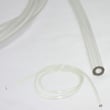
- Washer water-level pressure switch hose WP353244 (leaks or blockage can prevent “empty” sensing)
A long-drain condition can stop the washer mid-cycle, leave clothes soaking wet, and strain the drain pump. Fixing the restriction or the failed drain component restores proper water removal and normal spin performance.
Related help: Whirlpool belt drive top load washer error codes
Last updated: February 2026




