Owner’s manual
 Error Codes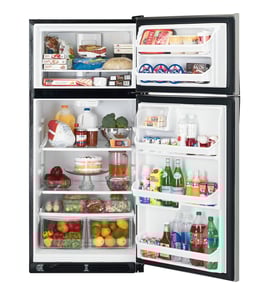



What is the upper part of a fridge called?
On the Kenmore 10664232402 top-mount refrigerator, the upper section is the freezer compartment. It’s the coldest area of the appliance, designed to keep foods frozen and to supply cold air that circulates to help cool the fresh-food section.
The freezer compartment is more than “just storage”; it supports overall cooling performance.
- Freezes and stores food long-term
- Sends cold air through vents to the refrigerator section
- Houses freezer features such as shelves and the pull-out freezer floor (varies by configuration)
- Often supports ice making (if equipped)
Different manuals and technicians may use slightly different terms.
| What people say | What it usually means | Where it is |
|---|---|---|
| Freezer | Freezer compartment | Upper section on a top-mount |
| Freezer section | Same as freezer compartment | Upper section |
| Fresh-food section | Refrigerator compartment (not the freezer) | Lower section |
This Kenmore design relies on airflow between the freezer and refrigerator sections. If vents are blocked by food packages, temperatures can drift and moisture or odor issues can show up.
- Keep freezer vents clear of boxes and bags
- Avoid packing items tightly against the back wall
- Don’t block the top vent that feeds the refrigerator section
- Wrap foods tightly to reduce odor transfer between sections
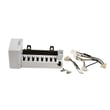
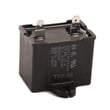
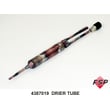
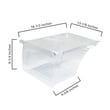
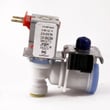
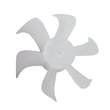
If the “upper part” is not freezing well or ice production is inconsistent, these model-matched parts are commonly involved in diagnosis.
For the exact names of compartments, vents, and included freezer features on the Kenmore 10664232402, use the 10664232402 owner's manual.
Last updated: January 2026
How to tell cubic feet of Kenmore refrigerator by model number?
For Kenmore model 10664232402, the most reliable way to get the exact cubic-foot capacity is to look it up in the specifications section of the 10664232402 owner's manual. If you only have the model number and no spec sheet, you can still estimate capacity by measuring the usable interior space.
- Check the specifications section in the 10664232402 owner's manual.
- Look for a rating/spec label inside the fresh food compartment (often on an inside wall). The manual notes the model/serial label is inside the refrigerator compartment.
- Search the model number on the appliance’s spec sheet if you have original paperwork.
- Estimate cubic feet by measuring the interior (helpful when labels are missing).
- Empty the refrigerator enough to measure the usable interior.
- Measure the fresh food compartment:
- Width (inches) x depth (inches) x height (inches)
- Measure the freezer compartment the same way.
- Add both volumes together, then convert:
| What to do | Formula |
|---|---|
| Compartment volume (cubic inches) | W x D x H |
| Convert to cubic feet | cubic inches ÷ 1728 |
Tip: Measure to the inside walls and subtract obvious unusable space (large duct covers, thick shelves) for a more realistic estimate.
Kenmore model numbers (including the 106 prefix family) identify the design series and configuration, but they do not consistently encode the exact interior capacity. The same series can include multiple sizes and feature packages.
- Model and serial label location (inside the refrigerator compartment)
- Door style: top-mount (freezer on top)
- Features that affect usable space (ice maker, shelves, bins)
Last updated: January 2026
What are the disadvantages of a top mount fridge?
A top-mount refrigerator like Kenmore 10664232402 is usually reliable and efficient, but the main downsides are convenience and organization: fresh-food items sit lower (more bending), freezer access is easiest, and features like in-door ice and water are less common.
- More bending for daily items: the refrigerator section is below the freezer, so produce, drinks, and leftovers often require reaching down.
- Less fresh-food organization: many top-mount designs have fewer premium bins and door-storage options than newer bottom-freezer styles.
- No built-in dispenser on many models: in-door water and ice are less common on top-mount units.
- Smaller freezer usability: the freezer is on top, but shelves and door bins can be simpler, so bulky items can be harder to stack.
- Door swing clearance matters: you may need extra side clearance near walls so doors open fully.
| Feature | Top-mount refrigerator (like 10664232402) | Bottom-freezer refrigerator |
|---|---|---|
| Daily fresh-food access | Lower, more bending | Eye-level, easier |
| Freezer access | Easy, at chest height | Lower drawer, more bending |
| Organization features | Often simpler | Often more advanced |
| Dispenser options | Less common | More common |
Some frustrations come from installation and airflow, not the design itself.
- Leave about 1/2 inch space at the sides and top for ventilation.
- If installed next to a fixed wall, plan for about 2 inches minimum clearance so the door can swing.
- Do not block air vents between the freezer and refrigerator sections; blocked vents can cause temperature and moisture problems.
For model-specific placement and use guidance, follow the 10664232402 owner's manual.
If you use the refrigerator section far more than the freezer, a top-mount layout can feel less convenient day to day. If you use the freezer often and want a simpler, proven design, the trade-off can be worth it.
Last updated: January 2026