Owner’s manual


What is the average lifespan of an LG dryer?
An LG dryer typically lasts 10 to 15 years with normal household use and basic upkeep. For your LG DLG0332W, consistent venting, lint control, and quick attention to wear parts (belt, rollers, idler) are the biggest factors in reaching that range.
Typical lifespan and what changes it
Most dryers fail early due to airflow restrictions, overheating, or drum-drive wear. We see lifespan vary mainly based on:
- Loads per week (heavy daily use shortens life)
- Proper exhaust venting and regular vent cleaning
- Avoiding overloading (reduces strain on the motor and drum support)
- Replacing wear parts before they damage other components
- Keeping the lint screen and blower area clear
Wear parts that commonly affect longevity
If the dryer starts squealing, thumping, or the drum stops turning, these parts are common culprits on many LG dryers:
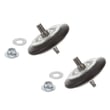
- Dryer drum belt 4400EL2001F (drum won’t turn, slipping, burning rubber smell)
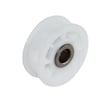
- Dryer drum support roller 4581EL2002L (thumping, rumbling, flat spots)
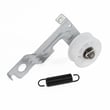
- Dryer idler pulley 4560EL3001A (squeal, belt tension issues)
- Lint screen and venting components (long dry times, overheating)
Quick maintenance schedule (simple and effective)
| Task | How often | Why it helps |
|---|---|---|
| Clean lint screen | Every load | Improves airflow and drying speed |
| Check outside vent flap | Monthly | Confirms strong exhaust flow |
| Clean vent duct run | Every 6 to 12 months | Reduces heat stress and shutdowns |
| Level the dryer | As needed | Prevents vibration and premature roller wear |
Why it matters
A dryer that runs hot because of poor airflow can cycle off early, take longer to dry, and stress thermostats and the motor. Following the safety, installation, and maintenance guidance in the DLG0332W owner’s manual helps you get full performance and the longest service life.
Last updated: February 2026
Why does my LG dryer keep saying check filter?
On our LG DLG0332W dryer, the “Check filter” message is a lint filter reminder, not a failure code. It commonly appears as a prompt to clean the lint screen before a load and typically clears after you start the drying cycle.
What to do first (quick fix)
- Pull out the lint screen and remove all lint.
- Wash the screen with warm water and a soft brush if you see residue (dryer sheet buildup can block airflow).
- Dry the screen completely, then reinstall it fully.
- Start a cycle; the reminder normally turns off once the cycle begins.
- If drying is slow, check the exhaust vent path for restrictions.
When the message is a sign of an airflow problem
If the reminder stays on during the cycle or clothes take longer to dry, treat it as an airflow warning. A clogged lint screen or vent can cause overheating and shutdowns.
Common airflow-related symptoms:
- Loads take multiple cycles to dry
- Dryer feels hot but clothes stay damp
- Burning smell or unusually hot cabinet
- Lint collecting around the dryer or vent outlet
Parts that often help when airflow and lint are the issue
| Symptom | What to inspect | Model-matched part to consider |
|---|---|---|
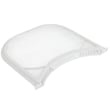
| Lint screen is torn, warped, or won’t seat | Lint screen frame and fit | Dryer lint screen 5231EL1003B |
| Dryer runs but airflow seems weak | Blower wheel for cracks or looseness | Dryer blower wheel 5835EL1002A |
| Dryer shuts off or overheats | Thermostats and venting | Dryer high-limit thermostat AGM30045804 |
Why it matters
Good airflow is what carries moisture out of the drum. Keeping the lint screen and venting clean helps the LG DLG0332W dry faster, run cooler, and reduce wear on components like the blower and thermostats. For cleaning intervals and venting guidance, follow the DLG0332W owner’s manual.
Last updated: February 2026
What is the most common problem with LG dryers?
The most common LG dryer problem is poor drying performance: the dryer runs but clothes stay damp or take too long. On LG DLG0332W, this is most often caused by restricted airflow (lint buildup or a crushed vent) or a heat-related safety part opening due to overheating.
Quick checks we recommend first
- Clean the lint screen before every load; a full filter is a top cause of long dry times.
- Confirm strong airflow at the outside vent hood while the dryer is running.
- Inspect the vent path for kinks, crushed flex duct, or heavy lint buildup.
- Avoid overloading; packed loads block tumbling and airflow.
- If the drum will not tumble, check for a broken belt or a seized roller.
Common symptoms and the most likely causes
| Symptom | Most likely cause | What to check next |
|---|---|---|
| Runs but no heat (gas model) | Gas supply off, thermostat/limit opened | Verify gas is on; then test heat circuit parts |
| Takes too long to dry | Vent restriction, lint screen clogged | Clean venting and lint screen; re-test airflow |
| Drum will not turn | Belt broken, idler issue, roller drag | Inspect belt and idler; check drum support |
| Stops early or dries unevenly | Moisture sensor dirty | Clean sensor bars; confirm cycle selection |
Parts that commonly fix these issues on DLG0332W
If airflow is good and the dryer still will not heat or tumbles poorly, these model-matched parts are common fixes:
- Dryer drum belt 4400EL2001F (no tumble)
- Dryer drum support roller 4581EL2002L (thumping, squealing, hard-to-turn drum)
- Dryer high-limit thermostat AGM30045804 (overheating or no-heat condition)
- Dryer blower thermostat 6931EL3002M (heat regulation problems)
- Dryer moisture sensor 6500EL3001A (auto cycles end too soon or leave clothes damp)
Why it matters
Restricted venting can make an LG dryer dry slowly, overheat, and trip safety thermostats. Fixing airflow first often restores normal heat and protects key components like the burner system, blower wheel, and thermostats.
Where to confirm model-specific troubleshooting steps
Use the DLG0332W owner’s manual troubleshooting section to match symptoms (no heat, long dry times, no tumble) to the correct checks, including power and fuse or breaker guidance.
Last updated: February 2026
Can I fix the LG dryer D80 error myself?
Yes. On the LG DLG0332W, a D80 error is usually telling you the dryer is not exhausting well enough; in most cases you can fix it yourself by cleaning lint buildup and correcting a crushed, kinked, or clogged vent path from the lint screen to the outside hood. See the venting and maintenance steps in the DLG0332W owner's manual.
What to do first (safe DIY checks)
- Unplug the dryer before moving it or opening any panels.
- Clean the lint screen every load; a blocked screen increases drying time and heat buildup.
- Pull the dryer out and inspect the exhaust hose for crushing, kinks, or sagging.
- Disconnect the exhaust hose and remove lint from the hose and the wall duct.
- Check the outside vent hood; remove lint and confirm the damper flap opens freely.
- Run a short timed-dry test with the vent reconnected; airflow at the outside hood should feel strong.
Why D80 happens (common causes)
Poor airflow is almost always the root cause. These are the most common culprits:
| Cause | What you’ll notice | DIY fix |
|---|---|---|
| Lint screen restricted | Longer dry times | Clean screen; wash residue off if needed |
| Crushed/kinked vent hose | D80 returns quickly | Re-route hose; shorten if excessive length |
| Lint in wall duct or hood | Weak airflow outside | Clean duct and hood thoroughly |
| Blower area lint buildup | Noisy airflow, weak pull | Clean internal lint (service access) |
When a part problem is more likely
If the venting is clear and D80 keeps coming back, the dryer may not be moving air correctly.
- A damaged blower wheel can reduce airflow; inspect and replace if cracked or loose (see dryer blower wheel 5835EL1002A).
- A thermostat issue can contribute to overheating symptoms; follow the troubleshooting guidance in the manual.
- If the dryer will not run or stops early, check for related error codes and symptoms.
Why it matters
Restricted exhaust makes the dryer run hotter and longer, which can damage fabrics and strain components like thermostats, the motor, and the drum belt.
Last updated: February 2026
What parts might cause an LG dryer to not heat?
On the LG DLG0332W dryer, “no heat” is most often caused by an airflow restriction (lint screen or venting) or a failed heat-safety/control part such as a high-limit thermostat. On gas models, ignition parts can also prevent the burner from lighting; use the DLG0332W owner's manual checks to confirm heat operation.
Parts and conditions that commonly stop heat
These are the most common heat-related culprits for this LG dryer style:
- Restricted exhaust venting (kinked duct, clogged vent hood, long run): the dryer can run but not heat well, or it can overheat and trip safety devices.
- Lint screen problems (blocked, damaged, not seated): reduced airflow increases drying time and can trigger overheating.
- High-limit thermostat: opens when temperatures get too high; a failed thermostat can interrupt heat. Consider dryer high-limit thermostat AGM30045804 or dryer high-limit thermostat 6931EL3003C when diagnosing.
- Blower thermostat: helps regulate operating temperature; a failure can affect heat cycling (example: dryer blower thermostat 6931EL3002M).
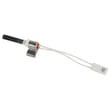
- Gas ignition components (gas dryers): if the igniter glows but the burner does not light reliably, the igniter or flame-sensing circuit is a prime suspect (example: LG dryer burner igniter 5318EL3001A).
Quick diagnostic checklist (safe, high-value steps)
- Clean the lint screen and make sure it is fully seated.
- Check airflow at the outside vent hood; it should be strong and steady.
- Run a timed heat cycle for a few minutes; exhaust air should feel warm.
- If it is a gas dryer, watch for igniter glow and burner ignition (through the inspection opening if accessible).
- If airflow is good but there is still no heat, test heat-safety parts (thermostats) with a meter.
Symptom-to-likely-cause guide
| What you notice | Most likely cause | What to check first |
|---|---|---|
| Dryer runs, clothes stay cold | Vent restriction or thermostat open | Vent path, lint screen, high-limit thermostat |
| Heat starts then stops quickly | Overheating from poor airflow | Vent length, crushed duct, lint buildup |
| Gas igniter glows, no flame | Ignition component issue | Igniter, sensor circuit, gas supply on |
Why it matters
A dryer needs steady airflow to carry heat through the drum and out the exhaust. When airflow drops, temperatures rise inside the heater/burner area; thermostats can open to protect the dryer, and repeated overheating can damage components and increase drying time.
Last updated: February 2026
How to reset LG dryer heating element?
The LG DLG0332W dryer heating system does not have a “reset” for the heating element itself; when heat stops, the fix is usually restoring airflow, power, or a safety thermostat condition. Use the DLG0332W owner's manual to confirm your exact control steps and safety guidance.
What to do first (safe, fast checks)
- Unplug the dryer (or switch off the breaker) before removing any panels.
- Clean the lint screen and confirm it is seated correctly; a clogged screen restricts airflow.
- Inspect and clean the entire vent path (dryer outlet, vent hose, wall duct, outside hood).
- Run a timed/manual cycle and verify the dryer is actually running (drum turning, blower moving air).
- If the dryer shuts off after about 10 minutes, reselect the cycle and restart; many LG dryers auto shut off after inactivity.
Why “no heat” happens on this model
On the DLG0332W, loss of heat is commonly caused by restricted venting (overheating protection trips), a failed thermostat, or a gas ignition issue (for gas models). The heating element itself is not a resettable component.
Common heat-related parts you may need
| Symptom | Most likely area | Example part for this model |
|---|---|---|
| Runs but no heat, venting is clear | High-limit protection or temperature sensing | Dryer high-limit thermostat AGM30045804 |
| Runs but heat cycles off too soon | Blower housing temperature control | Dryer blower thermostat 6931EL3002M |
| Gas model: ignites inconsistently or not at all | Ignition system | LG dryer burner igniter 5318EL3001A |
Airflow reset (the “real reset” that fixes most no-heat calls)
Restricted airflow can overheat the heater area and trigger safety devices. After you:
- fully clear the venting, and
- reinstall the vent hose without kinks or crushing, run a timed dry cycle again to see if heat returns and stays stable.
Why it matters
Good airflow prevents overheating, protects thermostats and sensors, and shortens dry times. A clean vent also reduces strain on the motor and blower wheel.
Last updated: February 2026
How much does it cost to replace a heating element in an LG dryer?
For an LG dryer like model DLG0332W, replacing a heating element typically costs $30 to $120 for the part, plus $150 to $350 for labor if you hire service. Total installed cost is commonly $180 to $470, depending on access, diagnosis time, and local rates.
What changes the total price
- Dryer type: electric dryers use a heating element; gas dryers use an igniter, gas valve, and sensors.
- Diagnosis vs. parts swapping: a failed thermostat or airflow restriction can mimic a bad heater.
- Vent condition: restricted venting can overheat and damage heating components.
- Service call minimums: many companies charge a flat trip/diagnostic fee.
- DIY vs. pro: DIY usually means paying only for parts (and possibly tools).
Typical cost breakdown
| Cost item | Typical range | Notes |
|---|---|---|
| Heating element (part only) | $30 to $120 | Electric models only |
| Diagnostic/service call | $75 to $150 | Often applied toward repair |
| Labor (replacement) | $150 to $350 | Varies by region and disassembly time |
| Total installed | $180 to $470 | Most common real-world range |
Before you buy a heating element
We recommend checking these common causes of “no heat” first:
- Clean the lint screen and confirm strong airflow at the exterior vent hood.
- Verify the correct cycle and temperature settings.
- Inspect for a crushed, kinked, or excessively long vent run.
- If your dryer is gas, focus on ignition and flame sensing parts instead of a heating element.
If you need model-specific disassembly steps and safety guidance, use the DLG0332W owner's manual.
If your DLG0332W is a gas dryer
Many LG gas dryers that “won’t heat” need one of these parts instead of a heating element:
- LG dryer burner igniter 5318EL3001A
- Radiant sensor, gas valve, or thermostats (depending on symptoms)
For symptom-based troubleshooting, we use the LG dryer error codes guide to match error displays to likely causes.
Why it matters
Replacing the wrong heating component wastes time and money; airflow problems and failed thermostats can repeatedly overheat the heater circuit (electric) or prevent ignition (gas), leading to repeat failures.
Last updated: February 2026