Installation guide
 Owner’s manual
 Error Codes


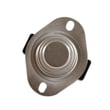
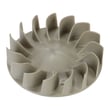
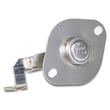
How to take off the front panel of a Kenmore dryer?
For Kenmore dryer model 11066752500, we remove the front panel by disconnecting power, opening the cabinet (top and/or lower access area), then removing the front-panel mounting screws and lifting the panel up and off the retaining clips. Use the 11066752500 installation guide for the safest cabinet-handling steps.
- Unplug the dryer (or switch off the breaker) before removing any panels.
- If it is a gas model, shut off the gas supply valve and confirm the flexible gas line is not kinked.
- Pull the dryer forward and leave room so the vent is not crushed or kinked.
- Wear cut-resistant gloves; cabinet edges can be sharp.
- Keep a small container for screws so none fall into the cabinet.
- Disconnect power and pull the lint screen out.
- Release the top: insert a putty knife a few inches in from each front corner to release the spring clips, then lift the top.
- Remove front mounting screws: look for screws along the inside top edge of the front panel and/or inside the door opening (varies by revision).
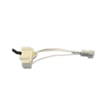
- Disconnect door switch wiring: unplug the harness connector so the front panel can come off cleanly.
- Lift and remove the front panel: lift the panel slightly to unhook it from the lower retaining clips, then pull it forward.
| Area you can reach | Common reason you are removing the front panel | Related part for this model |
|---|---|---|
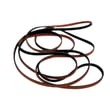
| Drum and belt path | Drum not turning, squealing | Dryer drum belt 341241 |
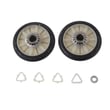
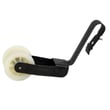
| Idler and rollers | Thumping, chirping, belt slipping | Dryer repair kit 4392065 |
| Blower housing | Poor airflow, rumbling | Dryer blower wheel WP694089 |
Removing the front panel correctly prevents bent cabinet tabs, broken door-switch wiring, and air leaks that can cause long dry times. After reassembly, confirm the door closes firmly and the dryer starts normally (door switch engaged).
Last updated: February 2026
What model Kenmore dryer do I have?
If you have a Kenmore dryer, the most reliable way to identify the exact model is to read the model and serial number label. On Kenmore model 11066752500, that label is located at the top inside the dryer door well; record the full model number and serial number for parts and service.
Check these common locations first (start with the door opening):
- Top inside the dryer door well (most common on Kenmore 110-series dryers)
- Inside the door opening on the cabinet frame
- Rear panel of the dryer cabinet
- Near the lint screen housing (varies by design)
For the exact label location and how it is shown for your unit, use the 11066752500 owner's manual.
Kenmore model numbers often start with a 3-digit prefix that helps identify the manufacturing source and parts family. For example, many Kenmore dryers that begin with 110 use a Whirlpool-built parts platform, which helps match items like a drum belt, heating element, thermostat, or timer correctly.
- Complete model number (all digits, no spaces)
- Serial number
- Purchase date (helpful for service records)
| Item | What it’s used for | Example for this page |
|---|---|---|
| Model number | Matching diagrams and correct replacement parts | 11066752500 |
| Serial number | Production run details, service identification | From the label |
| Purchase date | Maintenance and service history | Your receipt |
When your model number matches 11066752500, you can confidently shop by model for common wear items such as:
- Dryer drum belt 341241 if the drum won’t tumble
- Dryer door switch WP3406107 if the dryer won’t start when the door is closed
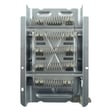
- Dryer element 279838 if the dryer runs but doesn’t heat
Using the exact model number prevents ordering the wrong Kenmore parts, since cycle controls, door styles, and heating systems can vary even between similar-looking dryers.
Last updated: February 2026
What is the average lifespan of 11066752500?
The average lifespan of a Kenmore dryer like model 11066752500 is 13 years. You can often extend that lifespan with consistent venting and lint-system maintenance, plus timely replacement of wear parts when you notice noise, poor drying, or overheating.
Most dryers reach their full service life when airflow stays strong and moving parts stay supported.
- Vent length and elbows: long runs and multiple turns reduce airflow and raise heat stress
- Lint buildup: increases drying time and can overheat components
- Load habits: frequent overloading strains the motor, belt, and drum support
- Heat issues: restricted airflow can trip safety devices and shorten heater life
- Preventive part replacement: rollers, idler, and belt wear is normal over time
We recommend these routine steps for 11066752500:
- Clean the lint screen every load
- Inspect and clean the vent duct and outside hood at least yearly
- Keep the vent route as straight and short as possible; avoid tight bends
- Stop using the dryer if you smell burning or the cabinet feels unusually hot
- Address squealing, thumping, or scraping early (usually drum support wear)
If the dryer still heats but is noisy or the drum stops turning, these are frequent fixes:
| Symptom | Common cause | Example part for this model |
|---|---|---|
| Drum will not turn | Worn/broken belt | Dryer drum belt 341241 |
| Squealing or rumbling | Worn drum support parts | Dryer repair kit 4392065 |
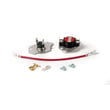
| Runs but no heat | Heater or safety cut-off opened | Dryer thermal cut-off fuse kit 279816 |
The installation guidance for venting notes that exhaust systems longer than specified can shorten dryer life and reduce performance. Keeping airflow within the recommended limits helps the heater, thermostats, and motor run cooler and last longer.
For model-specific care, venting guidance, and operating tips, use the installation guide and the owner's manual.
Last updated: March 2026