Owner’s manual
 View engine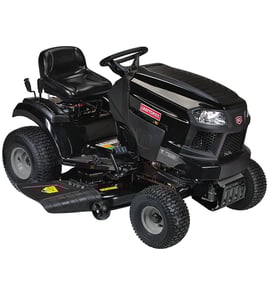


Is it worth replacing a lawn mower engine?
Yes, replacing the engine on your Craftsman 917289550 front-engine lawn tractor is worth it when the tractor’s deck, steering, and drive system are solid and the total engine-swap cost stays well below the cost of replacing the entire tractor. It is not worth it when the deck or drivetrain is worn out or unsafe.
- Replace the engine if the mower deck is straight, not rusted through, and cuts evenly.
- Replace the engine if the transmission and ground drive operate smoothly (no slipping, grinding, or loss of power).
- Replace the engine if the electrical system is reliable (good battery cables, consistent cranking).
- Replace the engine if you can do the work safely and you want to keep this tractor.
- Replace the engine if you can still get key wear parts for this model.
- Skip the engine swap if the deck is failing, the frame is damaged, or multiple major systems need repair.
| Option | Upfront cost | Reliability after repair | Best when |
|---|---|---|---|
| Replace engine | Medium to high | High if the rest of the tractor is strong | Deck and drivetrain are in good shape |
| Repair engine (partial) | Low to medium | Medium | Problem is clearly limited (fuel, spark, cooling) |
| Replace tractor | High | High | Multiple major components are worn |
Use these checks to avoid putting a new engine on a tractor that still will not perform:
- Deck and mandrels: Look for heavy vibration, noisy spindles, or grass buildup around mandrels; clogged vent holes and debris can cause poor cutting and overheating issues.
- Blade system: Blades must be installed correctly and tightened properly; the manual calls out correct blade orientation and tightening torque.
- Cooling and maintenance condition: Keep the grass screen and cooling fins clean; blocked cooling surfaces can overheat and damage an engine.
- Safety systems: Do not bypass safety devices; verify the reverse operation system (ROS) and other interlocks work as designed.
For model-specific procedures and safety steps, follow the owner's manual.
An engine swap only pays off when the rest of the Craftsman 917289550 is safe and mechanically sound. If the deck, mandrel assemblies, or drive components are already failing, you can end up chasing repeated breakdowns even with a new engine.
Last updated: February 2026
What brand engine does Craftsman use?
Craftsman lawn tractors can be equipped with engines from several manufacturers; for the Craftsman model 917289550, the operator’s literature identifies it as a 26.0 HP tractor with a low-emission internal combustion engine, and the exact engine maker is best confirmed by the engine identification label and the specifications section in the owner's manual.
Across Craftsman riding mowers and tractors, the most common engine brands include:
- Briggs & Stratton (very common on many Craftsman tractors)
- Kohler (common on some higher-horsepower or premium trims)
- Kawasaki (less common, but used on some models)
- Other OEM-supplied engines depending on year and configuration
Use these quick checks to identify the engine manufacturer on your specific tractor:
- Look for the engine data tag on the blower housing, valve cover area, or near the starter
- Record the engine model and type code (often separate from the tractor model number)
- Match that information to the Product specifications section in the owner's manual
- If the tractor has been repowered, rely on the engine tag, not the hood decal
| What you need | Where to look | Why it helps |
|---|---|---|
| Engine manufacturer | Engine data tag/label | Confirms brand (Briggs & Stratton, Kohler, etc.) |
| Engine model/type | Engine tag numbers | Needed for engine-specific tune-up parts |
| Tractor model | Frame tag (917289550) | Needed for chassis, deck, and drive parts |
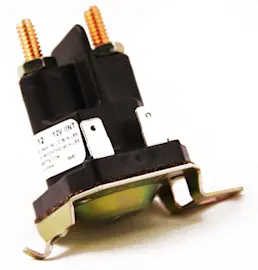
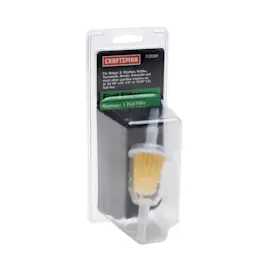
The engine brand determines the correct maintenance and repair parts for ignition and starting (spark plug, air filter, fuel filter, starter components). For example, if you are chasing a no-crank issue, a common tractor-side part is the lawn tractor starter solenoid 582042802, but engine-side parts still depend on the engine manufacturer.
Last updated: February 2026
What year did Craftsman make the 917289550?
Craftsman model 917289550 is part of the 917.28955 tractor series shown in the owner's manual. That manual confirms the series and specifications (26.0 HP, 54-inch deck, electric start, 6-speed transaxle), but it does not list a single “model year”; Craftsman tractors are dated by the purchase date and the product ID/serial label on the tractor.
Use these quick checks to pin down the build timeframe for your specific unit:
- Look under the seat or on the frame rail for the model and serial/product number label.
- Record the serial number exactly as shown (letters and numbers).
- Check your receipt or service paperwork for the purchase date.
- Compare your tractor’s configuration (deck size, transmission type) to the specs listed in the manual.
- If you are ordering parts, match by model number 917289550 and the exact part diagram callouts.
The manual identifies the tractor as Model No. 917.28955 and lists key specs. Those details help confirm you are working from the correct documentation and parts diagrams for the 917289550 family.
| Item in manual | What it tells you | Why it helps with dating |
|---|---|---|
| Model No. 917.28955 | Model family for 917289550 | Confirms the correct series |
| 26.0 HP, 54-inch deck | Major configuration | Narrows down matching parts and decals |
| 6-speed transaxle | Transmission type | Helps distinguish from hydrostatic variants |
Craftsman “917” tractors often share similar names across multiple production runs. Using the serial/product label (not just the model family) prevents ordering the wrong mower deck, electrical parts, or drive components.
If you are troubleshooting or rebuilding, these are common items where exact matching matters:
- Lawn tractor starter solenoid 582042802 (no-crank or intermittent starting)
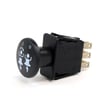
- Switch.pto 582107601 (PTO will not engage)
- Lawn tractor mandrel housing 587819701 (blade spindle noise, wobble, or poor cut)
Last updated: February 2026
Where can I find my lawn mower engine model number?
On the Craftsman 917289550 riding tractor, the engine model number is typically stamped into the engine itself (not on the mower deck or frame). Look for a metal-stamped code on the top area of the engine near the cylinder head or valve cover; use the owner's manual to confirm the exact location for your engine.
Check these common spots first (wipe off dirt and oil so the stamping is readable):
- Top of the engine near the cylinder head area
- Near the valve cover on either the right or left side
- On the blower housing or shroud area near the top (sometimes a label is used)
- Near the spark plug area (close to the cylinder)
Engine identification is often a group of numbers and letters. What you want is the engine model (and often the type and code/serial).
- Engine model: identifies the engine family
- Type/spec: identifies the exact configuration
- Code/serial: identifies the production run
| What you see | What it usually means | What to do with it |
|---|---|---|
| Stamped numbers/letters in metal | Engine ID is stamped for durability | Record it exactly as shown |
| Printed label/sticker | Engine ID is on a decal | Take a photo before it wears off |
| Tractor model “917…” | Mower/tractor model number | Use it for tractor parts lookup, not engine parts |
Using the correct engine model number prevents ordering the wrong ignition, starter, carburetor, or tune-up parts. It also helps when diagnosing no-start issues such as a click-no-crank condition.
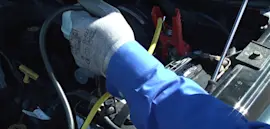
If the starter clicks but the engine will not turn over, we follow this basic order:
- Verify battery connections are clean and tight
- Check the brake and PTO safety interlock positions
- Inspect wiring at the solenoid
- Test the solenoid operation
For a common no-crank scenario on riding tractors, see riding lawn mower engine clicks but doesnt turn over video.
Last updated: February 2026