Installation guide
 Owner’s manual
 Error Codes


How to hard reset kenmore washer?
To hard reset your Kenmore washer model 41743042200, unplug it (or switch off the breaker) for 2 minutes, then restore power and start a normal cycle. This clears many temporary control glitches and is the safest reset method to try first; see the 41743042200 owner's manual for model-specific button sequences.
Hard reset steps (recommended)
- Press Power/Cancel to stop the washer if it is running.
- Unplug the washer or turn OFF the dedicated breaker.
- Wait 2 minutes (this lets the control fully discharge).
- Restore power.
- Select Normal (or a basic cycle) and press Start.
- If the washer was mid-cycle, reselect your settings and restart.
If the washer still will not run
Many “won’t start” complaints are actually a door lock issue on front-load Kenmore washers. If the door does not latch and lock, the control will not begin the cycle.
- Confirm the door is fully closed and nothing is caught in the bellows.
- Try a different cycle and listen for the lock click.
- Check for a loose plug at the door lock assembly (after unplugging power).
- If the latch is physically broken or the lock never engages, replace the door catch 131763256.
Quick guide: reset vs. diagnostic mode
| What you need | What it does | When to use |
|---|---|---|
| Power reset (unplug 2 minutes) | Clears temporary control errors | First step for most problems |
| Diagnostic/calibration routine | Tests components, can clear stored faults | Repeated errors, odd behavior |
For diagnostic mode and any calibration routine your model supports, follow the exact steps in the 41743042200 installation guide.
Why it matters
A proper hard reset can clear a “stuck” control board state without replacing parts. If the washer still will not start after a reset, focusing on the door lock, drain, and fill systems prevents unnecessary part swaps.
Last updated: January 2026
How to unclog drain hose on Kenmore washer?
To unclog the drain hose on a Kenmore washer model 41743042200, we unplug the washer, drain any standing water, then remove and flush the drain hose to clear lint, coins, or small socks. After clearing the blockage, we reinstall the hose securely to prevent leaks.
Safety first and quick prep
- Unplug the washer (or switch off the breaker).
- Turn off both water supply valves.
- Have towels, a shallow pan, and pliers ready.
- If the tub is full, bail out water or drain it into a pan before removing hoses.
- Keep the washer stable; do not tip it forward with water inside.
Steps to unclog the drain hose
- Pull the washer forward enough to access the rear.
- Locate the drain hose where it connects to the household standpipe or laundry tub; remove it and check the end for a clog.
- If the clog is not at the end, access the internal connection at the drain pump and remove the hose clamp.
- Flush the hose with hot water; push a flexible brush or a small drain snake through to break up debris.
- Reinstall the hose and clamps; make sure the hose is not kinked and has a smooth path to the standpipe.
- Run a rinse and drain cycle and watch for strong flow and leaks.
Helpful tools (what works best)
| Tool | Best for | Notes |
|---|---|---|
| Hot water flush | Soap scum, light lint | Fast first step |
| Flexible brush | Lint mats | Less likely to puncture hose |
| Small drain snake | Stubborn clogs | Use gently to avoid damage |
If it still will not drain
A clog is common, but slow or no draining can also point to a failing pump or a collapsed hose.
- Check the standpipe for a household drain blockage.
- Listen for the drain pump running during drain.
- Inspect the hose for soft spots, splits, or internal collapse.
- If the hose is damaged, replace it with the correct part.
Parts that commonly relate to draining
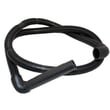
- Washer drain hose 134592700 (replace if kinked, split, or internally collapsed)
- Washer drain pump 137108000 (suspect if pump hums but does not move water)
Why it matters
A restricted drain hose can cause long cycle times, poor spin performance, musty odors, and water left in the tub. Clearing the hose restores proper draining and helps protect the drain pump from overheating.
For model-specific access panels, hose routing, and clamp locations, follow the 41743042200 installation guide and the 41743042200 owner's manual.
Last updated: January 2026
What is the life expectancy of a Kenmore washer?
Most Kenmore washers, including model 41743042200, typically last 10 to 15 years with normal household use. Lifespan depends most on load size, detergent use (HE detergent for front-loaders), installation/leveling, and how quickly small issues like draining or door-lock problems get repaired.
Typical lifespan ranges (what we see most often)
- 10 to 15 years: normal use, routine care, timely repairs
- 8 to 12 years: heavy use (large family, frequent hot washes, frequent overloading)
- 15+ years: lighter use plus consistent maintenance and quick part replacement
| Usage and care level | What to expect | Common wear areas |
|---|---|---|
| Light use, good care | 12 to 15+ years | Door seal, hoses |
| Average use | 10 to 15 years | Drain pump, inlet valve |
| Heavy use or frequent overloading | 8 to 12 years | Shocks, door lock, pump |
What shortens a washer’s life fastest
- Overloading the drum (stresses bearings, suspension, and motor)
- Too much detergent (causes residue, odors, and poor draining)
- Skipping leveling (increases vibration and tub movement)
- Letting small leaks continue (damages bearings, wiring, and flooring)
- Ignoring slow-drain symptoms (can overwork the drain pump)
Parts that commonly extend the life of this washer
Replacing a worn part early often prevents bigger failures.
- If the door will not latch or the cycle will not start, check the door catch 131763256.
- If the washer bangs, walks, or feels unstable, inspect the level shock 5304485917.
- If draining is slow or you hear pump strain, the drain system (including the washer drain pump 137108000 and drain hose) is a common focus.
Why it matters
A washer that is properly installed and maintained runs with less vibration, drains more reliably, and avoids repeat error conditions. That reduces stress on high-wear components like the drain pump, inlet valve, and suspension.
Maintenance habits that add years
- Keep loads balanced; wash bulky items in smaller batches
- Use the right amount of HE detergent; reduce if you see excess suds
- Leave the door slightly open between loads to dry the boot/bellows
- Periodically check inlet hoses and the drain hose for leaks or kinks
- Follow the care and cleaning steps in the 41743042200 owner’s manual
Last updated: January 2026
How big is a 4.2 washing machine?
A 4.2 cu. ft. washer is a full-size machine; most are about 27 inches wide, 38 to 40 inches tall, and 30 to 34 inches deep. For your Kenmore 41743042200, use the exact cabinet dimensions and required clearances in the 41743042200 installation guide.
Typical size range for a 4.2 cu. ft. washer
Use these common planning ranges, then match them to the Kenmore 41743042200 specs in the installation instructions.
- Width: 27 to 28 inches
- Height: 38 to 40 inches (to the top)
- Depth: 30 to 34 inches (add space for hoses)
- Front clearance: extra room for door swing on front-load models
- Rear clearance: space for fill hoses, drain hose, and power cord
Quick sizing checklist (what to measure)
Measure these before delivery or moving the washer into place:
| What you measure | How to measure it | What to compare against |
|---|---|---|
| Doorway and hallway width | Narrowest point the washer must pass through | Washer cabinet width from the guide |
| Depth to the back wall | From front edge of the space to the wall | Depth plus hose clearance |
| Height under shelves/cabinets | Floor to lowest obstruction | Height plus leveling leg range |
| Space in front | From washer front to opposite wall/door | Door swing and loading space |
Why it matters
Correct sizing prevents a washer that will not fit through a doorway, a door that cannot open fully, or kinked hoses that can cause fill or drain problems.
Installation tips that prevent fit issues
- Confirm the required clearances and hookups using the 41743042200 installation guide.
- Add at least a few inches behind the washer so hoses do not kink.
- Level the washer after placement; an unlevel washer can vibrate and walk.
- If the washer was recently moved, verify shipping hardware was removed as directed in the installation instructions.
Last updated: January 2026