Installation guide
 Owner’s manual
 Error Codes


How to identify a Kenmore washer model?
Your Kenmore washer model number is the ID we use to match the correct parts and instructions. For Kenmore model 11026742503, you will typically find the model tag on the washer cabinet (most often under the lid on top-load washers) or on the back panel; confirm the exact number against the 11026742503 owner's manual.
Where to look on Kenmore washers
Check these common locations first (use a flashlight and wipe dust off the tag):
- Under the lid: along the rim of the washer opening or underside of the lid
- Back of the washer: near the power cord entry or rear panel edge
- Behind the control panel area: sometimes on the cabinet near the console
- Inside the cabinet opening: around the top frame (varies by design)
What the model number should look like
Kenmore washer model numbers are often numeric and may start with 110 (a common Kenmore prefix). Record the full model number exactly as shown, including any extra digits.
| What to capture | Example for this washer | Why it matters |
|---|---|---|
| Model number | 11026742503 | Ensures parts fit and diagrams match |
| Brand | Kenmore | Helps narrow manuals and repair info |
| Product type | Washer | Confirms you are in the right category |
Tips to avoid ordering the wrong part
Once you find the tag, write it down and use it consistently when selecting parts like a lid switch, drain pump, or motor coupling.
- Copy the model number character-for-character
- Take a clear photo of the tag for reference
- Match parts by model before buying (for example, washer lid switch assembly WP8318084)
- Use the manual to confirm control type and cycle selector style
Why it matters
Kenmore washers can look similar across many series, but internal components (timer, clutch, drive system, lid switch) can differ by model. Using the exact model number keeps troubleshooting and part selection accurate.
Last updated: February 2026
Is it worth repairing a Kenmore washing machine?
Yes, it’s usually worth repairing a Kenmore washer like model 11026742503 when the fix is a common wear part and the total repair cost is clearly less than replacing the washer. We use the 11026742503 owner's manual to confirm safe service steps and operating checks before and after the repair.
How we decide if repair makes sense
A practical rule: repair is the better choice when the washer’s tub and cabinet are in good shape and the problem is isolated to a serviceable part (lid switch, drain pump, coupling, clutch, agitator parts).
Common “good repair” scenarios:
- Won’t spin or agitate but motor runs (often a coupling or clutch issue)
- Won’t drain or leaves water in the tub (often a drain pump or hose issue)
- Stops mid-cycle or won’t start spinning with lid closed (often a lid switch issue)
- Agitator “slips” or doesn’t move clothes well (often agitator dogs)
Cost and effort: quick comparison
| Situation | Typical outcome | What we recommend |
|---|---|---|
| Simple mechanical failure (pump, switch, coupling) | High success rate, fast repair | Repair it |
| Multiple major symptoms plus loud grinding/leaks | Can indicate gear case or basket drive wear | Price out parts and labor first |
| Rusted tub/cabinet or repeated flooding | Reliability drops quickly | Replacement usually makes more sense |
Parts that commonly restore performance on this model
These are frequent fixes for top-load Kenmore 110-style washers:
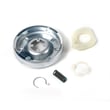
- Washer motor coupling 285753A (connects motor to transmission drive)
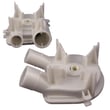
- Washer drain pump WP3363394 (removes water during drain)
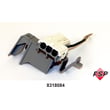
- Washer lid switch assembly WP8318084 (prevents spin with lid open)
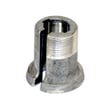
- Agitator dog 80040 (helps the agitator “grab” and move clothes)
Why it matters
A targeted repair can restore wash action, draining, and spinning for years at a fraction of the cost of a new washer, especially when the failure is a single wear component and the rest of the machine is solid.
Last updated: February 2026
What is the average lifespan of a Kenmore washer?
A Kenmore washer like model 11026742503 typically lasts 10 to 15 years with normal household use. Consistent care (proper loading, correct detergent, and periodic cleaning) helps you reach the high end of that range; chronic overloading and unresolved leaks shorten it. See the 11026742503 owner’s manual for model-specific care and maintenance routines.
Typical lifespan and what changes it
Most top-load Kenmore washers of this design land in the 10 to 15 year window. The biggest factors are load size, water quality, and how quickly small problems are fixed.
- Longer life: balanced loads, correct water level, routine cleaning
- Shorter life: frequent overloading, repeated off-balance spinning, hard-water buildup
- High-impact conditions: freezing storage or operation can damage internal components (winterizing guidance is in the manual)
Parts that commonly end a washer’s service life
When a washer nears end-of-life, we usually see failures in drive, drain, or fill systems. On model 11026742503, these are common repair points:
- Agitation problems: worn agitator dog 80040 or drive components
- No spin or loud grinding: drive train wear (clutch, drive block, gear case components)
- Won’t drain: clogged or failing washer drain pump WP3363394
- Won’t start or stops mid-cycle: lid switch issues such as washer lid switch assembly WP8318084
- Slow fill or no fill: inlet valve wear
Quick “repair vs. replace” guide
Use this as a practical decision tool for an older Kenmore washer.
| What you’re seeing | Most likely direction | Why |
|---|---|---|
| Won’t drain, but otherwise runs | Repair | Drain pump and hoses are straightforward fixes |
| Won’t spin and smells hot | Repair first | Often clutch, coupling, or lid switch related |
| Repeated leaks plus loud bearing/drive noise | Consider replace | Multiple major repairs add up |
| Timer or major drive system failure on a very old unit | Consider replace | Higher parts and labor cost |
Why it matters
Knowing the typical lifespan helps you plan: if your 11026742503 is already past 10 years, addressing small issues early (drain, lid switch, agitation wear) often prevents secondary damage and extends usable life.
Last updated: February 2026