 Installation guide
 Owner’s manual



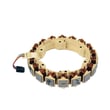
What is the capacity of a Kenmore washer model 11031632610?
The Kenmore washer model 11031632610 has a 3.2 cu. ft. capacity, which is a common size for a high-efficiency, low-water top-load washer. For cycle loading guidance and detergent recommendations, use the 11031632610 owner's manual.
A 3.2 cu. ft. tub cleans best when the load can move freely during wash and rinse.
- Load items loosely; do not pack or compress laundry
- Keep bulky items (blankets, jackets) to one or two pieces per load
- Mix large and small items to help balance during spin
- Use only HE detergent; too much soap can cause oversudsing and poor rinsing
- If the washer shakes or bangs, reduce the load size and redistribute
Use this as a starting point; fabric type and absorbency change how “full” a load behaves.
| Load type | What it looks like in the basket | Best practice |
|---|---|---|
| Small | Covers the bottom, low pile | Normal cycle, standard HE dose |
| Medium | About half full, loose | Mix item sizes for balance |
| Large | Near the top but not packed | Avoid overfilling; leave room to tumble |
Overloading a low-water HE top-load washer can reduce cleaning performance and increase out-of-balance spinning, which adds stress to drive components like the clutch and washplate.
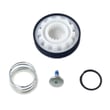
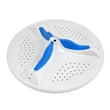
If you are troubleshooting poor agitation or slipping during spin, common related parts for this model include the washplate impeller W10752285 and 30mm spiral W10734521.
Last updated: February 2026
What is the life expectancy of a Kenmore washer?
A Kenmore washer typically lasts 10 to 15 years under normal household use. For your Kenmore 11031632610 top-load high-efficiency washer, proper installation, using HE detergent, and fixing wear items early can push service life toward the high end of that range (or longer). See the owner's manual for model-specific care and operating guidance.
Most washers fall into these real-world ranges:
- 10 to 15 years: common for many Kenmore washers with average use
- 8 to 12 years: heavy use (large households, frequent loads)
- 15+ years: lighter use plus consistent maintenance and timely repairs
| Usage pattern | What it looks like | Typical outcome |
|---|---|---|
| Light | 2 to 4 loads/week | Longer life, fewer major repairs |
| Average | 5 to 7 loads/week | Typical 10 to 15 years |
| Heavy | 8+ loads/week | More wear on drive and suspension parts |
These are the most common life-reducers we see on top-load, low-water washers like model 11031632610:
- Overloading or consistently washing bulky items off-balance
- Skipping routine cleaning (odor, residue, and drain issues build up)
- Using non-HE detergent or too much detergent (excess suds and residue)
- Running with a known problem (noise, slow drain, lid not locking)
- Poor leveling, which increases vibration and component stress
When performance drops, these parts commonly restore function and extend life:
- Washer lid lock assembly W11188327 (won’t start, won’t spin, lid won’t lock)
- Washer drain pump W10876600 (won’t drain, standing water)
- Damper assembly W11130360 (excessive shaking, out-of-balance behavior)
- Washplate impeller W10752285 (poor agitation or clothes not moving well)
A washer’s “life expectancy” is usually limited by a few high-wear systems (drain, drive, suspension, and lid locking). Catching symptoms early and replacing the right part often adds years of dependable operation.
Last updated: February 2026
What is the most common problem with a washing machine top loader?
The most common top-load washer problem is an unbalanced load that causes the washer to vibrate, bang, or even stop during spin. On Kenmore model 11031632610, correct loading around the washplate and proper leveling typically fix the issue; the manual also notes this is a primary cause of “vibration or off-balance.”
- Pause the cycle and redistribute items in loose heaps evenly around the washplate, not piled on one side.
- Avoid washing a single heavy item (add a few similar items to balance it).
- Close the lid and restart using START/PAUSE/Unlock Lid.
- Do not add extra water to “help”; it can make the load more unstable.
- If the load is oversized or non-absorbent, use the cycle recommended in your owner's manual.
If the washer rocks or “walks,” leveling is the next most common cause.
- Make sure all feet are firmly on the floor and locked.
- Check the floor for flexing or sagging.
- If the floor is uneven, a 3/4-inch piece of plywood under the washer can reduce sound and movement.
- Follow the leveling steps in the installation guide.
These are frequent causes of “won’t spin,” “won’t drain,” or “won’t start” complaints:
| Symptom | Common cause | What to check first |
|---|---|---|
| Won’t start or stops | Lid not locking | Lid closes fully; listen for lock; consider washer lid lock assembly W11188327 |
| Won’t drain | Drain restriction or failed pump | Check for clogs; inspect hose routing; consider washer drain pump W10876600 |
| Poor wash or slipping | Drive/clutch issue | Agitation/spin performance; consider 30mm spiral W10734521 |
Running a top-load washer out of balance can increase noise, reduce spin performance, and add stress to the suspension and drive components. Correct loading and leveling protect parts like the washplate, clutch, and lid lock.
Last updated: February 2026
How to read a Kenmore model number?
Kenmore model numbers identify the exact design and parts list for your appliance. For Kenmore washer model 11031632610, the full number (all digits) is what we use to match the correct replacement parts and the correct procedures in the owner's manual.
Most Kenmore top-load washers have the model and serial tag in one of these spots:
- Under the lid, around the lid opening
- On the underside of the lid
- Along the top rim of the cabinet
- On the back of the washer cabinet
Kenmore model numbers are mainly used for exact parts compatibility. Many Kenmore models also include a prefix that points to the original manufacturer.
- Prefix (often 3 digits): identifies the manufacturer family (common on many Kenmore appliances)
- Remaining digits: identify the platform, features, and production variation
- Full model number required: even one missing digit can pull the wrong parts diagram
| What you see | What it tells us | What to do with it |
|---|---|---|
| 11031632610 | Exact Kenmore washer model | Use it to select parts and procedures |
| 110 (prefix) | Manufacturer family identifier | Helpful for service info, but still use the full model |
Using the complete model number helps us match critical fit and function details such as mounting style, electrical connectors, and cycle control design.
- Correct match for common repairs like a no-drain issue (often involves the washer drain pump W10876600)
- Correct match for lid not locking or not starting (often involves the washer lid lock assembly W11188327)
- Correct match for agitation or spin complaints (can involve the washplate impeller W10752285)
- Copy the model number exactly as printed (no spaces)
- Keep the serial number too; it can help narrow production changes
- Use the model number from the washer, not from a receipt or manual cover page
Last updated: February 2026





