Owner’s manual
 Error Codes



Can you get parts for a Kenmore dryer?
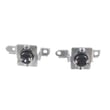
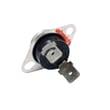
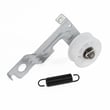
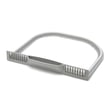
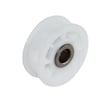
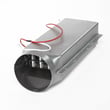
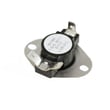
Yes. We can help you get replacement parts for your Kenmore Elite dryer model 79661552610, including common wear items (like a drum belt and lint screen) and repair parts (like a heating element, thermostats, and sensors) that match this dryer.
How to find the right part for your dryer
Your best match comes from confirming the exact model and then choosing the part by symptom or by diagram.
- Check the model and serial tag inside the dryer door
- Use the model number 79661552610 when searching parts
- Match the part by description and part ID (not just by looks)
- If you are fixing a symptom, start with the most common failure parts first
- Use the exploded-view diagrams and part lists in the 79661552610 owner's manual
Popular parts customers replace on model 79661552610
These are some of the most frequently replaced parts for this Kenmore Elite dryer:
- Lg dryer drum belt 4400EL2001F (drum turns)
- Dryer lint screen by lg 5231EL1001C (captures lint before it enters the vent)
- Lg dryer heating element 5301EL1001H (electric heat)
- Dryer moisture sensor 6500EL3001A (auto-dry sensing)
- Dryer high-limit thermostat 6931EL3003D (overheat protection)
Quick part-to-symptom guide
| Dryer problem | Parts to check first on 79661552610 | Why it matters |
|---|---|---|
| Drum will not tumble | Drum belt, idler pulley, motor | A broken belt or seized pulley stops drum movement |
| No heat or weak heat | Heating element, high-limit thermostat, blower thermostat | Heat is shut down if a heater or safety thermostat fails |
| Clothes overdry or underdry | Moisture sensor, lint screen, venting | Poor sensing or airflow causes bad cycle results |
| Loud thumping/squealing | Support rollers, idler pulley, belt | Worn moving parts create noise and can damage the drum |
Why it matters
Using model-matched Kenmore parts helps the dryer heat correctly, tumble smoothly, and vent safely. It also prevents repeat repairs caused by installing a similar-looking part that does not fit or perform the same.
Last updated: February 2026
How do I know if my Kenmore dryer thermal fuse is blown?
If your Kenmore Elite dryer model 79661552610 suddenly will not start or runs but produces no heat, a blown thermal fuse is a top suspect. The sure way to know is a continuity test with a multimeter after unplugging the dryer; a blown fuse also means you should correct restricted airflow.
Quick symptoms checklist
- Dryer will not turn on at all
- Dryer runs but there is no heat
- Drying times get longer and longer before the failure
- The exhaust airflow feels weak at the outside vent hood
- The dryer area smells hot or “overheated”
How we confirm a blown thermal fuse (safe, accurate method)
- Unplug the dryer (or switch off the breaker).
- Access the thermal fuse location shown in the 79661552610 owner's manual.
- Pull at least one wire off the fuse terminal.
- Test the fuse with a multimeter set to continuity or ohms.
What the meter reading means
| Meter result | What it means | What to do next |
|---|---|---|
| Continuity (near 0 ohms) | Fuse is good | Keep troubleshooting heat/airflow issues |
| No continuity (open circuit) | Fuse is blown | Replace the fuse and fix the vent restriction |
Fix the root cause: restricted venting
On this dryer, restricted or blocked airflow is a known performance problem; the manual notes the CHECK VENT indicator can blink when the exhaust system is restricted, and drying performance will be poor.
Use this airflow cleanup list:
- Clean the lint screen and the lint screen housing
- Inspect the entire vent run for crushed flex duct, kinks, or long runs
- Clear lint buildup from the wall duct and outside vent hood
- Confirm the outside damper opens freely
- Run a timed dry cycle and recheck airflow at the vent outlet
Why it matters
A thermal fuse is a one-time safety device; if it blows and you only replace the fuse without correcting airflow, the dryer can overheat again and repeat the failure. Restoring proper venting also improves dry time consistency and helps protect heating components.
Last updated: February 2026
How much does it cost to replace a heating element in a Kenmore dryer?
For Kenmore Elite dryer model 79661552610, heating-element replacement cost is typically the price of the part plus labor: DIY is usually part-only cost, while a service call commonly brings the total into the low hundreds. Use the 79661552610 owner's manual to confirm the correct heating circuit and access steps before ordering parts.
Typical cost breakdown (part vs. labor)
Costs vary most by whether you replace only the heater or also address airflow and safety cutoffs.
- Heating element part: commonly $50 to $300 depending on whether it is an element-only or an assembly
- Labor (if hiring a technician): commonly $100 to $250
- Common add-ons (when heat problems are present): thermostats, thermal cutoffs, wiring repair
- DIY tools/supplies: nut driver, vacuum, gloves, multimeter (if testing)
| Scenario | What you pay for | Typical total |
|---|---|---|
| DIY element replacement | Part only | $50 to $300 |
| Pro replaces element | Part + labor | $150 to $550 |
| Pro diagnoses “no heat” first | Diagnostic + part + labor | $200 to $650 |
Parts that often get replaced with the heater
If the dryer is not heating, overheating, or cycling heat oddly, we often see related temperature-control parts involved.
- Lg dryer heating element 5301EL1001H (heater that produces heat)
- High-limit thermostat (opens if temperatures get too high)
- Blower thermostat (helps regulate operating temperature)
- Thermistor (feeds temperature readings to the control)
- Lint screen and venting cleanup (prevents repeat failures)
Why it matters (and what drives the price)
A failed heating element is only one cause of “no heat.” Restricted airflow (lint buildup, crushed vent, blocked exterior hood) can overheat the heater housing and trip safety devices, which increases parts and labor.
Before you buy: quick checks that save money
- Clean the lint screen and confirm it seats correctly
- Inspect and clean the vent duct to the outside
- Verify the dryer is getting proper power at the outlet and breaker
- If heat is weak, check for long dry times and hot cabinet sides (airflow restriction)
- Match parts to the full model number 79661552610
Last updated: February 2026
Is Kenmore Elite high end?
Yes. Kenmore Elite is Kenmore’s higher-end line, and the Kenmore Elite dryer model 79661552610 is built and marketed as a premium-tier dryer with more features and refinement than standard Kenmore models.
What “high end” means for Kenmore Elite
Kenmore Elite typically focuses on upgrades that improve convenience, fabric care, and overall fit and finish.
Common high-end traits include:
- More cycle and option choices (often including specialty fabric-care cycles)
- Better moisture sensing and temperature control for more consistent drying
- Quieter operation features (improved cabinet design, drum support, airflow design)
- Larger capacity designs and smoother drum movement components
- More advanced controls (electronic control board and sensor-driven cycles)
How to judge “high end” for your exact dryer
The best way to confirm which premium features your 79661552610 has is to match what you see on the console to the feature list and cycle descriptions in the 79661552610 owner’s manual.
Use this quick checklist:
- Compare your cycle names to the manual’s cycle chart
- Check whether you have sensor dry cycles vs timed dry only
- Look for steam-related options (if equipped)
- Confirm venting and installation requirements (performance depends heavily on airflow)
Feature vs. performance: what matters most
Even a premium dryer can feel “not high end” if airflow is restricted or wear parts are failing.
| What you notice | Often tied to | Example part on this model |
|---|---|---|
| Long dry times | Vent restriction, lint buildup, weak heat | Dryer lint screen by LG 5231EL1001C |
| Thumping/squealing | Drum support wear | Dryer drum support roller 4581EL2002H |
| No heat/low heat | Heating circuit issue | LG dryer heating element 5301EL1001H |
Why it matters
“High end” should translate into better fabric care and more consistent results. On a dryer, that consistency depends on correct installation, clean airflow, and healthy wear components (belt, rollers, idler pulley, thermostats).
Last updated: February 2026
What are common problems with Kenmore dryers?
Common problems on the Kenmore Elite 79661552610 dryer are long dry times from restricted venting, no-heat conditions tied to power or gas supply, and control issues such as Control Lock (CL). We use the troubleshooting steps in the 79661552610 owner's manual to pinpoint the cause.
Most common symptoms (and the usual cause)
- Clothes take too long to dry: blocked/dirty exhaust duct, long duct run, or a clogged lint filter
- Dryer runs but does not heat: tripped breaker or blown fuse; on gas models, a closed gas shutoff valve
- CHECK VENT light on or blinking: restricted exhaust performance detected over multiple cycles
- Dryer will not turn on: loose plug, blown house fuse, tripped breaker, or outage
- Buttons don’t work and CL shows: Control Lock is enabled (often cleared by holding Drum Light 3 seconds)
Quick checks we recommend first
- Clean the lint filter before every load; hold it up to a light to confirm airflow.
- Inspect the full vent path to the outside hood for lint buildup, crushed flex duct, or a stuck damper.
- Verify correct power at the outlet; some electric dryers tumble with a partial power issue but won’t heat.
- For gas models, confirm both the house and dryer gas shutoff valves are fully open.
- Match cycle and load size; heavy fabrics and oversized loads dry slower, very small loads can confuse Auto Dry.
CHECK VENT indicator: what to expect
The dryer evaluates vent performance over several consecutive cycles to avoid false alarms. After you clear a restriction, it takes multiple cycles for the indicator to reset.
| CHECK VENT behavior | What it points to | Best next step |
|---|---|---|
| On or blinking | Restricted exhaust airflow | Clean/shorten venting; confirm outside damper opens |
| Still on after cleaning | Needs several cycles to re-evaluate | Run several cycles; recheck the entire vent run |
Parts often involved after airflow checks out
- Dryer lint screen by lg 5231EL1001C (airflow restriction, long dry times)
- Lg dryer heating element 5301EL1001H (no heat on electric models)
- Dryer thermistor AGM30045804 (temperature sensing problems)
Why it matters
Poor exhaust venting is the most common root cause behind long dry times and heat complaints; fixing airflow first restores performance and prevents repeat overheating-related failures.
Last updated: February 2026
What are the codes for Kenmore Elite dryer?
Kenmore Elite dryer model 79661552610 uses display error codes to point you to the system that needs attention (power supply, wiring, controls, or temperature sensing). Start by matching the exact code on the display to the list in the 79661552610 owner's manual, then follow the recommended checks.
Common Kenmore Elite dryer error codes
These are some of the most common codes customers see on Kenmore Elite dryers:
- PF: Power failure or power interruption
- PS (electric models): Power cord wired incorrectly at the terminal block
- nP: Power cord connection issue (often missing/incorrect neutral)
- gAS (gas models): Gas supply off or gas service issue
- tE1 to tE7: Temperature sensor (thermistor) failure
- CL: Control lock is turned on (buttons disabled)
Quick checks we recommend (in order)
Before replacing parts, these steps solve many code-related problems:
- Unplug the dryer (or switch off the breaker) for 2 minutes, then restore power
- Confirm the outlet matches the dryer’s electrical requirements and the plug is fully seated
- Check the house breaker or fuse (reset or replace as needed)
- If you see CL, press and hold Drum Light for 3 seconds to toggle Control Lock
- For PS/nP, inspect the terminal block wiring for correct neutral and line connections
- For gAS, confirm both the house gas shutoff and dryer gas shutoff valves are fully open
Code-to-system cheat sheet
| Code family | What it usually points to | What to check first |
|---|---|---|
| PF | Power interruption | Breaker, outlet, cord fit |
| PS / nP | Power cord/terminal block wiring | Neutral and L1/L2 wiring |
| gAS | Gas supply issue | Shutoff valves, gas service |
| tE1 to tE7 | Temperature sensing circuit | Thermistor wiring and sensor |
If you’re troubleshooting a temperature-sensor code, the thermistor is a common suspect on this model family; see the dryer thermistor AGM30045804 if testing confirms it is out of spec.
Why it matters
Error codes help prevent unsafe operation and reduce guesswork. For example, PS/nP protects the control from incorrect voltage, and tE codes help prevent overheating by flagging temperature-sensing problems early.
For a longer list of Kenmore Elite codes and definitions, we also use the Kenmore elite dryer error codes reference.
Last updated: February 2026
Where is the model number on Kenmore Elite dryer?
On Kenmore Elite dryer model 79661552610, the model number is printed on the identification plate inside the dryer door (on the door opening area of the cabinet). This is the quickest place to check before ordering parts or looking up troubleshooting steps in the 79661552610 owner's manual.
Where to look (fast checklist)
- Open the dryer door and look around the door opening on the cabinet frame.
- Check the identification plate for Model No. and Serial No.
- Wipe dust off the label so the full number is readable.
- Write the number exactly as shown (all digits).
- Use the model number when searching for Kenmore Elite dryer parts and diagrams.
What the identification plate helps you do
The model and serial label is used to match the correct Kenmore Elite dryer parts, wiring, and troubleshooting information.
| You need to do this | Use this from the label | Why it matters |
|---|---|---|
| Order replacement parts | Model number | Ensures the part fits your exact dryer |
| Confirm production details | Serial number | Helps match revisions and component versions |
| Use troubleshooting steps | Model number | Keeps error code and symptom checks accurate |
Why it matters
Kenmore Elite dryers often share similar styling across multiple series, but internal components (like the drive system and heating circuit) can differ by model. Using the exact model number helps prevent ordering the wrong belt, thermostat, or heating element.
Last updated: February 2026
Why won't my Kenmore Elite dryer start but has power?
If your Kenmore Elite dryer model 79661552610 has power but will not start, the most common causes are Control Lock being turned on (shows CL), the door not fully latching, or a power-supply issue that lets the display light up but prevents the motor from running. Use the steps in the 79661552610 owner's manual to confirm the exact control sequence and lock setting.
Quick checks that fix most “has power but won’t start” problems
- Make sure the door is fully closed and you hear/feel the latch engage.
- If CL appears, turn off Control Lock (see steps below).
- Press POWER, select a cycle, then press START/PAUSE (the normal start sequence).
- Reset power: unplug the dryer (or switch the breaker off) for 1 minute, then restore power.
- Check the house breaker or fuse; reset or replace as needed (do not upsize a fuse).
- If the display shows PS (electric models), recheck the power cord connection.
Control Lock (CL) is on
When Control Lock is enabled, the dryer can power on but the buttons will be disabled.
What you’ll see:
| Symptom | What it means | What to do |
|---|---|---|
| CL alternates with cycle time | Controls are locked | Press and hold DRUM LIGHT for about 3 seconds to toggle Control Lock off |
If the dryer still won’t start
These checks help narrow the failure to a switch, control, or drive component.
- Listen for a click when you press START/PAUSE; no click often points to a control or switch issue.
- If the drum light works but the motor never hums, inspect the belt and idler area for a jam.
- If you recently heard squealing or thumping before the no-start, check the drive system parts.
Common related parts for this model:
- Lg dryer drum belt 4400EL2001F (broken belt can prevent tumbling)
- Lg dryer idler pulley 4561EL3002A (seized pulley can stop the belt from moving)
- Dryer electronic control board EBR80198609 (can prevent start if it fails)
Why it matters
A dryer that “has power” can still be missing the correct start conditions (door closed, controls unlocked, correct power supply). Confirming those basics first prevents unnecessary part replacement and gets your Kenmore Elite dryer running faster.
Last updated: February 2026